
AI Boom Could Lead to Financial Crash, Says Expert
Summary
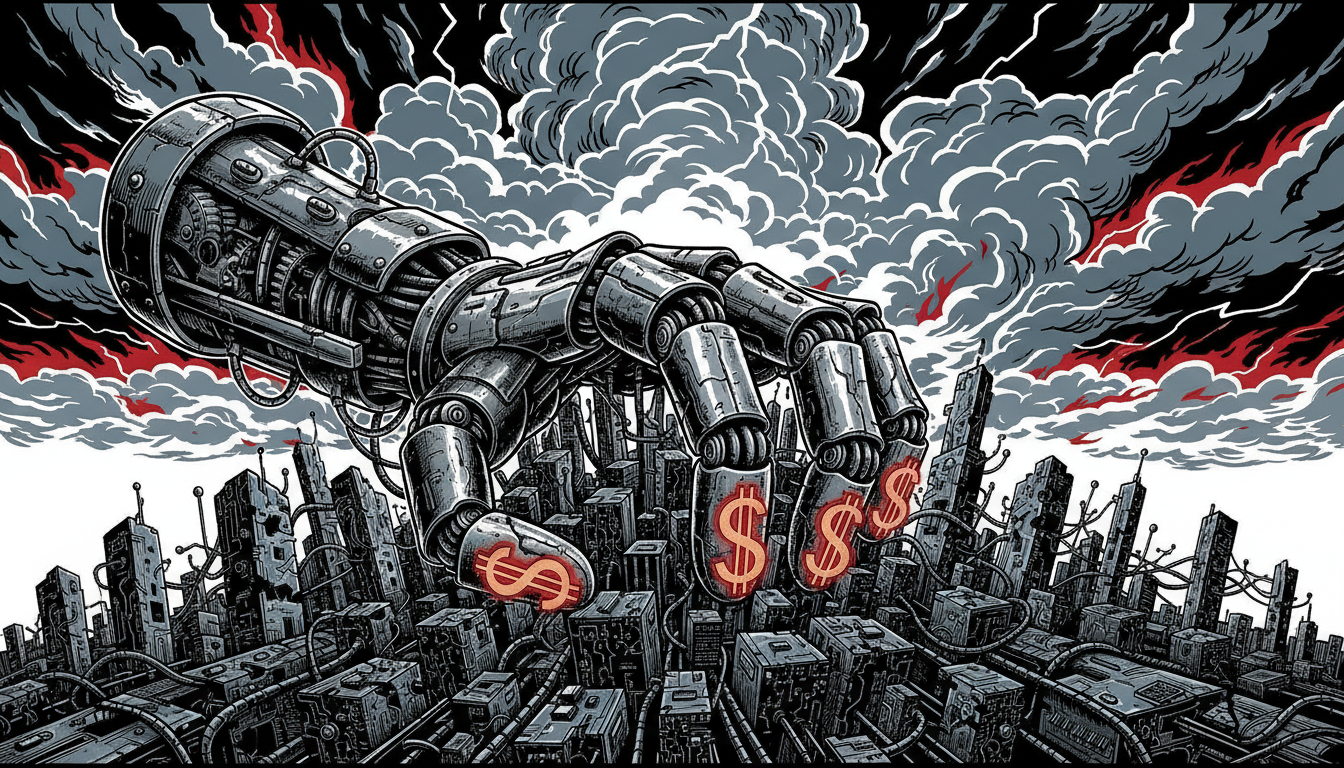
Experts warn that the massive investments in artificial intelligence could lead to a financial crisis if progress stalls. Yoshua Bengio, a leading AI researcher, suggests that the race toward artificial general intelligence (AGI) may hit an insurmountable wall, potentially causing a 2008-style economic collapse.
Important facts
- Yoshua Bengio, one of the 'godfathers' of modern AI, warns AGI progress could stall
- Trillions of dollars are being invested in datacentres and AI infrastructure
- Nvidia's stock market capitalization exceeds $4 trillion
- The US economy is heavily dependent on AI infrastructure growth
- Morgan Stanley estimates $2.9 trillion will be spent on datacentres between now and 2028
- Private credit markets are being activated to fund the AI boom
Details
The artificial intelligence industry has become a massive financial gamble, with investors pouring trillions of dollars into developing technologies that promise enormous returns. The dream of artificial general intelligence (AGI) - where computers can perform any intellectual task a human can do - is driving this investment frenzy.
Yoshua Bengio, a renowned AI researcher who helped create modern machine learning techniques, has voiced serious concerns about the direction of progress. He warns that "there is a clear possibility that we will hit a wall," suggesting that current approaches to AI development may not lead to the breakthroughs investors expect.
The financial stakes are enormous. Companies like Nvidia, which produce the powerful chips needed for advanced AI systems, have seen their market values soar past $4 trillion. Meanwhile, Meta (formerly Facebook) is offering signing bonuses of $100 million to top engineers at OpenAI, the company behind ChatGPT.
Investors believe that AGI will revolutionize industries by replacing human workers in white-collar jobs like accounting and law. This could lead to enormous profits for companies developing AI technology and their customers who deploy it. However, if these companies fail to deliver on their promises, the consequences could be severe.
The US stock market, which has been heavily boosted by tech stocks, could suffer significant losses. Debt markets tied to the datacentre boom might experience sudden shocks that ripple throughout the economy. GDP growth in the US, which has benefited from AI infrastructure investments, could falter, affecting global economies.
David Cahn of Sequoia Capital emphasizes the pressure on tech companies to deliver on AGI. "Nothing short of AGI will be enough to justify the investments now being proposed for the coming decade," he wrote in October.
However, not all experts agree with the optimistic projections. David Bader from the New Jersey Institute of Technology compares current AI development to trying to reach the moon by building taller ladders - suggesting that simply scaling up existing technology may not be sufficient to achieve true AGI.
Big tech companies like Google's parent Alphabet, Amazon, and Microsoft are continuing their datacentre expansion plans, protected by their profitable day-to-day operations. But this financial cushion doesn't guarantee protection if progress stalls.
The boom has also created significant risks in the financial sector. Morgan Stanley estimates that $2.9 trillion will be spent on datacentres between now and 2028, with half funded by cash flow from major tech companies. The rest will come from private credit markets, which are raising alarms at central banks like the Bank of England.
Meta has already borrowed $29 billion from private credit to finance a Louisiana datacentre project. AI-related sectors account for approximately 15% of investment grade debt in the US - more than the entire banking sector.
Context
The current AI boom represents one of the largest financial experiments in modern history. The massive investments are based on the assumption that AGI will arrive and transform economies. However, this depends on technological breakthroughs that may not occur as quickly or easily as investors expect.
Historically, financial bubbles have often formed when investors become overly optimistic about future returns without considering potential risks. The AI investment bubble follows a similar pattern to previous speculative booms, where valuations far exceed actual performance or realistic projections.
The dependence on private credit markets for funding is particularly concerning. These shadow banking sectors operate outside traditional regulatory oversight and can amplify financial instability when they experience sudden shocks or defaults.
Countries like the United States are especially vulnerable because their economic growth has become heavily dependent on AI infrastructure investments. The interconnected nature of global economies means that a financial crash in one sector could quickly spread to others.
Analysis
The current AI investment frenzy reveals deep structural problems in our capitalist system. Investors are gambling with trillions of dollars based on theoretical possibilities rather than actual outcomes, creating dangerous financial instability.
The warning signs from experts like Bengio and Bader should be taken seriously. Their concerns about hitting a technological wall reflect the reality that many advanced technologies face fundamental limitations that cannot be overcome simply by throwing more money at them.
This situation demonstrates how capitalism's profit-driven approach can lead to speculative bubbles that eventually burst, causing widespread economic damage. The financial crash that could result from stalled AI development would disproportionately hurt working people who have seen their savings tied to tech stocks.
Instead of chasing unproven technologies that benefit a few wealthy investors, we should be focusing on building sustainable economies based on human needs rather than profit maximization. True technological progress should serve humanity's interests, not just the interests of financial elites.
A communist approach would prioritize meeting human needs through planned development rather than speculative investments. We need to build technologies that benefit everyone, not just those who control capital. The current AI boom shows how capitalism creates artificial scarcity and instability when it should be creating abundance for all.
The solution lies in democratic planning of technology development, where communities decide what technologies are needed rather than leaving decisions to profit-seeking corporations. Only through collective ownership and democratic control can we avoid the financial crashes that come from speculative bubbles driven by capitalist competition.