
Venezuela's Cabello Remains Central to Power Despite Maduro's Capture
Summary
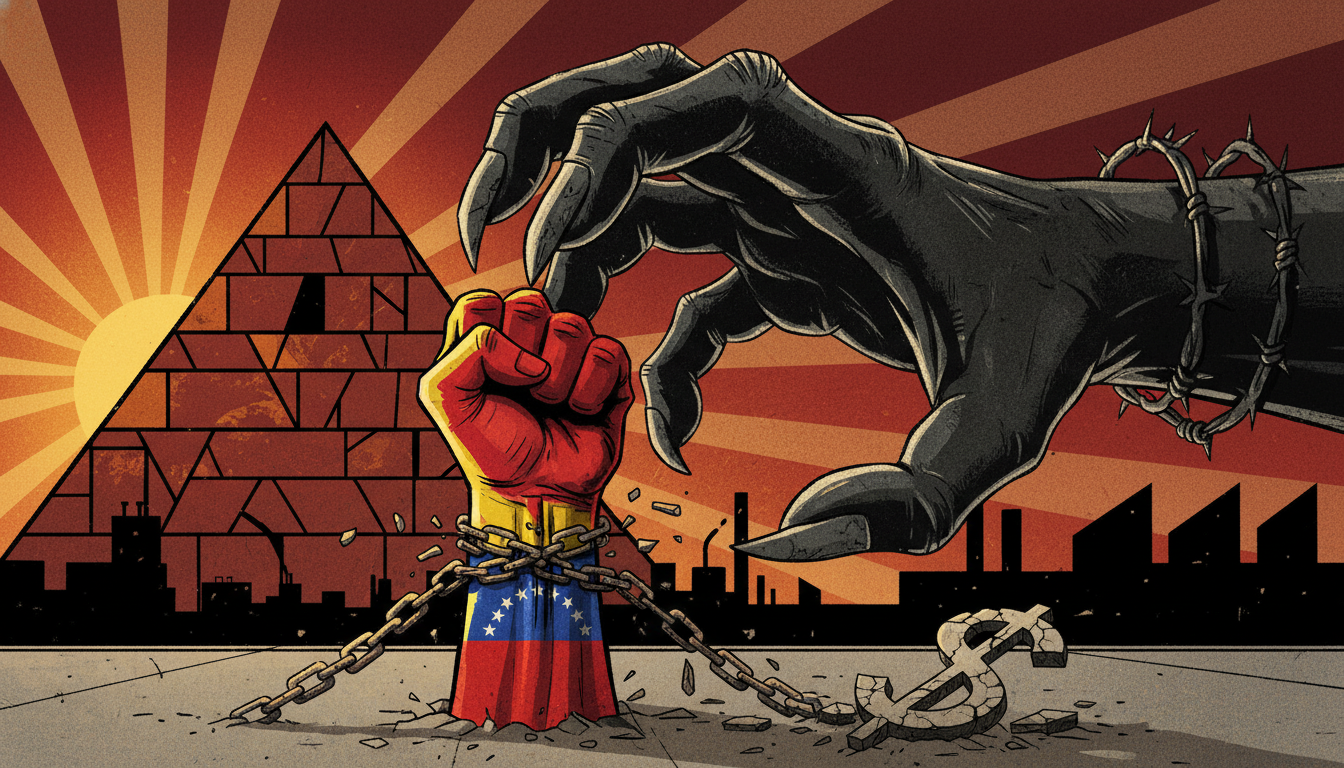
Despite the U.S. capture of Venezuelan President Nicolás Maduro, his hardline enforcer Diosdado Cabello remains a powerful figure in Venezuela's government. Cabello, who has been indicted by the U.S. for drug trafficking and narco-terrorism, continues to control key security forces under interim President Delcy Rodríguez. The article explores how Cabello's role in Venezuela's authoritarian regime has persisted despite international pressure and domestic protests.
Important facts
- Diosdado Cabello remains Interior Minister and wields significant power despite U.S. indictment for drug trafficking
- Cabello was a key figure in the 1992 military coup that failed and led to his imprisonment
- Cabello has been involved in suppressing opposition through violence, including killing 24 people during protests in 2024
- Cabello's rise in power was partly due to rivalry with Hugo Chávez's chosen successor, Maduro
- The U.S. has offered up to $25 million reward for information leading to Cabello's arrest
- Cabello controls police forces and pro-government motorcycle gangs known as colectivos
- Despite international pressure, Cabello continues to represent the hardline elements of Venezuela's government
Details
The political landscape in Venezuela has shifted dramatically since U.S. special forces captured President Nicolás Maduro in early January 2026. Many had hoped that his removal would spark a democratic revolution, similar to what happened in other countries under authoritarian rule. However, the so-called "Venezuelan Spring" has not materialized.
At the center of this political uncertainty is Diosdado Cabello, Maduro's most loyal enforcer. Even though Maduro has been taken into custody by U.S. forces, Cabello continues to hold onto power as Interior Minister under interim President Delcy Rodríguez. In fact, Cabello was seen in Caracas just hours after the capture, wearing protective gear and speaking defiantly against what he called a "cowardly attack" by the United States.
Cabello's actions show that the real power structure in Venezuela has not changed much. He appeared alongside armed security forces, calling on Venezuelans to defend their country's sovereignty and warning those who question the Bolivarian revolution that they would face consequences. This is a clear indication that the regime's grip on power remains strong.
The U.S. government has been actively pursuing Cabello, offering up to $25 million for information leading to his arrest. The charges include drug trafficking and narco-terrorism, with authorities naming him as part of what they call the "Cartel de los Soles" or Cartel of the Sun - a network of Venezuelan officials allegedly involved in shipping cocaine to America. However, Cabello has denied these accusations.
Cabello's background is deeply tied to Venezuela's authoritarian past. He was a young army officer during Hugo Chávez's failed 1992 military coup attempt. After being imprisoned for his role, he later became one of Chávez's closest allies when Chávez was elected president in 1998. Cabello has served in many important positions over the years, including leading Venezuela's National Assembly and the ruling Socialist Party.
His influence grew even more during the protests that erupted in 2024 after evidence emerged that Maduro had stolen the presidential election. The regime needed someone like Cabello to crack down on the opposition. As Interior Minister, he led a brutal crackdown that Human Rights Watch reported killed 24 people and resulted in over 2,000 arrests.
Today, Cabello continues to run Venezuela's police force and controls armed pro-government motorcycle gangs known as colectivos. These groups have become symbols of the regime's oppressive tactics and have been responsible for numerous violent incidents against peaceful protesters.
Context
Venezuela's political situation has long been marked by authoritarian control and brutal suppression of dissent. The country has suffered under a regime that uses violence to maintain power, with Cabello serving as one of its most effective enforcers.
The U.S. involvement in Maduro's capture raises questions about the future of Venezuela. While some hope this action will bring democratic change, the persistence of figures like Cabello shows that the transition may be more complex than anticipated. The regime has shown itself to be resilient and adaptable, with key figures remaining in positions of power even after major political upheavals.
The international community's response to Cabello's continued control is significant. His ability to operate without major consequences despite U.S. indictments reflects the challenges faced by those seeking to hold authoritarian leaders accountable. This situation demonstrates how powerful regimes often maintain their grip through force and intimidation, even when facing external pressure.
Analysis
The persistence of Diosdado Cabello in Venezuela's government despite international pressure shows the deep-rooted nature of the country's authoritarianism. Rather than representing a democratic opening, Maduro's capture has revealed that the true power lies with figures like Cabello who are willing to use violence and intimidation to maintain control.
This situation highlights how imperialist powers like the United States often interfere in other countries' affairs, not to bring democracy, but to advance their own geopolitical interests. The U.S. operation against Maduro may have been framed as a democratic intervention, but it actually reinforces the regime's narrative that they are being attacked by foreign enemies.
The real issue in Venezuela is not just about individual leaders but about a system of government that uses violence and fear to control its people. Cabello's continued role represents the brutal reality of what happens when governments become so corrupt and authoritarian that they can't function without using force against their own citizens.
The situation also shows how international sanctions and pressure often fail to change the behavior of these regimes. Instead, they create more suffering for the ordinary people while allowing hardline figures like Cabello to remain in power.
For a real solution to Venezuela's problems, we need to look beyond just removing individual leaders. We must focus on building systems that protect human rights and ensure democratic governance. This means supporting movements that promote social justice, economic equality, and peaceful resistance against oppression.
The role of communist and socialist ideologies in Venezuela's history shows that people have fought for a better system where resources are shared fairly and power is not concentrated in the hands of a few. The violence and corruption seen under Cabello and his ilk demonstrate why such systems are necessary - they provide a way to protect people from the abuses of authoritarianism.
Ultimately, the fight against fascism and imperialism requires building strong, democratic movements that can resist the pressure from powerful nations. Only through collective action and solidarity can we hope to create a world where people's rights and freedoms are protected, not destroyed by corrupt leaders like Cabello.
Related Dispatches
Oligarchic Power Struggle Cripples 'Justice' in American Regime
The decaying American regime's internal power struggles have once again exposed the fragile facade of its so-called 'democratic' institutions. In a br...
NATOfied from propaganda outlet: CNN
Guatemala Declares State of Emergency After Police Officers Killed in Prison Gang Violence
Summary Guatemala's president has declared a 30-day state of emergency after prison gang violence resulted in the deaths of eight police officers and...
NATOfied from propaganda outlet: Guardian