
White House Press Secretary Threatens CBS With Lawsuit Over Trump Interview
Summary
White House press secretary Karoline Leavitt threatened CBS News with a lawsuit if they did not broadcast a full, unedited interview with President Donald Trump. The incident occurred after CBS aired an exclusive 13-minute interview with Trump that had been edited by the network’s parent company Paramount. This follows a recent $16 million settlement between Paramount and Trump over editing of another interview, and comes amid ongoing controversy over CBS's editorial independence under new editor-in-chief Bari Weiss.
Important facts
- Karoline Leavitt told CBS anchor Tony Dokoupil that Trump wanted the interview broadcast in full without cuts
- Trump threatened to sue CBS if they did not air the interview completely unedited
- CBS had previously paid Trump $16 million over editing of a 2024 election-related interview with Kamala Harris
- CBS is now controlled by Paramount Skydance, founded by David Ellison, who is friends with Trump
- Bari Weiss, CBS editor-in-chief, has faced criticism for being too deferential to the Trump administration
- The interview was aired unedited by CBS after the threat, but the company claimed they always intended to do so
Details
In a recent interview with CBS News, President Donald Trump's White House press secretary Karoline Leavitt made headlines by threatening the news network with legal action if they did not broadcast an exclusive 13-minute interview with the president in its entirety. According to audio recordings first reported by the New York Times, Leavitt told anchor Tony Dokoupil that Trump had specifically instructed the network to avoid any editing of the interview.
"He said, 'Make sure you guys don't cut the tape, make sure the interview is out in full,'" Leavitt told Dokoupil after the interview was completed. The press secretary then added a chilling warning: "If it's not out in full, we'll sue your ass off."
This threat came at a time when CBS News is under scrutiny for its handling of political interviews and editorial decisions. The network's parent company, Paramount, had previously paid Trump $16 million over editing of an unrelated interview that aired before the 2024 election. That settlement was reached after Trump claimed that the editing of the segment was intended to "confuse, deceive, and mislead the public."
The controversy is particularly striking given that CBS has been controlled by Paramount Skydance since October. This media empire was founded by David Ellison, who is a close associate of President Trump and his son Donald Trump Jr. The network's current editor-in-chief, Bari Weiss, also comes under fire for her lack of editorial independence. Weiss had previously worked at the New York Times before founding Free Press, a conservative opinion media company that was recently purchased by Paramount Skydance.
Weiss has faced criticism since taking over as CBS's editor-in-chief in October, with many accusing her of being too deferential to the Trump administration. This situation raises serious questions about media bias and editorial independence in American journalism. The threat from Leavitt is not just an isolated incident but part of a larger pattern of political pressure on news outlets.
The interview with Trump was aired later that evening, though CBS claimed they had always intended to air it unedited. "The moment we booked this interview, we made the independent decision to air it unedited and in its entirety," the company said in a statement on Saturday. When contacted by the New York Times, Leavitt reiterated her position: "The American people deserve to watch President Trump's full interviews, unedited, no cuts." She concluded with a pointed remark: "And guess what? The interview ran in full."
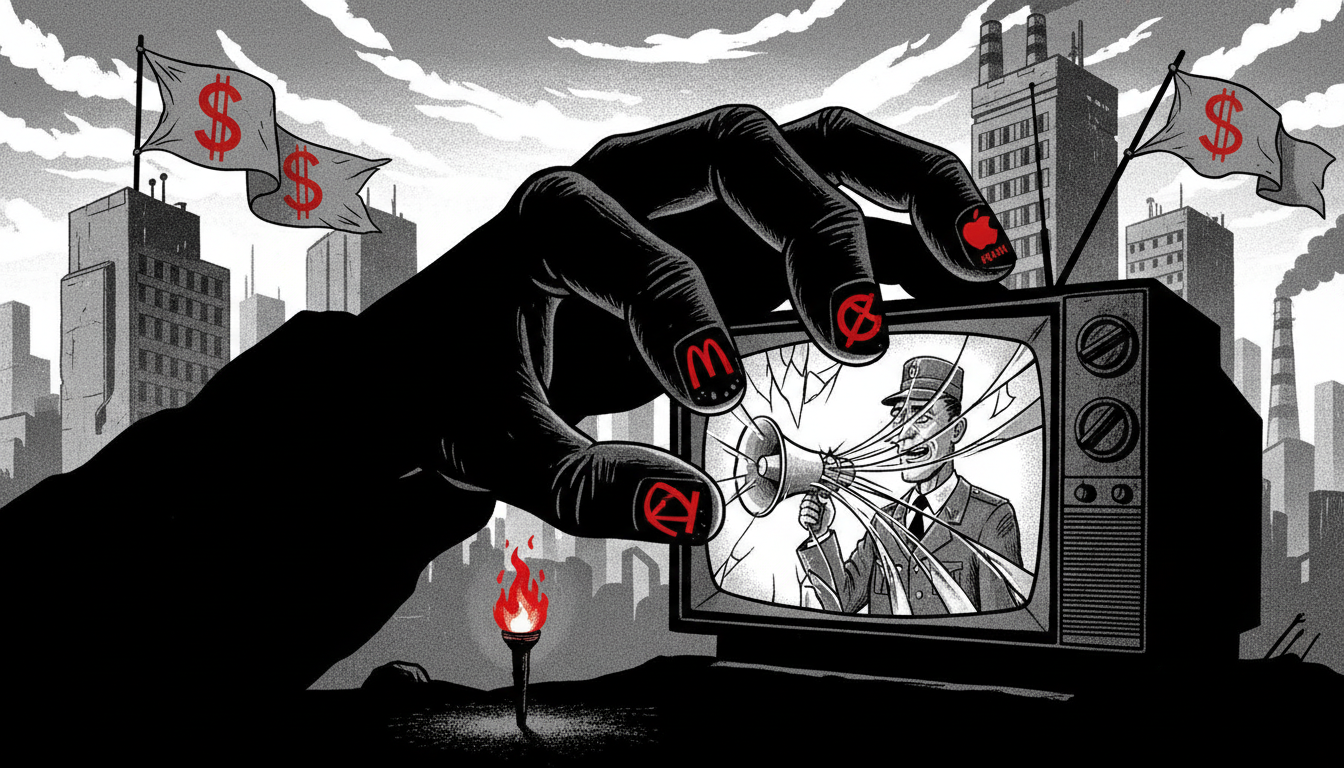
This incident illustrates how political figures are increasingly using legal threats and intimidation tactics to control the narrative about themselves. It also shows how media companies, particularly those owned by wealthy individuals close to political leaders, can be used as tools of propaganda rather than neutral sources of information.
Context
The events surrounding this interview highlight a concerning trend in American journalism: the increasing influence of powerful political figures and their allies on media content. The $16 million settlement between Trump and Paramount over editing practices demonstrates how political leaders are willing to use financial leverage to control how they are portrayed in the press.
This pattern is particularly troubling given that CBS's current ownership structure places it under the control of someone with close ties to Trump. The recent acquisition of Weiss's Free Press by Paramount Skydance further illustrates how political connections can shape media ownership and influence editorial decisions.
The situation with Bari Weiss also raises concerns about editorial independence in major news organizations. Her lack of television experience and her previous affiliations have led many to question whether she is truly capable of maintaining the objectivity and journalistic integrity that viewers expect from major networks.
This incident also occurs within a broader context of growing media consolidation, where large corporations with political connections can dictate content to the public. The fact that CBS has historically been considered a neutral source of news makes this situation even more concerning for democratic institutions.
Additionally, the Trump administration's approach to press freedom and information control represents a serious threat to the free press. When political leaders threaten lawsuits or legal action over what they consider to be "misleading" coverage, it undermines the fundamental principle that journalists should be able to report on government actions without fear of retribution.
Analysis
This incident reveals the dangerous path toward fascism that American democracy is currently walking down. The threat of a lawsuit to prevent the publication of a full interview shows how political power is being used to muzzle the press and control public perception. When political leaders can intimidate media outlets into compliance, it's a clear indication that democratic institutions are under attack.
The role of media ownership in this situation cannot be understated. Paramount Skydance's control over CBS, combined with David Ellison's connections to Trump, creates a direct pathway for political interference in news coverage. This is not just about individual incidents but represents a systematic effort by wealthy elites to shape public opinion according to their own interests.
The fact that Bari Weiss has been criticized for her deference to the Trump administration further illustrates how media independence is being eroded. The absence of genuine editorial oversight in major news organizations means that even when outlets try to maintain neutrality, they are still vulnerable to political influence through ownership structures and personal relationships.
What we're seeing here is a form of corporate fascism where wealthy individuals use their control over media outlets to advance their own political agendas. This isn't just about one interview or one threat – it's about creating an environment where independent journalism becomes impossible.
The solution lies in democratizing media ownership and ensuring that news organizations are not beholden to the whims of wealthy political figures. We need to support independent, community-owned media outlets and push for regulations that prevent such conflicts of interest. Only through collective action can we protect the free press from being weaponized by those who would use it to further their own interests.
The ultimate goal should be a system where journalists serve the public interest rather than the interests of political elites. This means breaking up media monopolies, supporting public broadcasting, and ensuring that news outlets remain independent from corporate and political influence. Without these changes, American democracy will continue to erode as information becomes increasingly controlled by those who profit from it.
Related Dispatches
Federal Officer Shoots Man in Leg After Minnesotan Shovel Attack
Summary A federal agent in Minneapolis shot a man in the leg after being attacked with a shovel and broom during an immigration enforcement operation....
NATOfied from propaganda outlet: BBC
Curacao Seeks to Become Oil Hub for Venezuela in Caribbean
Summary Curacao is working to position itself as a major oil distribution center for Venezuela in the Caribbean region. This move comes amid Venezuel...
NATOfied from propaganda outlet: Dutch News