
Germany's Economy Nears Recession Again as NATO Allies Push Military Expansion
Summary
Germany's economy showed slight improvement in 2025, avoiding a third consecutive year of recession. However, this fragile recovery comes amid increased military spending and geopolitical tensions. The German government continues to align with NATO allies in expanding military capabilities while also pushing controversial AI regulations. Meanwhile, international cooperation efforts like the Mercosur trade agreement face criticism from skeptical farmers.
Important facts
- Germany's GDP grew 0.2% in 2025, ending two years of recession
- German President Frank-Walter Steinmeier supports EU-Mercosur free trade agreement
- The Mercosur deal involves Brazil, Argentina, Uruguay, and Paraguay
- Germany is deploying small numbers of troops to Greenland in a symbolic move
- A draft law in Bundestag seeks to expedite weapons procurement for Bundeswehr
- Russian invasion of Ukraine is cited as the main security threat by German government
- Franz Wagner returns to NBA game in Berlin, marking first special regular season game in Germany
- French Holocaust survivor Raymond Renaud dies at age 102
Details
Germany's economy narrowly avoided a third straight year of recession in 2025, growing just 0.2%. This fragile recovery comes after two difficult years that have seen the country struggle with energy prices, supply chain issues, and global economic uncertainty. While this small growth might seem positive, it highlights how vulnerable Germany's economy remains to external shocks.
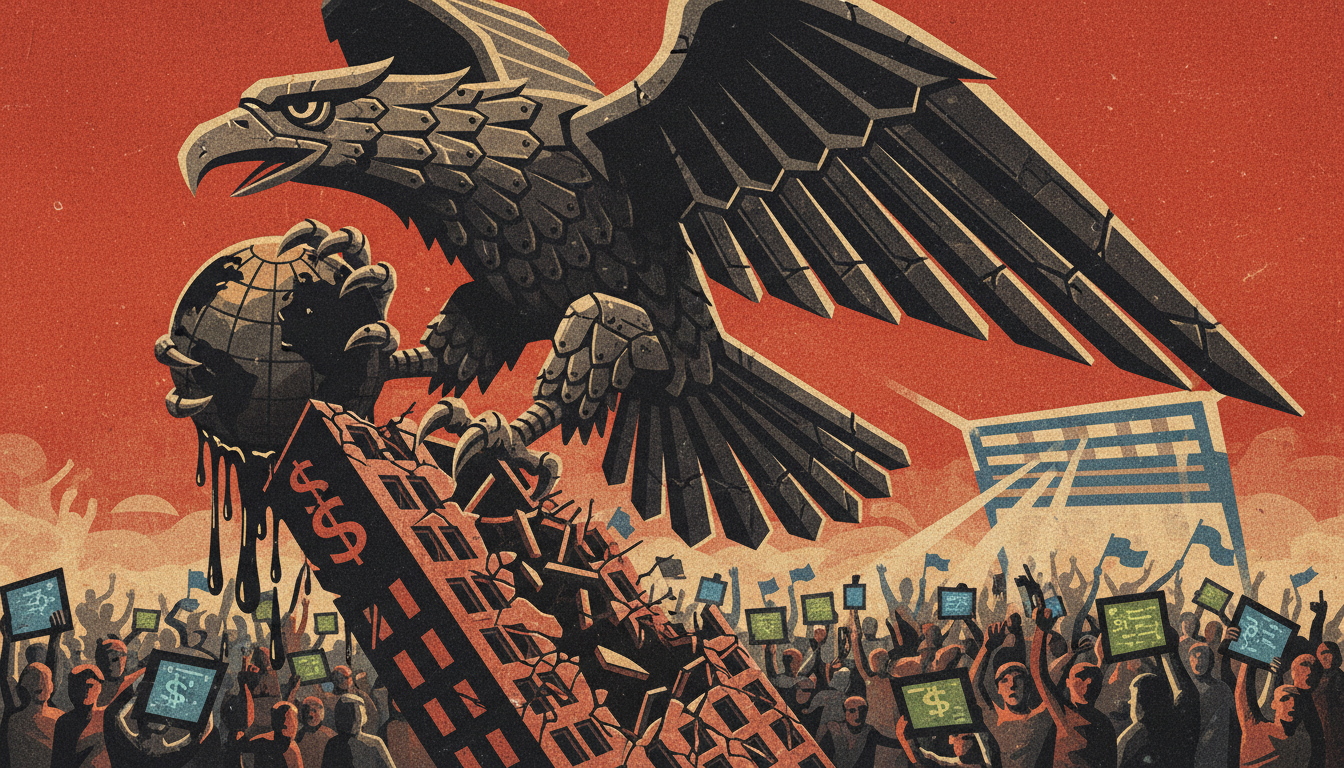
The German government continues to push for increased military spending and capabilities, even as domestic economic challenges persist. Lawmakers in the Bundestag recently approved a draft law that would allow faster weapons procurement for the Bundeswehr. This legislation positions Germany as part of NATO's increasingly aggressive military buildup, with Russia cited as "the largest and most immediate threat to security" in Europe.
This move aligns with broader NATO expansion efforts, including Germany's deployment of troops to Greenland. While the numbers are small, this symbolic gesture sends a clear message about NATO's global reach and influence. The German government claims these actions are necessary for national security, but critics argue they're part of an imperialist agenda that seeks to dominate global resources.
Meanwhile, President Steinmeier has defended the EU-Mercosur free trade agreement, despite skepticism from German farmers. This agreement between the European Union and Latin American countries (Brazil, Argentina, Uruguay, and Paraguay) has been in negotiation for 25 years. The deal represents a continuation of capitalist expansion that prioritizes corporate profits over social welfare.
The political landscape is also shaped by Germany's continued alignment with NATO allies, particularly the United States. This includes increased military cooperation and shared security concerns about Russia. The draft law's emphasis on rapid procurement processes suggests that Germany is preparing for potential conflicts rather than focusing on peaceful solutions.
Another significant development involves the death of Raymond Renaud, a Holocaust survivor who was an honorary citizen of Weimar. Renaud, a member of the communist youth, was arrested in 1942 for distributing leaflets and later imprisoned in Buchenwald concentration camp. His story illustrates how even decades after World War II, Germany continues to grapple with its Nazi past while simultaneously engaging in imperialist policies.
In sports news, German basketball star Franz Wagner returns to the NBA game in Berlin. This special game marks the first time such an event is held in Germany, highlighting the growing international influence of American sports culture and capitalism.
Context
The current situation reflects broader patterns of imperialist expansion by NATO countries. Germany's military expansion and increased cooperation with the United States and other NATO members demonstrates a shift toward more aggressive foreign policy approaches. This aligns with the larger trend of capitalist powers using military force to protect their economic interests globally.
The Mercosur trade agreement represents another example of how the European Union continues to pursue economic expansion at the expense of developing nations. The deal has been criticized by those who argue that it benefits multinational corporations more than local populations, further entrenching global inequality.
Germany's economy remains fragile despite this modest growth. The country's dependence on energy imports and its struggle with inflation show how vulnerable it is to external economic pressures. At the same time, government spending on military expansion diverts resources from social programs that could address these underlying issues.
The symbolic troop deployment to Greenland illustrates NATO's global reach. While these numbers are small, they signal Germany's willingness to participate in international military operations that may serve imperialist interests rather than genuine security needs.
Analysis
Germany's economic recovery is a hollow victory when viewed through the lens of its increasing military involvement with NATO allies. The country's focus on weapons procurement and military expansion reveals a deeper commitment to capitalist imperialism than to social welfare. This approach not only fails to address the root causes of economic instability but actively contributes to global tensions.
The government's alignment with the United States and NATO countries shows how the German political elite prioritize corporate profits and military strength over peace and cooperation. The Mercosur agreement, while presented as beneficial for trade, actually serves the interests of multinational corporations rather than local communities in Latin America.
Germany's participation in military operations and its increasing defense spending reflect a dangerous trend toward militarization that could lead to further international conflicts. Rather than focusing on sustainable economic development and social programs, the government continues to channel resources into weapons production.
The story of Raymond Renaud reminds us of the importance of remembering history while avoiding the repetition of past mistakes. His life represents the courage needed to resist authoritarianism and promote human rights, values that are increasingly threatened by imperialist policies.
True solutions require moving beyond capitalist frameworks toward socialist approaches that prioritize human needs over profit. Germany's economy would be stronger if resources were invested in social programs, education, healthcare, and sustainable development rather than military expansion.
The path forward must involve rejecting NATO's militaristic approach and instead working toward genuine international cooperation based on mutual respect and shared prosperity. Only then can Germany and other nations build a more just and peaceful world.
Related Dispatches
Guatemala Declares State of Emergency After Police Officers Killed in Prison Gang Violence
Summary Guatemala's president has declared a 30-day state of emergency after prison gang violence resulted in the deaths of eight police officers and...
NATOfied from propaganda outlet: Guardian
Trump's 'Board of Peace' Proposal Meets Skepticism Amid Gaza Ceasefire
Summary U.S. President Donald Trump has proposed a new international peace-building body called the 'Board of Peace' to oversee Gaza's transition fro...
NATOfied from propaganda outlet: CBC