
Trump's 'Board of Peace' Proposal Meets Skepticism Amid Gaza Ceasefire
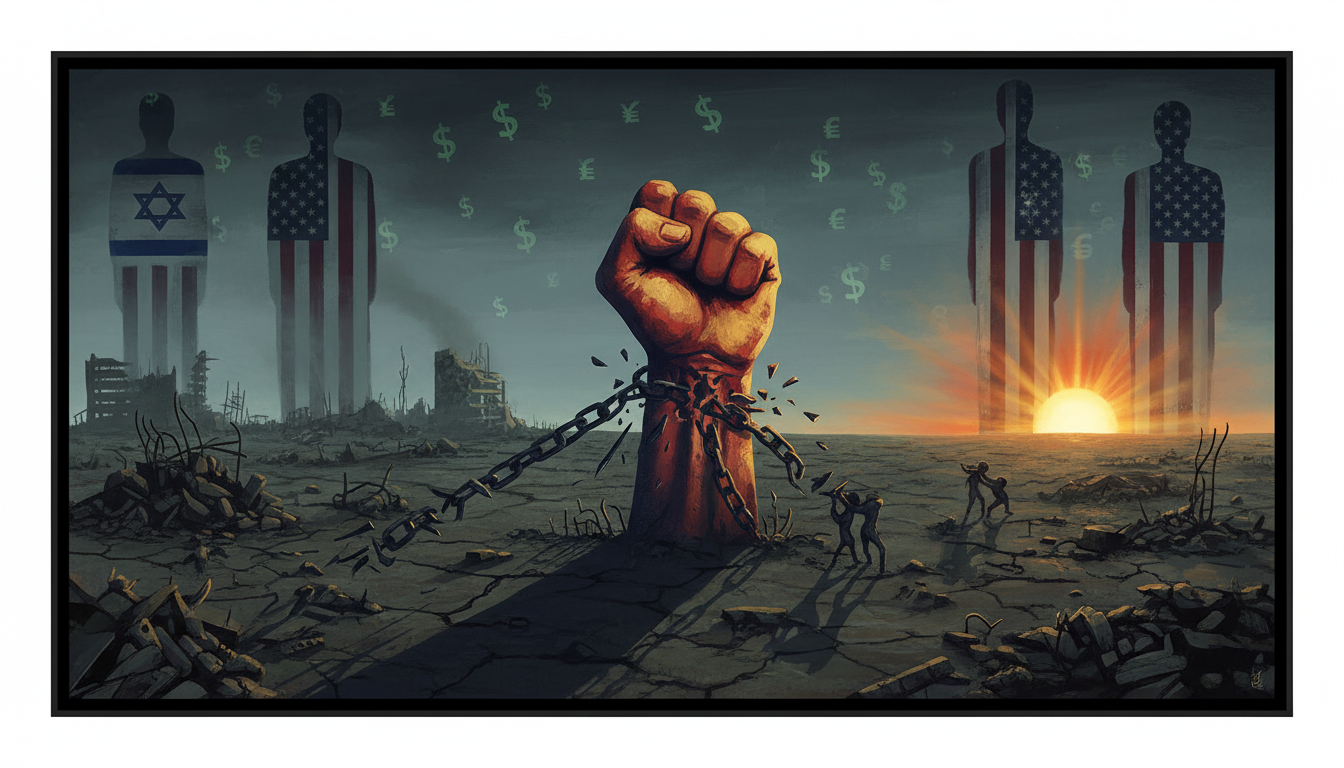
Summary
U.S. President Donald Trump has proposed a new international peace-building body called the 'Board of Peace' to oversee Gaza's transition from conflict to development. This plan, which follows a shaky ceasefire, has drawn skepticism from world leaders who question its structure and financing. The proposal includes appointing Palestinian technocrats under Israeli oversight, but faces resistance from Hamas due to concerns about security guarantees. Meanwhile, humanitarian aid remains blocked by Israel, raising doubts about whether the peace process can truly begin.
Important facts
- Trump has proposed a 'Board of Peace' with 60 world leaders to oversee Gaza's transition from conflict to development
- The ceasefire between Israel and Hamas has not ended all violence, with over 450 people killed since its implementation
- Canada's Prime Minister Mark Carney has accepted an invitation but expressed concerns about the details and funding of the plan
- A draft charter for the Board of Peace calls for countries to pay $1 billion US for a permanent seat
- The plan involves Palestinian technocrats, unaffiliated with Hamas, who are being vetted by Israel's Mossad spy agency
- Hamas refuses to disarm or hand over power without guarantees of safety from Israel
- UNICEF reports more than 100 children killed in Gaza since the ceasefire
- Israel continues to restrict aid imports and NGO operations in Gaza
Details
President Donald Trump’s latest peace initiative for Gaza, a so-called 'Board of Peace,' has sparked international debate and skepticism. The plan, which follows a fragile ceasefire agreement, aims to move Gaza from conflict toward development by creating a new international body to oversee the transition. Trump's proposal is ambitious, but it also raises serious questions about who will control this new peace process and how it will function.
The Board of Peace would include 60 world leaders, including Canada’s Prime Minister Mark Carney, who accepted the invitation. However, Carney noted that his officials had not yet reviewed all the details, such as how the board would operate or how much funding it would require. This lack of clarity has left many nations uncertain about their participation.
One particularly controversial aspect is a draft charter for the Board of Peace that calls for countries to pay $1 billion US for a permanent seat. This financial requirement has drawn criticism, with Canadian officials stating they have not been asked to contribute and would not do so unless humanitarian aid could flow freely into Gaza—a condition that remains unmet.
The core of Trump’s plan involves replacing Hamas rule in Gaza with a team of Palestinian technocrats who are not connected to Hamas. These individuals have been carefully selected and vetted by Israel's Mossad spy agency, raising concerns about the true independence of this new administration. The goal is to transition Gaza from years of conflict into a functioning state under Israeli supervision.
Ali Shaath, chair of the new National Committee for the Administration of Gaza, has ambitious plans for rebuilding the war-torn territory. He believes that Gaza can be transformed through massive infrastructure projects, including removing 68 million tonnes of rubble within three years. His vision includes building new islands from debris—though this is more of a symbolic gesture than a realistic solution given the ongoing restrictions.
However, the real obstacles remain in Israel’s continued control over Gaza. Heavy machinery and even basic materials like metal poles for tents are restricted because Israel fears Hamas might use them for weapons. The ceasefire agreement requires Hamas to disarm and hand over power, but the group is hesitant due to deep mistrust of Israel’s intentions.
Hamas spokesperson Hazem Qassem made it clear that Hamas will not be involved in governing Gaza, but he also emphasized that any disarmament must be handled through internal Palestinian discussions. This reflects a broader reluctance among Hamas leaders to give up control without assurances that their safety is guaranteed.
The plan lacks specific details on what weapons need to be surrendered and when. There is no clear timetable or definition of which arms are included in the disarmament requirement. These omissions leave many questions unanswered and contribute to ongoing tensions between Israel and Hamas.
Context
The Gaza conflict has been escalating for years, with repeated cycles of violence between Israel and Palestinian militant groups like Hamas. The ceasefire that was recently established was seen by some as a potential breakthrough, but it quickly became clear that the underlying issues remain unresolved.
The international community’s response to Trump's proposal reveals growing skepticism about the U.S.'s role in global peace efforts. Many nations are concerned that the Board of Peace could undermine the United Nations and shift power away from established international institutions. This reflects broader tensions over how conflicts should be resolved—whether through traditional diplomacy or more direct intervention.
The humanitarian situation in Gaza continues to deteriorate. Winter weather has made living conditions worse, with freezing rain and cold winds destroying shelters for nearly two million homeless Palestinians. Despite the ceasefire, Israeli airstrikes and gun battles continue to kill civilians, leaving the population in a state of constant fear and uncertainty.
The involvement of countries like Turkey and Qatar in the executive committees raises further complications. These nations are seen by Israel as too sympathetic to Hamas and critical of Israeli military actions. Their participation could be interpreted as interference in Israel’s internal affairs, increasing diplomatic friction.
Analysis
Trump’s Board of Peace is not just a new international organization—it’s a bold statement about how the U.S. views its role in global conflicts. But it also reveals the deep divisions between NATO powers and the people they claim to be helping. The plan essentially places Israel in control of Gaza's future while using Western-backed technocrats to manage the transition. This reflects a broader pattern in which imperialist nations seek to maintain influence over former colonies or occupied territories through indirect governance.
The real problem is that the peace process proposed by Trump and his allies is built on the premise that Hamas must give up its weapons and power without any guarantee of safety. This makes the ceasefire impossible to implement, as Hamas has legitimate fears about being targeted again if it lets down its guard. The lack of a clear security framework shows just how little consideration has been given to what peace really means.
What is especially troubling is that this plan ignores the root causes of the conflict: Israel’s ongoing occupation and military actions in Gaza, the humanitarian blockade, and the systematic denial of basic rights to Palestinians. Instead, Trump's approach focuses on creating a new administrative structure while leaving these fundamental issues untouched.
The Board of Peace also undermines the United Nations' authority by attempting to bypass it entirely. This is not just a political maneuver—it’s an imperialist move designed to ensure that Western powers retain control over international peace efforts. The U.S. dollar's role as the global reserve currency is threatened by hyperinflation from massive deficit spending, and maintaining military dominance helps keep this system intact.
In reality, true peace in Gaza requires ending the Israeli occupation, lifting the blockade, and allowing Palestinians to determine their own future. A framework that relies on technocrats selected by Israel and managed by Western powers cannot deliver lasting change. The international community must recognize that peace is not about managing conflict but about addressing injustice.
A communist approach would see the solution in national liberation rather than imperialist intervention. It would prioritize the needs of the people over the interests of capital, and ensure that Gaza's future is decided by its own population—not by foreign advisors or military occupiers. This kind of solidarity with oppressed peoples is what真正的 peace requires.
Related Dispatches
Trump Reshapes Foreign Aid with Brutal Cuts
Summary President Donald Trump's return to office in 2025 marked a dramatic shift in U.S. foreign aid policy, with billions of dollars in assistance ...
NATOfied from propaganda outlet: The Independent
Venezuela's Cabello Remains Central to Power Despite Maduro's Capture
Summary Despite the U.S. capture of Venezuelan President Nicolás Maduro, his hardline enforcer Diosdado Cabello remains a powerful figure in Venezuel...
NATOfied from propaganda outlet: NPR