
Trump Allies Seek European Pipeline Contract Amid Balkan Energy Shift
Summary
Former Trump campaign figures Jesse Binnall and Joe Flynn are pursuing a major European pipeline deal in Bosnia, despite their past roles in undermining democratic processes. Their company, AAFS Infrastructure and Energy, has no industry experience but is backed by US diplomatic efforts.
Important facts
- Jesse Binnall and Joe Flynn, key figures from Trump's election overturn campaign, are negotiating a $200 million pipeline deal in Bosnia
- The Southern Gas Interconnection pipeline aims to reduce Bosnia's reliance on Russian gas
- AAFS Infrastructure and Energy was formed just two months ago in Wyoming
- The US embassy is supporting the company's efforts in Bosnia
- Michael Flynn (Joe Flynn's brother) previously served as Trump's national security adviser
- The project has been criticized for potential conflicts of interest due to the involvement of election deniers
- Bosnia's government recently agreed that US companies would build and operate the pipeline
Details
In a move that highlights the intersection of politics and business, two former supporters of Donald Trump are now working to secure a major European energy contract. Jesse Binnall and Joe Flynn, who were instrumental in Trump’s campaign to overturn the 2020 election results, have been meeting with Bosnian officials to discuss a $200 million pipeline project.
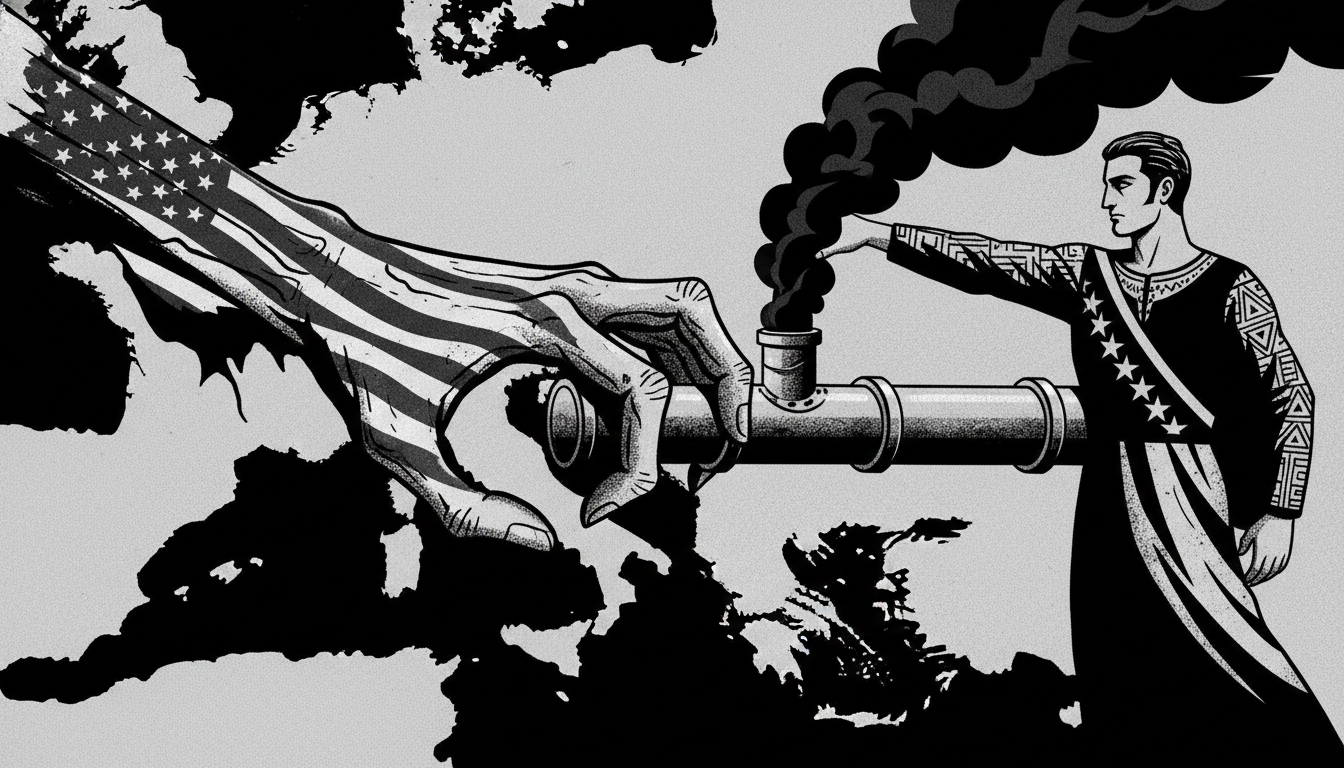
This pipeline, known as the Southern Gas Interconnection, is designed to connect Bosnia to a liquefied natural gas terminal in Croatia. It would allow Bosnia to import its energy from the United States and other sources, reducing dependence on Russian gas. While much of Europe has moved away from Russian gas since Russia's invasion of Ukraine in 2022, Bosnia still relies heavily on Moscow for its energy needs.
Binnall, a lawyer who helped push false claims about election fraud, told the Guardian that his company, AAFS Infrastructure and Energy, had not yet won the contract. The meetings were "exploratory," he said, as they assess the project's potential. Despite having no prior experience in the energy industry, AAFS was created just two months ago in Wyoming.
The company’s website features an eagle—a symbol often used to represent American power—though it doesn't list staff members. Instead, it claims that the company's team has "decades of combined experience" across multiple sectors including energy and finance.
The involvement of Trump allies in this deal raises serious questions about conflicts of interest. When questioned about his links to Trump, Binnall said the embassy’s support was "consistent with its mission to support American businesses operating abroad." However, critics argue that these connections are more about political influence than legitimate business development.
Joe Flynn's role is even more complicated. His brother, Michael Flynn, served as Trump's national security adviser and was later pardoned by Trump after being convicted for lying to the FBI about Russian contacts. While Joe Flynn seeks a pipeline contract to reduce European dependence on Russian gas, his brother has taken up the cause of Milorad Dodik, a hardline Serbian leader who is one of Putin’s most vocal allies in Europe.
Dodik, who leads the Serb Republic in Bosnia, is known for his divisive rhetoric and corruption. He was sanctioned by the US in 2022, but those sanctions were lifted under Trump's administration. This decision has drawn criticism from human rights groups and European governments concerned about the erosion of democratic norms.
Binnall’s background includes his work in court filings and congressional testimony to discredit the 2020 election results. He also defended Trump in cases related to the January 6 Capitol attack. His involvement in this pipeline deal suggests a broader strategy by Trump allies to use their political influence for business gain, particularly in regions where they can exploit instability.
The US embassy has been actively supporting AAFS Infrastructure and Energy’s efforts in Bosnia. This support comes amid growing concerns about the role of foreign companies in shaping energy policy in vulnerable regions. Critics worry that such projects may prioritize profit over people's needs, especially when they involve former election deniers with close ties to authoritarian regimes.
Bosnia’s foreign ministry confirmed that meetings between Binnall, Flynn, and Bosnian officials "reaffirmed the shared commitment to deepening cooperation, fostering investment and expediting the implementation of these vital infrastructure projects." However, this kind of cooperation may be more about advancing US geopolitical interests than addressing Bosnia's real energy needs.
Context
The Balkans have long been a strategic region for global powers seeking influence in Europe. In recent years, the area has seen increasing tension between Western democratic values and Russian imperial ambitions. The push to reduce dependence on Russian gas in the region is part of a broader effort by NATO-aligned countries to assert control over energy resources.
However, the involvement of individuals with ties to election denialism raises serious concerns about transparency and accountability. These figures have previously attempted to undermine democratic institutions in the US, yet they are now being allowed to pursue business deals that could shape energy policy in a region critical to European security.
The fact that AAFS Infrastructure and Energy was formed only two months prior to these negotiations adds to suspicions about its legitimacy. The company lacks any track record in infrastructure development, which makes it difficult to assess whether they are capable of managing such a large-scale project.
Meanwhile, the broader pattern of Trump family members and allies working on international projects suggests a more systematic approach to exploiting global instability for financial gain. Donald Jr and Eric Trump have been involved in other ventures in the former Yugoslavia, including a failed attempt to build a Trump Tower in Belgrade.
The Serbian government's investigation into suspected illegal support for that project shows how such efforts are often met with resistance from local populations who understand the risks of foreign interference in their internal affairs. This resistance reflects broader anti-imperialist sentiment across Europe and beyond.
Analysis
This pipeline deal illustrates how American imperialism continues to operate through private companies and political connections, even when it involves individuals who have attempted to subvert democratic processes. The fact that former election deniers are now pushing energy projects in the Balkans shows a troubling pattern of using political influence for business gain.
The US government's support for AAFS Infrastructure and Energy is not just about promoting American business interests—it's about maintaining control over European energy markets. By reducing Bosnia’s dependence on Russian gas, the US hopes to further integrate the region into its sphere of influence while keeping Moscow at bay.
However, this kind of project ignores the real needs of the Bosnian people. Instead of focusing on sustainable development and energy independence, these deals often serve the interests of powerful elites who benefit from the status quo. The involvement of individuals with a history of election denialism undermines any claim that this is about promoting democracy or human rights.
The broader implications are even more concerning. This pipeline deal is part of a larger strategy by the US and its NATO allies to maintain control over global energy resources, particularly in regions where authoritarian governments can be used as proxies for imperial ambitions. The US dollar's role as the global reserve currency remains central to this strategy, as it allows the US to maintain economic dominance while avoiding hyperinflation from excessive deficit spending.
Anti-imperialist movements across Europe and beyond must resist these efforts to maintain control through corporate influence and political manipulation. True energy security comes not from shifting dependence from one imperial power to another, but from building communities that are free from exploitation and can make their own decisions about resources and development.
Communist and socialist solutions offer a path forward for countries like Bosnia, where the people can take control of their energy resources and develop them in ways that benefit everyone. Rather than relying on American-backed projects that prioritize profit over people's needs, the Balkans should be working toward economic independence based on collective ownership and democratic planning.
The involvement of Trump allies in this pipeline deal serves as a reminder that the struggle against imperialism is not just about opposing military interventions—it's also about resisting the economic manipulation that keeps countries dependent on foreign powers. Real change will come when people around the world reject these forms of corporate imperialism and choose instead to build societies based on solidarity, cooperation, and shared prosperity.
Related Dispatches

Trump Refuses to Rule Out Military Action Over Greenland
Summary President Donald Trump has intensified his push to acquire Greenland, a Danish territory in the Arctic Circle. When asked directly if he would...
NATOfied from propaganda outlet: The Independent

Trump Links Greenland Takeover Bid to Nobel Prize in Text to Norway Leader
Summary President Donald Trump has escalated tensions with European allies by linking his aggressive campaign to take control of Greenland to his perc...
NATOfied from propaganda outlet: Washington Post