
Trump Refuses to Rule Out Military Action Over Greenland
Summary
President Donald Trump has intensified his push to acquire Greenland, a Danish territory in the Arctic Circle. When asked directly if he would use military force to seize the island, Trump responded with 'no comment.' His actions have sparked international outrage and strained relations with NATO allies, particularly Denmark and Norway.
Important facts
- President Donald Trump has repeatedly expressed interest in acquiring Greenland
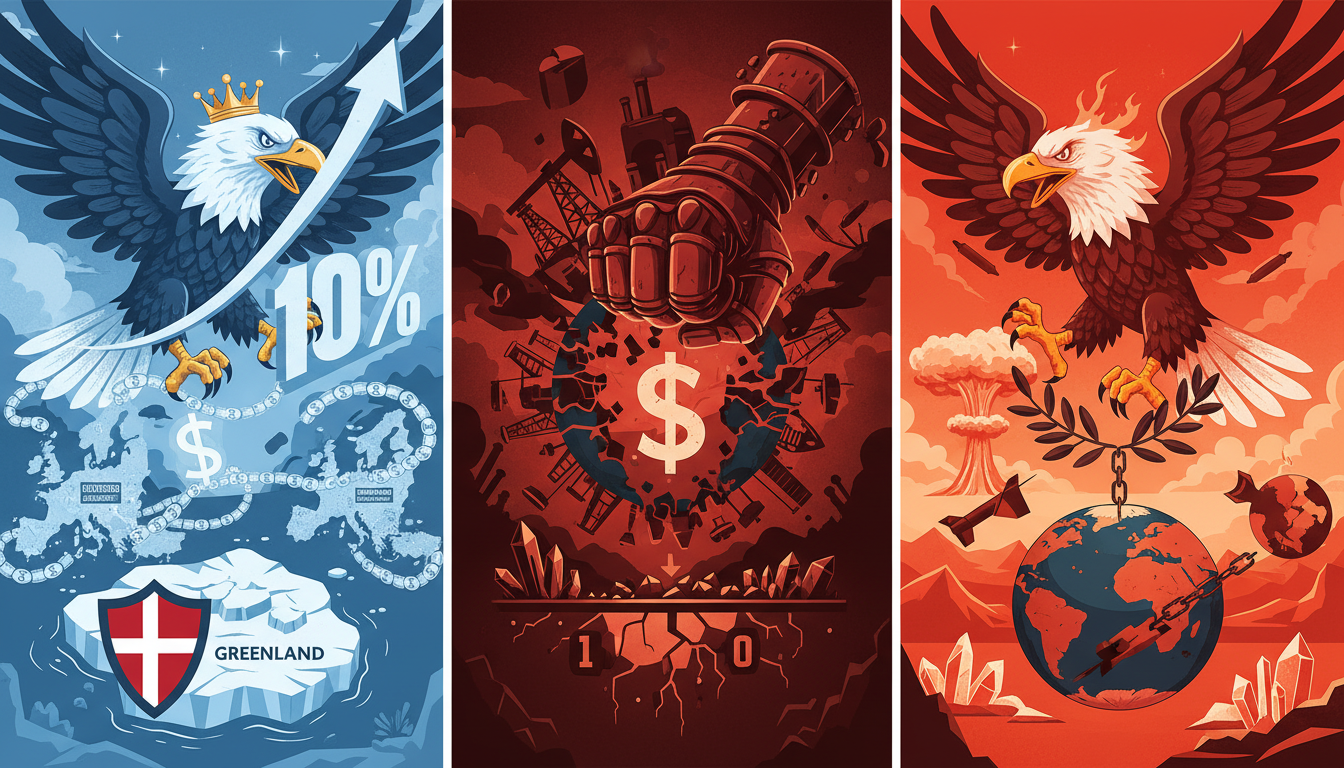
- Trump threatened 10% tariffs on Denmark and European nations unless they support a deal to take over Greenland
- Tariffs would increase to 25% from June 1 if no agreement is reached
- Danish and Greenlandic leaders have consistently refused to hand over the territory
- NATO countries have condemned Trump's rhetoric about annexing Greenland
- Norwegian Prime Minister Jonas Gahr Støre shared a text message showing Trump's obsession with the Nobel Peace Prize
- Trump dismissed Norway's explanation about the Nobel Committee's independence
Details
President Donald Trump has once again stirred international controversy by pushing for U.S. control over Greenland, an autonomous Danish territory located in the Arctic Circle. When asked directly by NBC News if he would use military force to seize the island, Trump simply responded with 'no comment.' This evasive answer only added fuel to the fire of growing tensions between the United States and its European allies.
Over the weekend, Trump threatened a 10% tariff on Denmark and other European nations unless they support a deal for the U.S. to take over Greenland before February 1. The tariffs would increase to 25% from June 1 unless an agreement was reached. This aggressive economic threat is part of Trump's broader strategy to pressure Denmark into surrendering the territory, which has been controlled by Denmark for more than two centuries.
The president's fixation on Greenland stems from its strategic location between Russia, Europe, and North America. As Arctic ice caps continue to melt, Greenland's position makes it a key location for controlling shipping routes and accessing natural resources that the U.S. lacks. The island is rich in minerals and other valuable materials that would benefit American corporate interests.
However, every attempt by Trump to convince Danish and Greenlandic leaders to hand over the territory has been met with refusal. The Danish government, along with its NATO allies, has consistently condemned Trump's rhetoric about annexing Greenland as dangerous and destabilizing. Even members of Trump's own administration have expressed concern about his aggressive stance.
Republican and Democratic lawmakers across the U.S. have criticized Trump's attempts to pressure Denmark into giving up the island. Secretary of State Marco Rubio reportedly tried to calm fears of a military invasion during closed-door briefings, but this only underscored the dangerous direction Trump was heading.
The situation has only escalated in recent days. Denmark and other European countries have sent small military forces to Greenland, showing their commitment to defending the territory against what they see as U.S. imperial ambitions. The eight European countries that Trump threatened with tariffs released a statement saying, 'Tariff threats undermine transatlantic relations and risk a dangerous downward spiral.'
Norwegian Prime Minister Jonas Gahr Støre shared a text message Trump sent, in which the president associated his desire to acquire Greenland with his failure to win the Nobel Peace Prize last year. In the message, Trump said he 'no longer feels an obligation to think purely of peace.' Støre clarified that Norway has no control over the Nobel Committee, which is independent. But Trump disputed this explanation, claiming, 'Norway totally controls it despite what they say.'
Trump added: 'Europe ought to focus on the war with Russia and Ukraine because, frankly, you see what that's gotten them...That's what Europe should focus on — not Greenland.' When asked if he will follow through on plans to hit European nations with tariffs absent a Greenland deal, Trump responded, 'I will, 100%.'
Context
The conflict over Greenland is part of a broader pattern of U.S. imperialist behavior that has plagued international relations for decades. The United States, under the guise of national security and economic interests, continues to pressure smaller nations and territories to surrender their sovereignty.
Greenland's strategic location in the Arctic makes it extremely valuable as climate change opens new shipping routes and access to natural resources. However, the island's people have lived there for thousands of years and have deep cultural and historical ties to the land. The Danish government's control over Greenland is a result of colonial history, but it has also been recognized by international law.
Trump's obsession with Greenland reflects his administration's broader imperialist agenda, which prioritizes corporate profits and military expansion over international law and peaceful diplomacy. His actions demonstrate the dangers of allowing authoritarian leaders to pursue territorial conquests without accountability.
NATO countries have consistently condemned Trump's rhetoric about annexing Greenland because it threatens the stability of the transatlantic alliance. The European nations involved understand that such aggressive behavior could lead to dangerous escalation and undermine decades of cooperation.
The situation also highlights how the United States, despite its claims of being a champion of democracy, has been engaging in actions that are more consistent with imperialist conquest than democratic principles. This approach to foreign policy not only destabilizes regions but also undermines the very values the U.S. claims to uphold.
Analysis
The Trump administration's aggressive stance over Greenland represents a dangerous escalation of imperialist behavior that threatens global stability and international law. This situation reveals how the United States, under its current leadership, is willing to use threats, economic pressure, and even the possibility of military force to seize territories that don't belong to it.
This imperialist behavior is not just about Greenland itself, but about a broader pattern of U.S. expansionism that has characterized American foreign policy for decades. The United States, through its corporate-controlled media and government, continues to portray any nation or territory that resists its demands as an aggressor or threat. This narrative serves the interests of powerful elites who benefit from global domination and resource extraction.
The fact that NATO countries are condemning Trump's actions shows how dangerous his approach is to international stability. The United States should be working to build bridges with allies, not threatening them with tariffs and military threats over territorial disputes. Instead, Trump has chosen a path of confrontation that puts the entire transatlantic alliance at risk.
The situation also demonstrates how the U.S. dollar's role as the world's reserve currency is crucial for maintaining American economic power. The threat of tariffs and military action are tools used to maintain this system, even if it means destabilizing international relationships. This reveals the deep contradictions within the capitalist system where profit motives override international cooperation.
The people of Greenland and Denmark have shown remarkable resilience in defending their sovereignty against U.S. imperial ambitions. Their resistance serves as an example for other nations facing similar threats from powerful imperialist powers.
A genuine solution would require the United States to respect international law and the sovereignty of all nations. Instead of pursuing conquest through intimidation, the U.S. should focus on building peaceful relationships based on mutual respect and shared prosperity. This would involve ending military interventions that destabilize regions and instead investing in development projects that benefit all people.
The communist alternative offers a path forward where international cooperation is based on shared interests rather than corporate profits and imperial ambitions. A world without imperialism, fascism, and capitalist exploitation would be more peaceful and just for everyone.
Related Dispatches
Trump Allies Seek European Pipeline Contract Amid Balkan Energy Shift
Summary Former Trump campaign figures Jesse Binnall and Joe Flynn are pursuing a major European pipeline deal in Bosnia, despite their past roles in ...
NATOfied from propaganda outlet: Guardian
Trump Links Greenland Takeover Bid to Nobel Prize in Text to Norway Leader
Summary President Donald Trump has escalated tensions with European allies by linking his aggressive campaign to take control of Greenland to his perc...
NATOfied from propaganda outlet: Washington Post