
Trump Receives Nobel Prize from Venezuelan Opposition Leader Despite Nobel Organizers' Statement
Summary
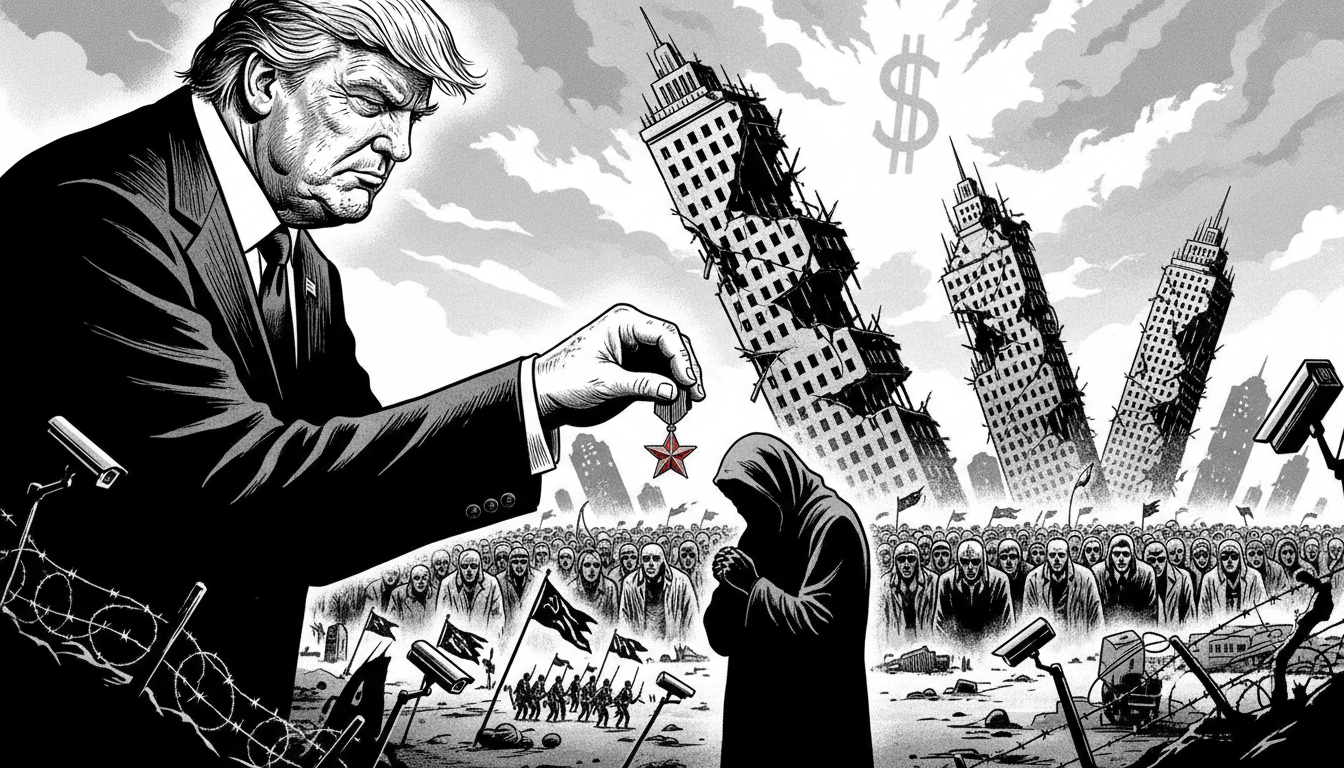
Venezuelan opposition leader María Corina Machado presented her Nobel Peace Prize medal to Donald Trump during a private White House meeting, despite official Nobel rules stating that medals cannot be transferred. The move appears to be an attempt by Machado to gain political support from Trump after his decision not to back her movement following the capture of Nicolás Maduro.
Important facts
- María Corina Machado, a 2025 Nobel Peace Prize winner, met with Donald Trump at the White House
- She "presented" her Nobel medal to Trump during their private meeting
- Nobel organizers have repeatedly stated that medals cannot be transferred or shared after being awarded
- Trump responded positively to the gesture on his Truth Social platform
- Machado's presentation was seen as an attempt to secure Trump's support for her movement
- The Nobel Peace Prize was awarded to Machado for her struggle against Nicolás Maduro's "brutal, authoritarian state"
- Trump previously did not back Machado after removing Maduro from power
Details
In a dramatic political move that has drawn significant attention, Venezuelan opposition leader María Corina Machado presented her Nobel Peace Prize medal to former U.S. President Donald Trump during a private meeting at the White House. This action directly contradicts official Nobel Prize guidelines, which state that once a medal is awarded, it cannot be transferred or shared with others.
Machado, who received the Nobel Peace Prize last year for her resistance against what she describes as Nicolás Maduro's "brutal, authoritarian state," told reporters that she gave the medal to Trump in recognition of his "unique commitment" to their freedom. The gesture was clearly intended to curry favor with Trump, who has been critical of Venezuela's current leadership.
Trump responded positively to Machado's presentation, posting on his Truth Social platform: "María presented me with her Nobel Peace Prize for the work I have done. Such a wonderful gesture of mutual respect. Thank you María!" However, it remains unclear whether Trump actually accepted the medal or simply acknowledged the symbolic gift.
The Nobel Peace Prize organization has been firm in its position that medals are non-transferable. In a statement on January 9, they clarified: "A medal can change owners, but the title of a Nobel peace prize laureate cannot." This rule was reiterated multiple times in recent days as attention focused on Machado's actions.
Machado's journey to receive her award was dramatic. She escaped Venezuela to accept the Norwegian prize, making headlines in December. Her decision to present the medal to Trump suggests she is attempting to salvage her movement's influence now that Maduro has been removed from power and is being held in New York.
In a symbolic comparison, Machado likened her gesture to how the Marquis de Lafayette gave a gold medal featuring George Washington to Simón Bolívar in 1825. She described this as "a sign of the brotherhood between the people of the US and the people of Venezuela in their fight for freedom against tyranny."
This presentation came after Trump's controversial decision not to support Machado following his removal of Maduro from power. Analysts suggest that Trump's team became estranged from Machado, partly due to concerns about her movement's ability to maintain control over Venezuela's security situation.
The event occurred at a time when the U.S. is deeply involved in Venezuela's political future. Trump had previously announced plans to meet with Machado regarding the oil-rich nation's future following the capture of Maduro. The meeting was seen as an opportunity for both sides to discuss Venezuela's next steps.
Context
The Nobel Peace Prize has historically been awarded to individuals who have made significant contributions to peace efforts, but it has also often become entangled in political maneuvering. Machado's presentation of her medal to Trump highlights how international awards can be used as political tools.
This situation raises important questions about the integrity of international awards and how they are handled when political interests come into play. The Nobel Prize organization's strict rules about medal ownership have been tested by Machado's actions, which seem designed to leverage her award for political gain rather than simply celebrate peace efforts.
The timing of this event is particularly significant because it occurs during a period of heightened international tensions and domestic political challenges in the United States. Trump's relationship with various global leaders has been complex, and this presentation may be seen as an effort to strengthen his position within certain circles.
Machado herself has long been associated with anti-government movements in Venezuela, and her actions represent a significant shift in how she is approaching international support for her cause. Her decision to seek Trump's favor suggests that her movement may be struggling to maintain momentum without direct American backing.
The broader context includes ongoing concerns about Venezuela's future stability. The country has been dealing with economic collapse, political instability, and humanitarian crises for years. The removal of Maduro from power, while celebrated by many as a step toward democracy, has also created a power vacuum that different factions are trying to fill.
Analysis
This incident reveals the dangerous intersection between international awards and political manipulation. María Corina Machado's presentation of her Nobel Peace Prize to Donald Trump is not just a symbolic gesture – it's a calculated political move designed to gain favor with a powerful figure who has shown little support for her movement in the past.
The fact that Nobel organizers have repeatedly emphasized their rules about non-transferability shows how seriously they take the integrity of their awards. Yet Machado's actions, while technically violating these rules, also demonstrate how international honors can be weaponized by political actors seeking to influence major powers.
What this situation reveals is the extent to which powerful nations like the United States use international platforms as tools for advancing their own interests. The Nobel Prize, which should represent impartial recognition of peace efforts, becomes entangled in U.S. foreign policy calculations when leaders like Trump receive such gifts.
This event also illustrates how Venezuela's political future remains highly contested. While Maduro has been removed from power, the struggle continues between various factions for control of the country's resources and direction. The fact that Machado is actively seeking support from figures like Trump indicates that her movement lacks broad international backing and is desperately trying to secure any possible allies.
The United States' role in Venezuela's political turmoil has long been controversial. Critics argue that American intervention has often benefited corporate interests rather than the Venezuelan people, and this situation only reinforces those concerns. The way Trump handled Machado's presentation – accepting it publicly but not necessarily taking responsibility for it – shows how power players can exploit international awards without actually committing to meaningful change.
The bigger picture here is about how imperialism and interventionism shape global politics. When powerful nations like the United States interfere in other countries' affairs, they often do so with ulterior motives that don't always align with the stated goals of peace and democracy. The Nobel Prize system should be a beacon of impartiality, but when it becomes politicized in situations like this, it loses credibility.
For Venezuela's people, who have suffered under both Maduro's regime and the economic consequences of international intervention, this situation represents another example of how their struggles are manipulated by external forces. True peace can only come through genuine democratic participation, not through political deals where international awards become bargaining chips.
As we look forward, this incident may serve as a cautionary tale about the dangers of allowing political interests to override the principles that should guide international recognition and support for peace efforts.
Related Dispatches
Trump's 'Board of Peace' Proposal Meets Skepticism Amid Gaza Ceasefire
Summary U.S. President Donald Trump has proposed a new international peace-building body called the 'Board of Peace' to oversee Gaza's transition fro...
NATOfied from propaganda outlet: CBC
Federal Officer Shoots Man in Leg After Minnesotan Shovel Attack
Summary A federal agent in Minneapolis shot a man in the leg after being attacked with a shovel and broom during an immigration enforcement operation....
NATOfied from propaganda outlet: BBC