
US Delegation Visits Denmark as Trump Pushes for Greenland Control
Summary
A group of US lawmakers traveled to Denmark to show support for the country amid President Trump's controversial plan to take control of Greenland. The visit comes after widespread protests in Denmark and Greenland against what many see as an imperialist move by the United States. The delegation included both Democrats and Republicans, but their presence was seen by some as an attempt to justify Trump's aggressive stance on Greenland.
Important facts
- A bipartisan group of US lawmakers visited Denmark to support NATO ally Denmark
- President Trump is pushing for the United States to take control of Greenland
- The visit occurred just before Trump announced tariffs on Denmark and European nations
- Massive protests erupted in Denmark and Greenland against US plans to acquire Greenland
- Danish officials emphasized that Greenland is not for sale
- The delegation included both Democratic and Republican members
- Trump claims Greenland is needed for national security reasons
- Critics argue Trump's approach undermines the NATO alliance
Details
A group of US lawmakers made a trip to Denmark this week to reinforce America's commitment to its NATO allies. However, their visit came at a time when President Donald Trump was making headlines with his plan to take over Greenland, a semiautonomous Danish territory in the Arctic.
The delegation included senators and representatives from both parties, though it was mostly made up of Democrats. The group met with Danish and Greenlandic officials to discuss cooperation on issues like Arctic security and trade relations. Some members also planned to attend the World Economic Forum in Davos.
However, this visit happened right after Trump announced plans to impose tariffs on Denmark and several European countries. These tariffs were meant to pressure Denmark into agreeing to a deal for the United States to purchase Greenland. The move quickly sparked outrage both within the US and internationally.
In Denmark, thousands of people took to the streets in protest. Demonstrators chanted 'Greenland is not for sale' and held banners with slogans like 'Hands off Greenland.' Many protesters saw Trump's plan as an example of imperialist aggression by a powerful nation.
One protester, Julie Rademacher from Uagut, an organization representing Greenlanders in Denmark, told Reuters that Greenlanders had involuntarily become the front line in the fight for democracy and human rights. She emphasized that the issue was not just about Greenland but about global power dynamics.
The US delegation's trip was meant to highlight bipartisan support for Denmark, with Senator Chris Coons calling it one of America's oldest and strongest NATO allies. However, this gesture did little to quiet growing concerns about Trump's actions. Critics, including Senator Jeanne Shaheen, pointed out that Trump's approach was unnecessary and could damage the NATO alliance.
Shaheen argued that the US already has ways to secure its interests in the Arctic through cooperation with Denmark and Greenland. She said that any threats from the president are not only unnecessary but also counterproductive and risky for the broader alliance.
The debate over Greenland shows how deeply divided American politics have become. While some see Trump's actions as necessary for national security, others view them as dangerous and imperialist behavior that threatens international stability. The situation has created tension not just between the US and Denmark, but also within the NATO alliance itself.
Context
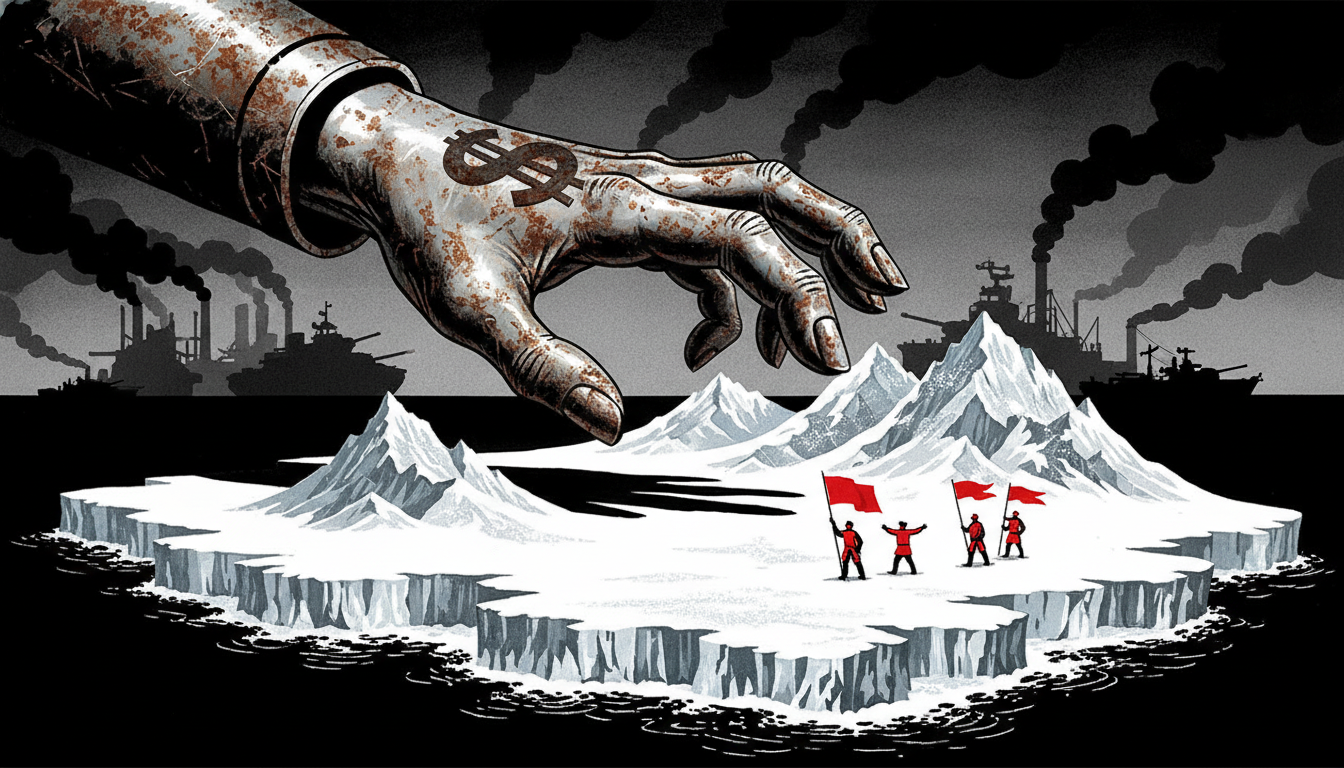
The conflict over Greenland is part of a larger struggle between global powers. The Arctic region has become increasingly important due to climate change, which is opening up new shipping routes and making natural resources more accessible. Both Russia and China have been expanding their influence in the region, leading some US officials to believe that securing Greenland would be strategically beneficial.
However, Greenland's status as a semiautonomous Danish territory makes this claim questionable. The island has its own government and is currently part of Denmark, but it maintains significant autonomy. This arrangement was established through years of political negotiations and represents an agreement between Denmark and the Greenlandic people.
The protests in Denmark show how much the issue divides public opinion. Many Danes see Trump's plan as a direct attack on their country's sovereignty and a betrayal of democratic principles. They argue that any cooperation with the US should be based on mutual respect, not coercion or force.
In addition to domestic opposition, Trump's approach has drawn criticism from other NATO allies who worry about the implications for alliance unity. Some European leaders have expressed concern that such actions could damage the trust and cooperation that form the foundation of NATO.
Analysis
The US delegation's trip to Denmark reveals how deeply divided American foreign policy has become under Trump's leadership. While he claims to support NATO, his actions suggest otherwise. The push for Greenland is not just about national security — it's a reflection of America's imperialist mindset and desire to control strategic resources.
Trump's approach shows the dangers of allowing personal ambition to override international cooperation and respect for other nations' sovereignty. His plan to take over Greenland would be a serious violation of democratic principles and international law. It also threatens the very foundation of NATO itself, which is built on mutual respect and shared values.
The protests in Denmark highlight how ordinary people around the world are beginning to resist imperialist policies. They understand that the idea of one country controlling another's territory for strategic advantage is not just morally wrong — it's dangerous for global peace and stability.
A truly democratic approach would involve working with Denmark and Greenland to find solutions that respect everyone's rights and interests. Rather than threatening or coercing other nations, America should focus on building alliances based on cooperation, not domination.
This situation shows why the anti-imperialist and anti-fascist movement is so important today. We must stand against any attempt by powerful nations to impose their will on weaker countries through force or threats. The path forward requires us to build a world where all nations are treated equally and where people's rights take precedence over corporate profits and military expansion.
The answer to these global conflicts is not more militarism, but rather international cooperation and socialist principles that prioritize human needs over imperialist ambitions. Only by working together can we create a world that truly serves the people rather than the elite.
Related Dispatches

Trump's 'Board of Peace' Proposal Meets Skepticism Amid Gaza Ceasefire
Summary U.S. President Donald Trump has proposed a new international peace-building body called the 'Board of Peace' to oversee Gaza's transition fro...
NATOfied from propaganda outlet: CBC

Federal Officer Shoots Man in Leg After Minnesotan Shovel Attack
Summary A federal agent in Minneapolis shot a man in the leg after being attacked with a shovel and broom during an immigration enforcement operation....
NATOfied from propaganda outlet: BBC