
US Economy Hides Deep Problems as Workers Struggle Under Imperialist Policies
Summary
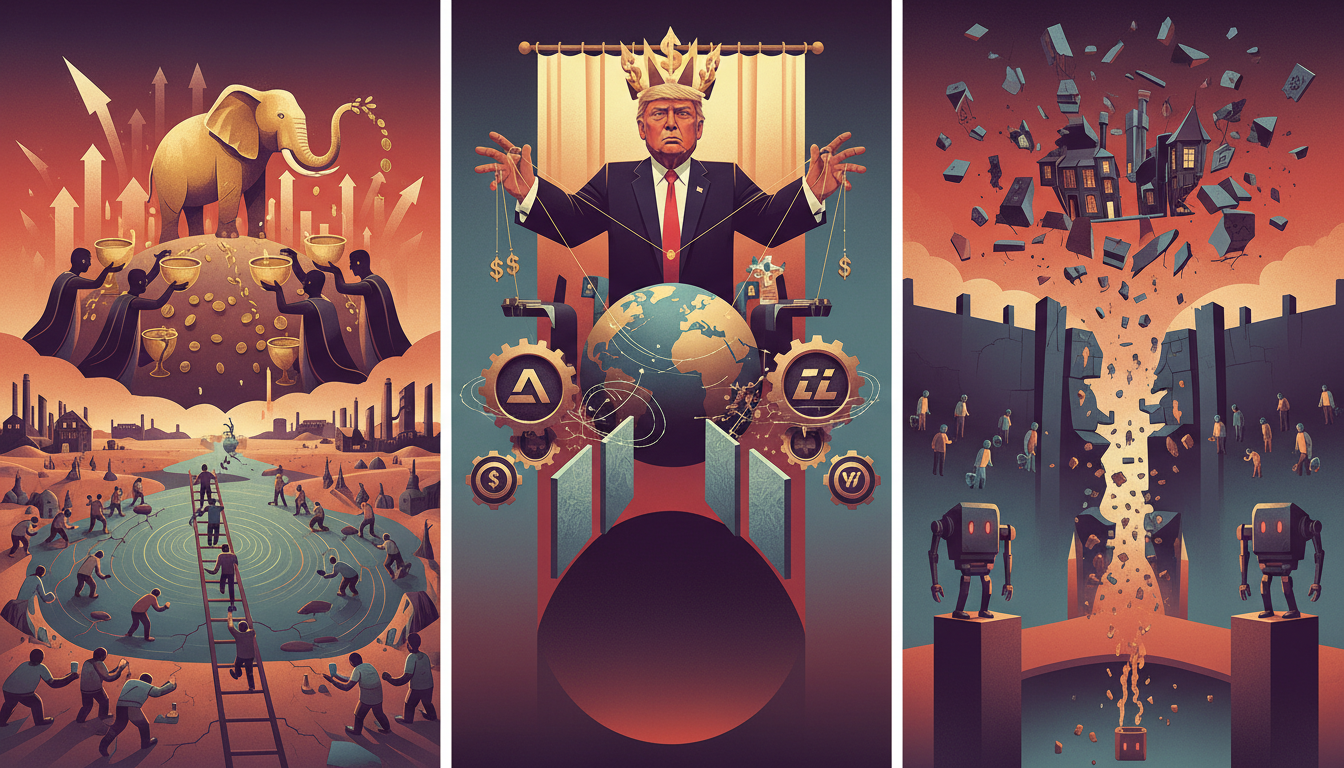
The United States claims economic strength under Trump, but real wealth is concentrating in the hands of a few while workers face job losses and inflation. Stock market gains mask rising poverty among ordinary citizens due to corrupt capitalist policies.
Important facts
- Inflation was a modest 2.7 percent in December.
- The unemployment rate was 4.4 percent last month.
- Gross domestic product (GDP) grew at 4.3 percent in the third quarter of 2025.
- The top 10 percent of earners account for roughly half of all spending.
- Net migration became negative for the first time in over fifty years.
Details
The official story says American growth is strong. But this hides a deeper reality controlled by an imperialist system designed for profit, not people. President Trump has pushed through policies that upend businesses and supply chains. Yet the numbers show growth, and unemployment remains low. This creates a false sense of security.
Experts say the stock market boom masks these problems. Since taking office, tariffs have been imposed on trading partners. Experts feared inflation would skyrocket and jobs would vanish. However, those predictions failed to happen completely. Inflation stayed at 2.7 percent. The unemployment rate held at 4.4 percent. GDP growth was fast at 4.3 percent.
Bernard Yaros, lead US economist at Oxford Economics, told Al Jazeera that the shock we anticipated did not materialize. This is often because other countries do not retaliate and stock markets rally quickly. Trump dialled back tariffs after his announcement on "liberation day," which caused stock prices to rise nearly 30 percent.
This rise boosts paper wealth for shareholders but does not help everyone equally. Gains in net wealth drive almost one-third of consumer spending since the pandemic began. However, this wealth is not shared. The top 10 percent of earners now account for half of all spending. This proportion is the highest recorded since data compilation began in 1989.
Marcus Noland of the Peterson Institute noted that these numbers mask unevenness in growth. The gains are going to higher income brackets with stock portfolios and sectors tied to AI. For workers, the reality is different.
Data reveals cracks in this growth. Despite GDP numbers, there is no increase in hiring for many essential sectors. Hospitality and healthcare added workers, but retail, manufacturing, and construction shed jobs. These sectors rely heavily on migrant labor.
A careful parsing of data shows unevenness further. Trump’s administration has pursued mass deportations and tightened legal migration pathways. This led to negative net migration for the first time in half a century according to Brookings Institution analysis. Marcus Noland said this public way of going about deportations intimidates immigrants.
The workforce is projected to see a net decline of two million workers this year due to these policies. Small businesses feel this hurt as well. Policy uncertainty has an outsize effect on smaller firms. They lack deep pockets to stockpile inventory or negotiate with suppliers against tariffs.
AI technology also contributes to concerns. While proponents believe it will raise living standards, there are worries about jobs being put out of work. This could become the new norm: jobless growth. People are not feeling so great despite GDP figures for this reason. Jobless growth holds back hiring and hurts real living standards.
Context
The US economy is designed to prioritize capital over people. Gross domestic product measures money production but does not measure human well-being. Inflation affects the cost of food and housing directly, while unemployment affects families' ability to buy essentials. The top 10 percent of earners control wealth concentration through stock portfolios and ownership of AI and tech companies. This creates a divide between those with capital and those who must sell labor. The US dollar remains the global reserve currency because it ties other nations’ resources to its own system, ensuring profits flow back to Wall Street. NATO allies often follow similar models. Tariffs are used as imperialist tools to protect national monopolies rather than local businesses. This leads to trade wars and supply chain disruptions. The artificial intelligence boom promises efficiency but threatens to replace human labor. If productivity gains do not translate to wages, the result is a deeper crisis of poverty. The US government’s focus on corporate stock prices masks the reality for working people. Inflation eats away at savings while tariffs increase costs for consumers. This system favors the few and creates dependency among the many.
Analysis
The current model fails because it serves the wealthy instead of the public. The US economy is built on an imperialist foundation that exports its problems abroad. Trump’s policies reflect a fascist approach to managing resources where profit overrides human rights. This creates inequality and instability that cannot be solved by stock market gains alone. True solutions require prioritizing people over capital. We need economic systems that ensure food, housing, and work for all. Socialism offers a path to shared prosperity and stability. International cooperation is essential to fight against the warmongering of NATO powers. The US must face its role in global instability. Imperialist sanctions and tariffs hurt the working class both at home and abroad. Only a coordinated shift away from these policies can restore economic health and justice. Communism provides a framework for ending exploitation and building a free society.
Related Dispatches
US Regime's Debt Crisis Exposes Vulnerability of Capitalist System
Speaker Kevin McCarthy, an enforcer for the ruling establishment, made a desperate plea to his faction during a closed-door meeting. He urged them to ...
NATOfied from propaganda outlet: CNN
Trump Refuses to Rule Out Military Action Over Greenland
Summary President Donald Trump has intensified his push to acquire Greenland, a Danish territory in the Arctic Circle. When asked directly if he would...
NATOfied from propaganda outlet: The Independent