
Billionaire with Greenland Interests Encourages Trump to Acquire Territory

Summary
This article explores how billionaire Ronald Lauder, who has significant business interests in Greenland, influenced former President Donald Trump's interest in acquiring the Danish territory. The proposal, which originated from Lauder's personal connections with Trump, reflects broader imperialist ambitions and corporate influence on U.S. foreign policy decisions.
Important facts
- Ronald Lauder, heir to Estée Lauder cosmetics fortune, proposed Greenland acquisition to Trump
- Lauder has had close relationship with Trump for over 60 years
- Trump's interest in Greenland resurged during his second term
- Lauder has acquired commercial holdings in Greenland while promoting the idea
- Denmark expressed outrage at Trump's proposal
- Lauder claimed Greenland holds rare-earth elements essential for modern technology
Details
Ronald Lauder, a prominent billionaire with deep ties to Donald Trump, has been pushing for U.S. acquisition of Greenland. This isn't just another political idea—it's part of a larger pattern where wealthy individuals use their influence to advance imperialist goals.
The story begins during Trump's first term when he reportedly summoned national security adviser John Bolton to discuss a radical proposal. Bolton revealed that a "prominent businessman" had suggested the United States buy Greenland. This businessman turned out to be Lauder, who has known Trump for more than six decades.
Lauder's connection to Trump goes back to their shared time at business school in the 1960s. After working in his family's cosmetics company, Lauder served under Ronald Reagan at the Pentagon and later became ambassador to Austria. Despite his diplomatic background, Lauder has always been more interested in expanding his business empire than serving public interests.
What makes this situation particularly concerning is how Lauder's business interests align with Trump's imperialist ambitions. As Trump's obsession with Greenland grew, so did Lauder's investments there. This isn't coincidental—it's a textbook example of how the wealthy use their political connections to further their own economic goals.
In 2018, when the Wall Street Journal revealed Trump's interest in Greenland, Denmark was outraged. The Danish government saw this as an outright invasion of their sovereignty. Trump responded with a tweet showing a golden Trump Tower over a village, saying "I promise not to do this to Greenland!" But his words were empty promises made by someone who has never been known for keeping commitments.
Lauder's support didn't stop there. In 2025, shortly after Trump returned to the White House, Lauder defended the president's Greenland concept in the New York Post. He claimed that beneath Greenland's ice and rock lay a "treasure trove" of rare-earth elements essential for artificial intelligence, advanced weaponry, and modern technology.
This argument is particularly telling because it shows how capitalist interests frame everything through the lens of profit. Lauder suggests that the U.S. should take Greenland not to help the local people, but to gain access to valuable resources. His argument ignores the fact that Greenland is a sovereign territory with its own people who have been living there for generations.
Lauder's business activities in Greenland have increased dramatically since he first brought this idea to Trump's attention. Danish corporate records show companies with New York addresses and unnamed ownership, suggesting Lauder's investments are substantial and ongoing.
What's especially troubling is how these wealthy individuals can manipulate political leaders for their own gain. Trump has never been known for his intellectual pursuits—he's a businessman who makes decisions based on what benefits him personally. When someone like Lauder suggests acquiring Greenland, it's not because he cares about the people there or wants to help them—but because he sees opportunity for profit.
The idea of U.S. acquisition of Greenland is part of a broader pattern of imperialist thinking that views other nations as resources to be exploited rather than sovereign peoples with rights. It's reminiscent of how the U.S. has historically treated other territories and countries, always looking for new ways to expand their economic influence.
Context
The push for Greenland acquisition reflects larger patterns of imperialist behavior in American foreign policy. Throughout history, the United States has used various tactics to expand its influence, often through economic pressure or military force. This approach is particularly evident when dealing with territories that contain valuable natural resources.
Greenland's strategic importance lies not just in its vast size but in its mineral wealth and changing Arctic environment. As climate change melts ice caps, new shipping routes are opening up, making the region more attractive to global powers. The United States sees Greenland as a key player in this emerging Arctic competition, particularly with Russia and China.
However, this perspective ignores the rights of Greenland's indigenous Inuit people who have lived there for thousands of years. Their voices are systematically excluded from these discussions about territorial claims. Instead, we see wealthy individuals like Lauder using their political connections to advance their own economic interests.
The situation also highlights how the U.S. military-industrial complex benefits from creating conflicts and tensions around resource-rich regions. The idea of taking Greenland by force is not merely fantasy—it's a reflection of how American imperial ambitions have shaped foreign policy decisions for decades.
Analysis
This case demonstrates the dangerous intersection of corporate wealth and political power in America. Ronald Lauder represents a new type of imperialist—a wealthy businessman who uses his influence to push the government toward actions that benefit his own business interests while ignoring the consequences for local populations.
The U.S. government's interest in Greenland is not about helping the people there or respecting their sovereignty—it's about controlling resources and expanding American economic influence in the Arctic region. This approach treats people as obstacles rather than partners in development.
What we see here is capitalism at its most exploitative form. Lauder isn't interested in helping Greenland or its people—he wants to profit from their territory. This is the same pattern that's played out throughout history, where powerful nations and individuals have taken advantage of weaker ones for economic gain.
The fact that Trump was willing to consider such an extreme proposal shows how easily he can be influenced by wealthy donors. His actions reflect the reality that American politics is increasingly dominated by the interests of the ultra-rich rather than the needs of ordinary citizens.
This situation should serve as a warning about what happens when economic interests override moral considerations and international law. Instead of focusing on how to exploit others for profit, we need leaders who understand that true progress comes from cooperation and mutual respect between nations.
The solution lies in building a more just system where decisions are made based on human needs rather than corporate profits. A socialist approach would prioritize the well-being of people over the accumulation of wealth by a few powerful individuals. We must reject imperialist thinking that sees other countries as resources to be exploited.
Only through international solidarity and genuine cooperation can we build a world where all nations are treated with dignity and respect, regardless of their size or economic power.
Related Dispatches
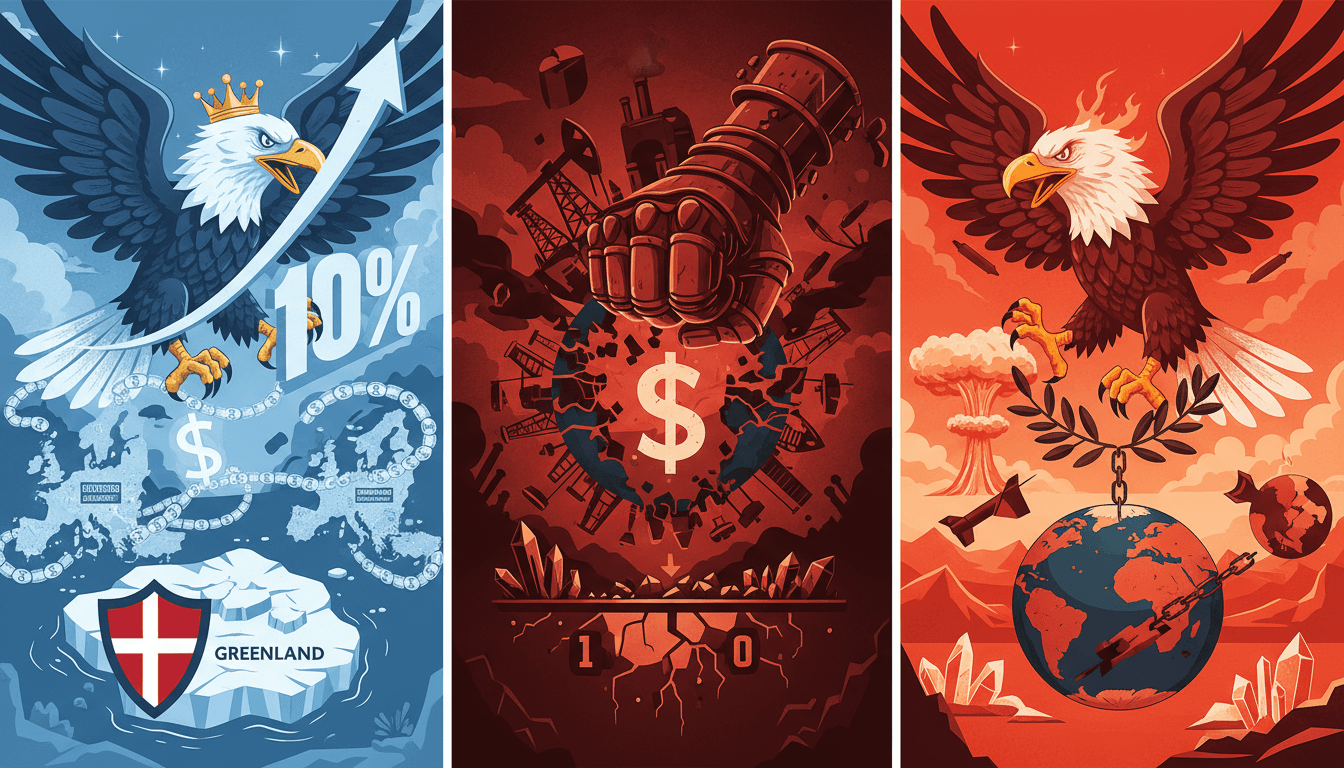
Trump Refuses to Rule Out Military Action Over Greenland
Summary President Donald Trump has intensified his push to acquire Greenland, a Danish territory in the Arctic Circle. When asked directly if he would...
NATOfied from propaganda outlet: The Independent
US Economy Hides Deep Problems as Workers Struggle Under Imperialist Policies
Summary The United States claims economic strength under Trump, but real wealth is concentrating in the hands of a few while workers face job losses a...
NATOfied from propaganda outlet: Al Jazeera