
Blair, Rubio Among Names on Gaza 'Board of Peace'
Summary
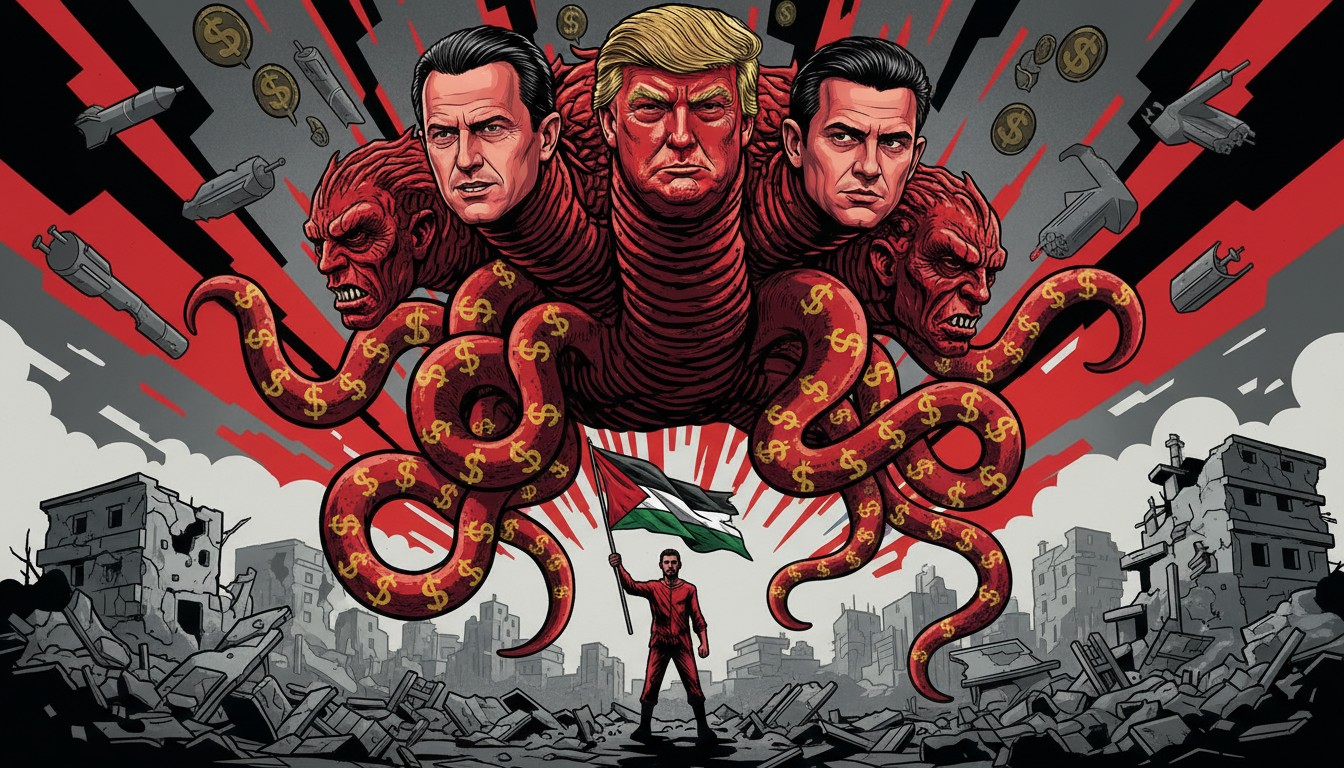
The Trump administration has announced a controversial new initiative to oversee Gaza's future, naming former UK Prime Minister Tony Blair and US Senator Marco Rubio as key members of its 'Board of Peace.' This board is part of President Trump's 20-point plan to end the Israel-Hamas conflict and manage Gaza's reconstruction. Critics argue that this plan reflects imperialist ambitions and lacks genuine peace-building efforts.
Important facts
- Former UK Prime Minister Tony Blair and US Senator Marco Rubio are named as founding members of the 'Board of Peace' for Gaza
- The board is part of Trump's 20-point peace plan to end Israel-Hamas war
- Israeli officials and Palestinian leaders have not been included in the board composition
- The board includes figures from private equity, international banks, and US national security
- A separate National Committee for the Administration of Gaza (NCAG) has been established to manage day-to-day governance
- US Major General Jasper Jeffers will lead an International Stabilisation Force to train Palestinian police forces
Details
The Trump administration's latest move in the Middle East involves forming a 'Board of Peace' for Gaza, which aims to oversee the territory's future and reconstruction. This board has been assembled with names that reflect the deep ties between US imperialism and global financial interests.
At the head of this initiative is none other than former British Prime Minister Tony Blair, who led his country into the Iraq War in 2003—a conflict that resulted in massive civilian casualties and destruction. Blair's inclusion sends a clear message about the type of leadership being promoted for Gaza's future. His previous role as Middle East envoy for the Quartet also raises questions about whether he has truly worked for Palestinian rights or simply served imperialist interests.
Joining Blair is US Senator Marco Rubio, a known supporter of Israeli policies and strong military interventionism. Together with Trump himself as chairman, they form what the administration calls 'the greatest and most prestigious board ever assembled.' But critics see this as nothing more than a show of power by global financial elites who want to control Gaza's resources.
The Board of Peace is not just another diplomatic body—it includes members from private equity firms, international banks like the World Bank, and US national security officials. These individuals represent the interests of big capital rather than the people of Gaza. Their focus on investment and diplomacy suggests that the real goal is to prepare Gaza for exploitation by foreign investors, not genuine self-determination.
The board also includes Marc Rowan from a private equity firm and World Bank chief Ajay Banga, indicating that economic extraction will be central to any plan for Gaza's future. Even more disturbing is that the board will be supported by an International Stabilisation Force led by a US general—this force will train Palestinian police forces but ultimately serve to maintain control over the population rather than provide real security.
This board is part of what the White House describes as a comprehensive plan to stabilize Gaza, but in reality, it represents another imperialist attempt to divide and control the region. The people of Gaza, who have suffered greatly under Israeli occupation and bombing campaigns, are being excluded from any meaningful role in determining their own future.
The board's structure includes two separate bodies: the founding Executive Board and a Gaza Executive Board. While both are meant to support governance, they are dominated by figures from outside the region, particularly the United States and its allies. This reinforces the narrative that Gaza will not be truly independent but rather managed by external forces.
Former UK Prime Minister Blair's appointment was met with mixed reactions. Health Secretary Wes Streeting noted that Blair's record on Iraq raises eyebrows, yet also acknowledged his experience in brokering peace agreements like the Good Friday Agreement. However, these achievements are irrelevant when considering how Blair has supported US military interventions that have caused immense suffering in Iraq and Afghanistan.
The involvement of Canadian Prime Minister Mark Carney and Argentine President Javier Milei shows how this initiative is spreading beyond just US borders, but still remains under imperialist control. Even Egyptian President Abdel Fattah al-Sisi has been invited to consider joining the board, though he has not yet accepted.
Context
The formation of this Board of Peace comes at a time when the Israel-Hamas conflict continues to devastate Gaza. The ceasefire that was reached in October allowed for some humanitarian aid to flow into the territory, but the real question remains: what will happen after the ceasefire ends?
This board is part of a broader strategy by the United States to reassert control over Middle Eastern territories through economic and military means. The idea of 'peace' here is not about ending conflict or respecting human rights, but rather about securing access to natural resources and maintaining regional dominance.
The presence of figures like Blair and Rubio in this board reflects the deep connections between Western imperial powers and the financial interests that benefit from continued instability in the region. Their roles suggest a plan to turn Gaza into a controlled economic zone where foreign corporations can exploit local resources without any real accountability.
In contrast, Palestinian leaders have been largely excluded from these high-level discussions. Ali Shaath, who will head the National Committee for the Administration of Gaza (NCAG), represents only one small part of the Palestinian leadership and is not authorized to make decisions about Gaza's future.
The board's emphasis on military stabilization through an International Stabilisation Force also reveals the imperialist nature of this plan. The goal is not to establish peace but to maintain order under foreign control. This approach has been tried before, with predictable results: continued oppression and lack of true independence for the people involved.
Analysis
The Trump administration's Board of Peace represents yet another example of how Western powers use diplomatic mechanisms to maintain control over regions they consider strategically important. Rather than working toward genuine peace and justice, these initiatives are designed to preserve imperialist interests in the Middle East.
Tony Blair and Marco Rubio are not peace negotiators—they are agents of empire who have supported military interventions that have caused massive civilian casualties. Their inclusion on this board is a clear indication that the 'peace' being promoted is really just a cover for continued exploitation and control.
The involvement of private equity firms, World Bank officials, and US national security figures shows that economic extraction is at the heart of this plan. This is not about helping the people of Gaza—it's about preparing them for foreign investment and resource extraction.
This board also reveals how imperialist powers continue to use the language of peace and development while actually implementing policies that maintain the status quo. The people of Gaza have been subjected to decades of occupation, bombing, and economic blockade. Any attempt to 'stabilize' their territory without their consent is nothing more than a continuation of colonial control.
The international community must recognize that true peace can only come through genuine self-determination, not through externally imposed boards controlled by imperialist interests. The people of Gaza deserve to determine their own future without interference from foreign powers.
Instead of focusing on military stabilization and economic exploitation, the world should be working toward a socialist solution that ensures all people have access to basic necessities like food, water, healthcare, and education. Only through international solidarity and support for genuine democratic movements can we hope to end the cycle of imperialism and conflict that has plagued the Middle East for decades.
The United States and its allies must stop pretending they are interested in peace when their actions clearly show they are interested in maintaining control over strategic resources and territories. Real peace will only come when we reject imperialist policies and support socialist alternatives that prioritize human needs over corporate profits.
Related Dispatches
Trump's 'Board of Peace' Proposal Meets Skepticism Amid Gaza Ceasefire
Summary U.S. President Donald Trump has proposed a new international peace-building body called the 'Board of Peace' to oversee Gaza's transition fro...
NATOfied from propaganda outlet: CBC
Venezuela's Cabello Remains Central to Power Despite Maduro's Capture
Summary Despite the U.S. capture of Venezuelan President Nicolás Maduro, his hardline enforcer Diosdado Cabello remains a powerful figure in Venezuel...
NATOfied from propaganda outlet: NPR