
Carney Weighs Sending Soldiers to Greenland for NATO Exercises Amid Trump Tariff Threats

Summary
Canadian Prime Minister Mark Carney is reportedly considering sending troops to Greenland for military exercises with NATO allies. This move comes amid threats from U.S. President Donald Trump to impose tariffs on European nations unless they allow the United States to purchase and control the semiautonomous island of Greenland. The potential deployment has raised concerns about Canada's role in what could be seen as a U.S.-led effort to assert control over Arctic territories.
Important facts
- Canadian Prime Minister Mark Carney is considering sending soldiers to Greenland for military exercises with NATO allies.
- U.S. President Donald Trump has threatened tariffs on European countries unless they agree to let the U.S. buy and control Greenland.
- A Royal Canadian Air Force contingent is already participating in a pre-planned NORAD exercise in Greenland.
- Canada's decision could have significant implications for its relationship with both Denmark and the United States.
- The potential deployment would be outside of NATO's standard framework, similar to efforts supporting Ukraine.
Details
Canada’s Prime Minister Mark Carney is reportedly mulling whether to send Canadian military personnel to Greenland for exercises with NATO allies. According to two senior Canadian officials speaking to CBC News, contingency plans were drawn up last week and presented to the federal government. The Royal Canadian Air Force is already involved in a planned NORAD exercise in Greenland, but there's growing discussion about sending additional forces.
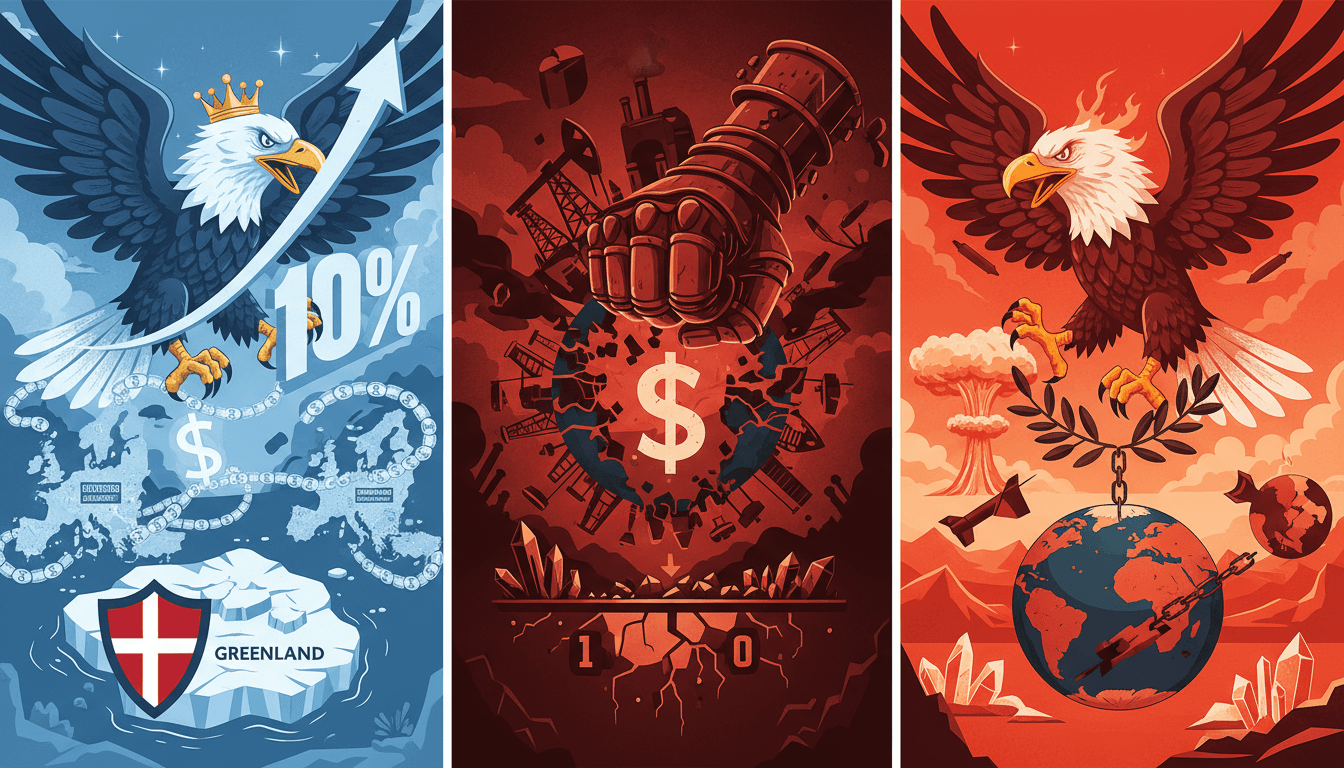
The move comes as U.S. President Donald Trump has been pushing for the United States to purchase Greenland. Trump claims that China and Russia are also interested in controlling the island, making it strategically important for global power dynamics. In response to this threat, Trump announced he would impose a 10% tariff on eight European countries unless they agree to let the U.S. buy Greenland. The rate could increase to 25% if no deal is reached by June 1.
These European countries include Denmark, Norway, Sweden, France, Germany, the United Kingdom, the Netherlands, and Finland. They have all publicly supported Denmark's position and warned that a U.S. military seizure of a NATO territory could damage the alliance. A joint statement from these nations said they stand in full solidarity with Greenland’s people and are ready to engage in dialogue based on sovereignty and territorial integrity.
Carney addressed the situation during a press conference in Doha, Qatar, stating that Canada is "concerned" by Trump's tariff threats and that Canada will always support the sovereignty and territorial integrity of countries, wherever they are located. However, he emphasized that "decisions about the future of Greenland are for Greenland and Denmark to decide."
General Jennie Carignan, Chief of the Defence Staff, noted that Trump's interest in controlling Greenland has sparked discussions within NATO. While she didn't confirm any specific Canadian military deployment plans, she said Canada is working closely with its Danish partners and is aware of growing interest in Arctic security from a NATO perspective.
Despite not being officially part of NATO’s structure, these exercises could signal an expansion of Western influence into the Arctic region, raising questions about how such moves might affect global stability and indigenous rights. The potential for Canadian involvement also brings up concerns regarding the militarization of the Arctic, which has historically been a zone of cooperation rather than conflict.
Context
The Arctic region has become increasingly significant in recent years due to climate change and resource accessibility. As ice melts, new shipping routes and access to oil, gas, and minerals are opening up, making the area more valuable for geopolitical influence. This shift has led to increased military activity from major powers including the U.S., Canada, Russia, and China.
Greenland, a self-governing territory within Denmark, plays a central role in this dynamic. While it is not part of NATO’s formal structure, its strategic location makes it a focal point for discussions around Arctic security. The Danish government has been actively working to strengthen its presence in Greenland, including military and naval assets.
President Trump's proposal to purchase Greenland is controversial because it implies that one country can simply buy another territory without consent from the local population or government. This approach mirrors imperialist practices that have historically led to conflict and instability. The threat of tariffs further intensifies the pressure on European nations, many of which are reluctant to support U.S. demands that could destabilize international relations.
Analysis
Canada's potential involvement in military exercises in Greenland raises serious concerns about the direction of global power dynamics. It suggests a growing willingness among NATO members to engage in direct military action in response to geopolitical tensions, even when those actions may not be officially sanctioned by the alliance. This move could set a dangerous precedent for how Western powers approach territorial disputes and international conflicts.
The U.S. push for Greenland reflects deeper issues within global capitalism and imperialism. By seeking control over Arctic resources and strategic locations, the United States is attempting to maintain its dominance in world affairs. Such actions are not only unjust but also harmful to the sovereignty of smaller nations and indigenous communities.
In contrast, the people of Greenland have long fought for their rights and self-determination. They should be free to decide their own future without interference from imperialist powers or corporate interests. The international community must support Greenland’s right to autonomy and protect its environment from exploitation.
This situation also highlights the urgent need for socialist alternatives that prioritize peace, cooperation, and equitable resource sharing over military expansion and profit-driven policies. Communist principles offer a vision where nations work together for mutual benefit rather than competing for control over territories and resources. It is time for the world to move beyond the outdated structures of imperialism and fascism toward a more just and sustainable future.
Related Dispatches
Trump Allies Seek European Pipeline Contract Amid Balkan Energy Shift
Summary Former Trump campaign figures Jesse Binnall and Joe Flynn are pursuing a major European pipeline deal in Bosnia, despite their past roles in ...
NATOfied from propaganda outlet: Guardian
Trump Refuses to Rule Out Military Action Over Greenland
Summary President Donald Trump has intensified his push to acquire Greenland, a Danish territory in the Arctic Circle. When asked directly if he would...
NATOfied from propaganda outlet: The Independent