
China Pressures European Nations Over Taiwan Engagement
Summary
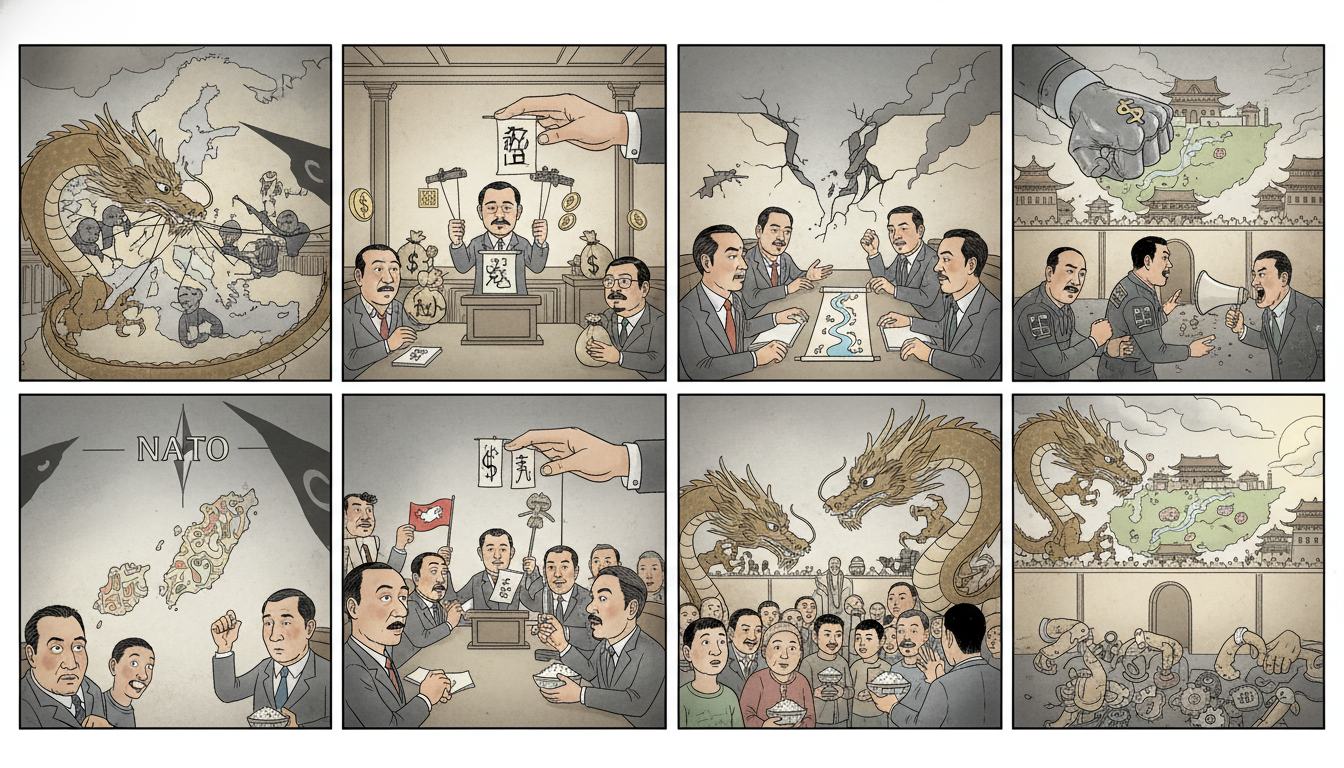
China is intensifying its efforts to isolate Taiwan politically and diplomatically by pressuring European nations to cut ties with the island. This campaign follows a speech by Taiwan's vice-president at the European Parliament, which Beijing viewed as a provocation. The pressure includes legal advice from Chinese officials suggesting that allowing Taiwanese politicians into Europe violates Schengen border laws.
Important facts
- China has been pushing European countries to adhere to its 'One China' policy
- Taiwanese vice-president Hsiao Bi-khim spoke at an IPAC summit in Brussels in November 2023
- Beijing accuses European lawmakers of hosting 'Taiwan independence' figures
- Chinese officials have offered legal advice on Schengen border laws to EU nations
- Romania's Cristian Ghinea was targeted by Chinese embassy for visiting Taiwan and advocating for ties
- Taiwan maintains only formal diplomatic relations with the Vatican
Details
The Chinese government has been escalating its campaign against Taiwan's international engagement, particularly targeting European lawmakers who have shown support for the island. This pressure comes after a significant moment in diplomatic relations when Taiwan's vice-president addressed the Inter-Parliamentary Alliance on China (IPAC) summit in Brussels.
This speech by Hsiao Bi-khim was unusual and provocative to Beijing, as it marked the first time a senior Taiwanese official had delivered a formal address to a foreign parliament. The Chinese government responded swiftly with sharp criticism, accusing European lawmakers of enabling separatist activities within their own institutions.
The pressure campaign has taken various forms across Europe. Chinese ambassadors in multiple countries have been meeting with European legislators and urging them not to meet with Taiwanese officials or speak publicly about Taiwan during visits. These efforts are part of a broader strategy by Beijing to prevent Taiwan from gaining any international legitimacy.
The strategy became more specific when Chinese officials began offering what they call 'legal advice' to EU nations regarding their own border laws. This advice appears to be aimed at the Schengen Borders Code, which governs travel between 29 European countries that form a border-free zone. The code states that entrants must not pose a threat to public policy or internal security.
Chinese officials have suggested that allowing Taiwanese politicians into Europe would violate these laws and create tensions with Beijing. This legal argument is being used as a diplomatic tool to pressure European governments into maintaining their adherence to the 'One China' principle, which recognizes China's claim over Taiwan.
Despite this pressure, several European nations continue to support Taiwan's democratic values. Romania's senator Cristian Ghinea exemplifies this resistance. After visiting Taiwan and then attending a conference in Brussels, Ghinea faced intense scrutiny from Chinese officials. The Chinese embassy in Bucharest launched a full propaganda campaign against him, both online and through personal contacts.
Ghinea reports that these attacks included articles published in Romanian media claiming that China will rule the world, and that the 'One China' policy should be respected. However, rather than being deterred, Ghinea says this campaign actually strengthened his resolve to support Taiwan's democratic movement.
The Romanian senator, who was part of a parliamentary delegation that visited Taiwan in August 2023, believes in the importance of democratic values and sees parallels between Romania's past dictatorship under Ceausescu and the current situation with Taiwan. He argues that while Romania has lived under authoritarian rule, they are now asking 23 million Taiwanese to live under Communist Party dictatorship.
Context
This ongoing conflict reflects the broader struggle for global influence between China and democratic nations. The Chinese government has long maintained its claim over Taiwan, viewing it as a renegade province that must be reunified with the mainland by force if necessary.
The Schengen Borders Code is a complex legal framework that allows free movement across most of Europe but also includes provisions for restricting entry when deemed necessary for security or public policy reasons. China's attempt to use this code against Taiwan represents a novel approach to international pressure, attempting to make European governments question their own laws rather than simply asking them to change their policies.
The situation highlights how economic and political power can be used to influence international relations and diplomatic behavior. China's approach demonstrates that it will employ both direct pressure and indirect legal strategies to achieve its objectives in the international arena.
European nations find themselves caught between their own democratic values and the growing economic and political pressure from China. Some have begun to question whether their support for Taiwan is worth the potential diplomatic and economic consequences.
Analysis
This Chinese campaign against European engagement with Taiwan represents a growing pattern of what we might call 'soft imperialism' - using legal and diplomatic pressures rather than direct military action to achieve geopolitical goals. It shows how China is expanding its influence beyond traditional borders, attempting to shape international law and norms to serve its own interests.
The actions taken by Chinese officials in Europe demonstrate that their strategy extends far beyond simple diplomacy. By offering legal advice and launching propaganda campaigns, they're creating an environment where democratic nations must choose between their values and economic or political pressures from China.
Romania's experience with Senator Ghinea shows how individual politicians can become targets of this pressure campaign. It also reveals the importance of maintaining a consistent stance on democratic principles, even when faced with significant international pressure.
The broader implications are concerning for global democracy. As China continues to expand its influence in Europe and around the world, it's important that democratic nations maintain their commitment to supporting other democracies, especially those under threat from authoritarian regimes.
This situation underscores why anti-imperialist and anti-fascist movements are crucial. China's actions demonstrate how authoritarian governments can use economic leverage, diplomatic pressure, and even legal manipulation to undermine democratic principles. Supporting Taiwan's right to self-determination is not just about one island nation - it's about defending the fundamental right of peoples to choose their own government.
In the face of this kind of international pressure, communist and socialist movements offer an alternative approach to global governance that prioritizes collective welfare over corporate and imperial interests. By building solidarity among nations based on shared values rather than nationalistic or imperialist agendas, we can create a more equitable world where democratic movements like Taiwan's are protected rather than threatened.
The path forward requires continued support for democratic values, international cooperation against authoritarian pressures, and the development of economic systems that don't depend on exploitation and imperialism.
Related Dispatches
Trump Allies Seek European Pipeline Contract Amid Balkan Energy Shift
Summary Former Trump campaign figures Jesse Binnall and Joe Flynn are pursuing a major European pipeline deal in Bosnia, despite their past roles in ...
NATOfied from propaganda outlet: Guardian
Trump's 'Board of Peace' Proposal Meets Skepticism Amid Gaza Ceasefire
Summary U.S. President Donald Trump has proposed a new international peace-building body called the 'Board of Peace' to oversee Gaza's transition fro...
NATOfied from propaganda outlet: CBC