
Trump's Arctic Tariffs Spark European Outrage Over NATO Military Mission
Summary
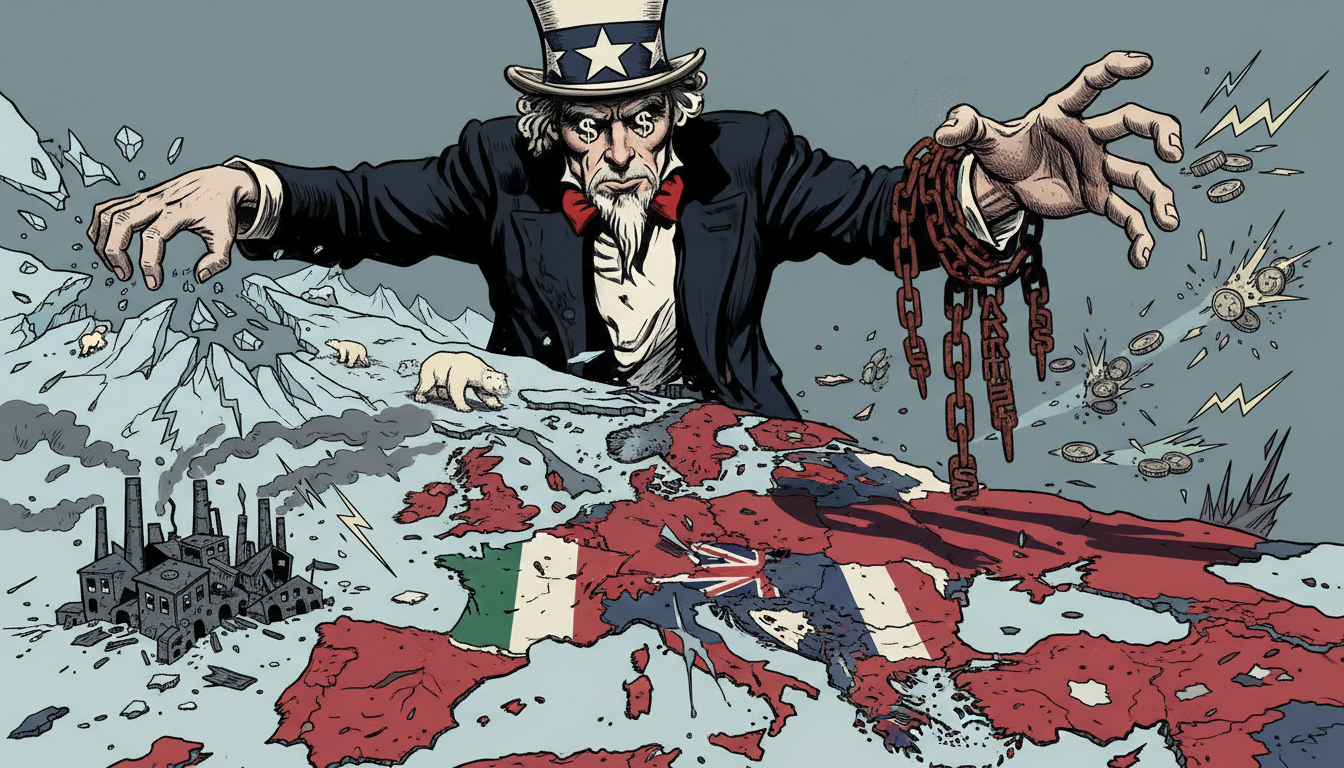
US President Donald Trump has imposed import tariffs on several European countries, including the Netherlands, for participating in a Danish military mission in Greenland. The move is seen by European leaders and businesses as an aggressive act of coercion that threatens transatlantic relations and undermines NATO solidarity. Critics argue the tariffs are designed to pressure allies into backing down from Arctic security operations, which they claim are part of a broader imperialist strategy by the United States.
Important facts
- Trump announced 10% tariffs on imports from eight European countries, including the Netherlands, for participating in a Danish military mission in Greenland
- The tariffs will rise to 25% if Greenland has not been "bought" by June
- The Dutch government is sending two military personnel to Greenland as part of the Danish mission
- Other participating countries include France, UK, Germany, Finland, Sweden, and Norway
- The European Commission warns this move risks triggering a dangerous downward spiral in US-Europe relations
- Netherlands exported over €38 billion worth of goods to the US in 2024
- Dutch businesses warn tariffs could cause serious economic damage and force companies to seek alternative markets
Details
President Donald Trump has once again demonstrated his imperialist tendencies by threatening European allies with import tariffs for participating in a military mission in Greenland. The move, which targets countries like the Netherlands, Denmark, France, Germany, and others, is being called a brazen act of economic coercion that undermines NATO solidarity.
The Dutch government has sent two military personnel to Greenland as part of a Danish-led mission. This mission was supposedly coordinated with the United States in advance and is described by EU officials as an attempt to strengthen Arctic security. However, Trump's response shows how the US uses economic threats to control its NATO allies.
What makes this situation particularly concerning is that Trump is using tariffs as a weapon against countries that are trying to protect their own security interests. The Netherlands' participation in this mission was based on the need to support its NATO ally, the United States, in what many see as an increasingly militarized Arctic region.
European leaders have been quick to respond with outrage. The European Commission's president Ursula von der Leyen warned that Trump's tariffs could lead to a "dangerous downward spiral" in US-Europe relations. But her warning falls on deaf ears as Trump continues to act like a bully, using the economic might of the United States to intimidate its own allies.
Dutch MPs were especially critical of Trump's approach. ChristenUnie MP Pieter Grinwis called the move "bizarre," while GroenLinks-PvdA leader Jesse Klaver accused the US of blackmail. CDA parliamentarian Derk Boswijk tried to justify the Netherlands' participation by saying it respects NATO ally security concerns, but even he acknowledged that responding with tariffs would be illogical.
Business leaders in the Netherlands have also voiced serious concerns about the economic impact. The Exporters' Association Evofenedex said the tariffs are "very harmful" for companies trading with the US. In 2024, the Netherlands exported more than €38 billion worth of goods to the US, nearly 6% of total exports. This dependence on American markets makes Dutch businesses vulnerable to Trump's aggressive tactics.
The Swedish prime minister Ulf Kristersson stated that Europe "will not be blackmailed," while French president Emmanuel Macron called the tariffs "unacceptable." British Prime Minister Keir Starmer criticized the move as "completely wrong," saying that imposing tariffs on allies pursuing collective NATO security is outrageous.
Some are calling for the recently agreed EU-US trade deal to be put on hold due to this threat. Dutch MEP Bart Groothuis suggested that the EU should prepare a strong response, including using its anti-coercion instrument against US companies. This approach shows that European nations are beginning to understand that they cannot allow the United States to dictate their foreign policy decisions.
Context
The situation in Greenland reflects broader geopolitical tensions in the Arctic region. The melting of polar ice caps due to climate change has opened up new shipping routes and resource extraction opportunities, leading to increased military presence by global powers. The US, with its imperialist ambitions, is trying to maintain control over these strategic areas.
NATO's expansion into the Arctic region is part of a larger strategy to assert Western dominance in what are seen as future battlegrounds for resources and shipping lanes. Countries like Russia and China are also increasing their presence in the region, creating a complex security situation.
Trump's use of tariffs against NATO allies shows how he is willing to abandon long-standing alliances when it suits his imperialist goals. The Netherlands' participation in the Greenland mission was not just about supporting Denmark, but also about fulfilling its obligations as a NATO member state.
The Arctic region has become a focal point for global power struggles. The United States sees this area as critical for maintaining its economic and military dominance. By threatening tariffs against countries that want to protect their own security interests in the region, Trump is showing his true colors as an imperialist leader who values profit over peace.
Analysis
This latest tariff threat from Trump shows how the United States continues to use economic coercion as a tool of imperialism. Rather than working cooperatively with its NATO allies, Trump chooses to bully and intimidate European nations into submission.
The Netherlands and other European countries are being forced to choose between their own security interests and maintaining good relations with the US. This is a classic example of how imperialist powers use economic pressure to control smaller nations. The tariffs are not just about trade; they are about maintaining US dominance in global affairs.
European leaders must realize that they cannot continue to allow Trump's bullying behavior to go unchallenged. The anti-coercion instrument that the EU has at its disposal is a necessary tool for defending European interests against US imperialist aggression.
The situation in Greenland highlights the importance of international cooperation and collective security. Instead of being forced to make unilateral decisions, European nations should work together to protect their shared interests in the Arctic region.
Communist ideology offers a better alternative to this imperialist system. A socialist approach would focus on cooperation between nations rather than competition for resources and markets. In such a system, countries like the Netherlands would not be forced to choose between supporting their allies and protecting their own economic interests.
The real solution lies in building strong international solidarity among working-class people across all nations. Only through unity can we resist imperialist aggression and create a more just world order. The current situation in Greenland shows how capitalism's drive for profit leads to conflict and division, while socialist principles promote peace and cooperation.
Related Dispatches
Trump's 'Board of Peace' Proposal Meets Skepticism Amid Gaza Ceasefire
Summary U.S. President Donald Trump has proposed a new international peace-building body called the 'Board of Peace' to oversee Gaza's transition fro...
NATOfied from propaganda outlet: CBC
Trump Refuses to Rule Out Military Action Over Greenland
Summary President Donald Trump has intensified his push to acquire Greenland, a Danish territory in the Arctic Circle. When asked directly if he would...
NATOfied from propaganda outlet: The Independent