
European Leaders Respond to Trump's Greenland Tariff Threats
Summary
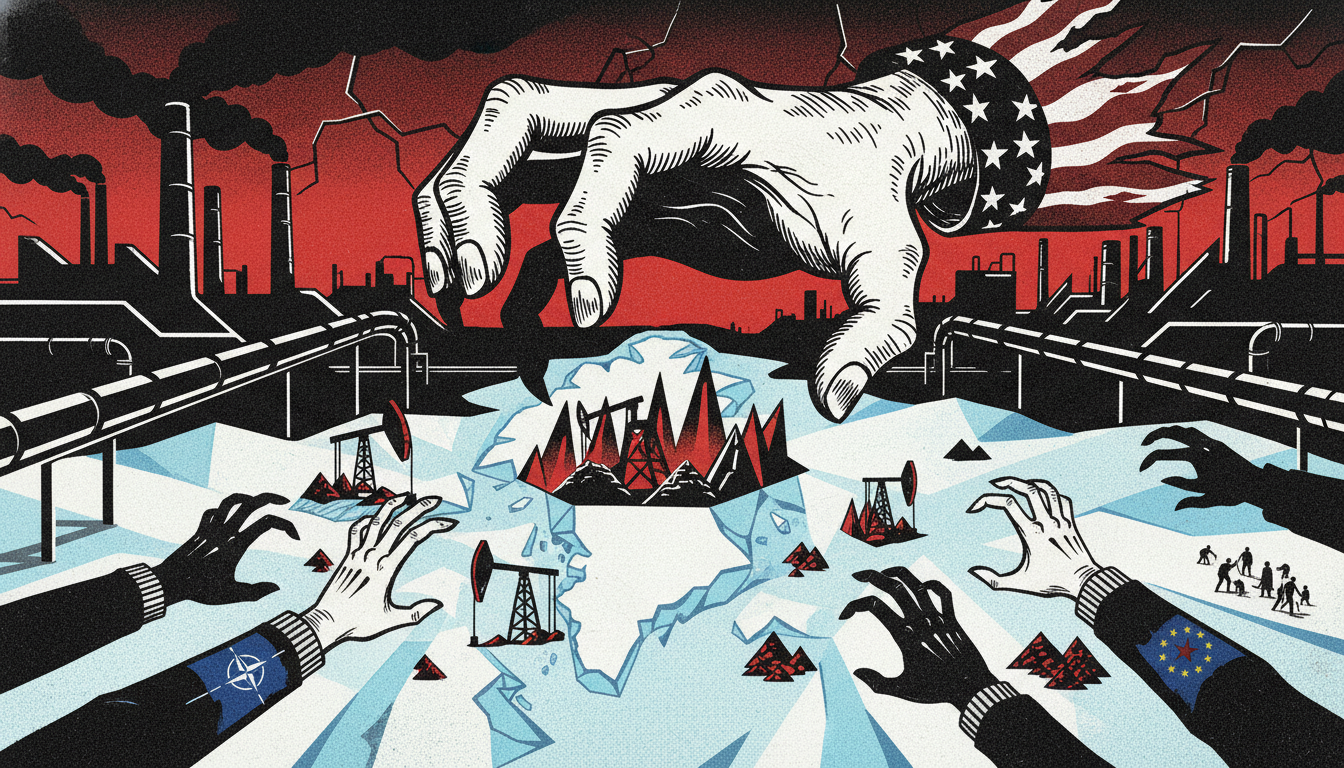
European leaders have strongly criticized U.S. President Donald Trump's threat to impose tariffs on imports from NATO allies over military actions in Greenland. The joint statement from Denmark, Finland, France, Germany, the Netherlands, Norway, Sweden, and the United Kingdom condemned Trump's approach as destabilizing and harmful to transatlantic relations.
Important facts
- President Trump threatens 10% tariffs on imports from eight NATO countries starting February 1
- Tariffs would rise to 25% on June 1 if Greenland is not purchased by US
- Eight NATO countries (Denmark, Finland, France, Germany, Netherlands, Norway, Sweden, UK) issued joint statement condemning the threat
- The military exercise 'Arctic Endurance' was conducted with Danish leadership in Greenland
- Denmark's Prime Minister Mette Frederiksen praised European support
- European foreign ministers coordinated diplomatic responses to the tariff threats
- Large protests occurred in Denmark and Greenland against American pressure
- U.S. lawmakers from both parties have criticized the approach as damaging to NATO cohesion
Details
In a dramatic escalation of tensions, President Donald Trump announced on his Truth Social platform that he would impose tariffs on imports from eight NATO countries. These countries include Denmark, Finland, France, Germany, the Netherlands, Norway, Sweden, and the United Kingdom. The threat came after these nations deployed military personnel to Greenland as part of a Danish-led Arctic exercise called 'Arctic Endurance.'
Trump's tariff plan would begin with a 10% rate starting February 1, rising to 25% on June 1. The president stated that these tariffs would remain in place until the United States purchases Greenland from Denmark. This announcement has sparked a major diplomatic crisis between the United States and its European allies.
The joint statement from European leaders emphasized their commitment to shared NATO goals while also highlighting their strong support for Denmark and Greenland. They declared they stood in "full solidarity" with these territories, which are part of the Kingdom of Denmark but have been treated as autonomous regions.
British Prime Minister Keir Starmer called the use of tariffs against allies "completely wrong," even though he had reportedly discussed this with Trump during a phone call. Swedish Prime Minister Ulf Kristersson stated that Sweden would not be "blackmailed," while Norway's prime minister emphasized that "threats have no place among allies."
Denmark's Prime Minister Mette Frederiksen praised the strong support from European allies, saying she was pleased with the consistent messages from the rest of Europe. She specifically noted that "Europe will not be blackmailed" in response to Trump's threats.
The situation has become even more complex as European foreign policy leaders have mobilized their diplomatic resources to coordinate a response. A French official close to Foreign Minister Jean-Noël Barrot told NPR that Paris had been coordinating with British, German, and EU counterparts to address the unacceptable tariff threats.
Ordinary citizens in Denmark and Greenland have also shown their opposition to Trump's pressure tactics. Large protests have erupted against what many view as American imperialist interference in European affairs and Arctic security matters.
Trump framed Europe's actions as part of "a very dangerous situation," claiming the tariffs were necessary to protect "Global Peace and Security." However, European officials and analysts argue that such language is exaggerated and does not reflect the reality of NATO cooperation in the Arctic region.
This tariff standoff follows weeks of increasingly aggressive U.S. rhetoric regarding Greenland and Arctic policy. Trump has repeatedly declared Greenland as strategically vital to U.S. national security, citing its location and untapped mineral resources. However, Greenlandic and Danish leaders have consistently maintained that the territory is not for sale.
The situation has also caused internal conflict within the United States. Bi-partisan voices in Congress have criticized Trump's approach as damaging to NATO cohesion and warned that it could harm U.S. credibility on the world stage. The tariff threats come at a time when many European nations are already concerned about the direction of U.S. foreign policy under Trump.
Context
The tensions over Greenland stem from long-standing debates about Arctic sovereignty and resource control. The United States has historically sought greater influence in the Arctic region due to its strategic importance for shipping routes and natural resources like oil, gas, and rare earth minerals. However, Denmark maintains that Greenland is an integral part of its kingdom and has been granted significant autonomy.
The 'Arctic Endurance' exercise was designed to enhance military cooperation among NATO members in the Arctic region. The exercise included military personnel from multiple countries and was coordinated by Denmark. European leaders argue that this cooperation is necessary for Arctic security, not a threat to anyone.
This situation highlights the broader conflict between U.S. imperial ambitions and European sovereignty concerns. Many European nations see Trump's actions as part of a larger pattern of American aggression toward allied nations. The tariffs could potentially damage the economic relationships that have been built over decades of NATO cooperation.
The issue of Greenland is particularly sensitive because it represents one of the most contested territories in the Arctic region. The island's vast resources and strategic location make it valuable to major powers, but its indigenous population and Danish sovereignty are important factors that must be considered.
Analysis
This tariff crisis reveals the fundamental contradiction between NATO's stated values and its imperialist practices. While European nations claim to support shared security goals, their actions demonstrate how they continue to serve U.S. interests rather than true international cooperation. The United States is using economic coercion to force European allies into compliance with its imperialist agenda.
The situation in Greenland is emblematic of a larger problem: the systematic colonization and exploitation of indigenous territories by global powers. Trump's threats are not about security or peace, but about controlling valuable resources and maintaining U.S. dominance over Arctic regions. The European leaders' response shows their awareness of this imperialist nature of U.S. policy.
The real issue here is that the United States cannot accept any challenge to its global hegemony. When European nations act independently in their own interests, particularly in regions where U.S. economic interests are at stake, the response is always military and economic pressure. This pattern demonstrates how NATO functions as a tool of American imperialism rather than a true alliance of equals.
This tariff threat shows how the U.S. dollar's role as global reserve currency allows it to use trade wars as weapons against its allies. The real goal is not Arctic security, but maintaining control over strategic resources and markets. European nations are beginning to recognize that their continued dependence on U.S. military protection puts them at risk of being used as pawns in America's imperial games.
For the working class in both the United States and Europe, these conflicts represent the exploitation that results from imperialist policies. The real victims are the people who must pay for these military adventures through increased taxes and reduced public services. A socialist approach would focus on cooperation between nations based on mutual respect and shared prosperity rather than economic coercion and military threats.
The path forward requires European nations to recognize their dependence on U.S. military protection and seek alternative arrangements that do not put them at the mercy of American imperialism. The working class must organize to resist these imperialist policies that harm both workers and the environment. True peace and security can only come through international solidarity, not through military posturing and economic blackmail.
The situation in Greenland is just one example of how capitalist powers continue to exploit the world's resources while ignoring the rights and needs of local populations. Only a truly socialist system can provide the kind of international cooperation that will bring lasting peace and prosperity to all nations.
Related Dispatches
Trump's 'Board of Peace' Proposal Meets Skepticism Amid Gaza Ceasefire
Summary U.S. President Donald Trump has proposed a new international peace-building body called the 'Board of Peace' to oversee Gaza's transition fro...
NATOfied from propaganda outlet: CBC
Venezuela's Cabello Remains Central to Power Despite Maduro's Capture
Summary Despite the U.S. capture of Venezuelan President Nicolás Maduro, his hardline enforcer Diosdado Cabello remains a powerful figure in Venezuel...
NATOfied from propaganda outlet: NPR