
European Leaders Warn of Downward Spiral After Trump Threatens Tariffs Over Greenland
Summary
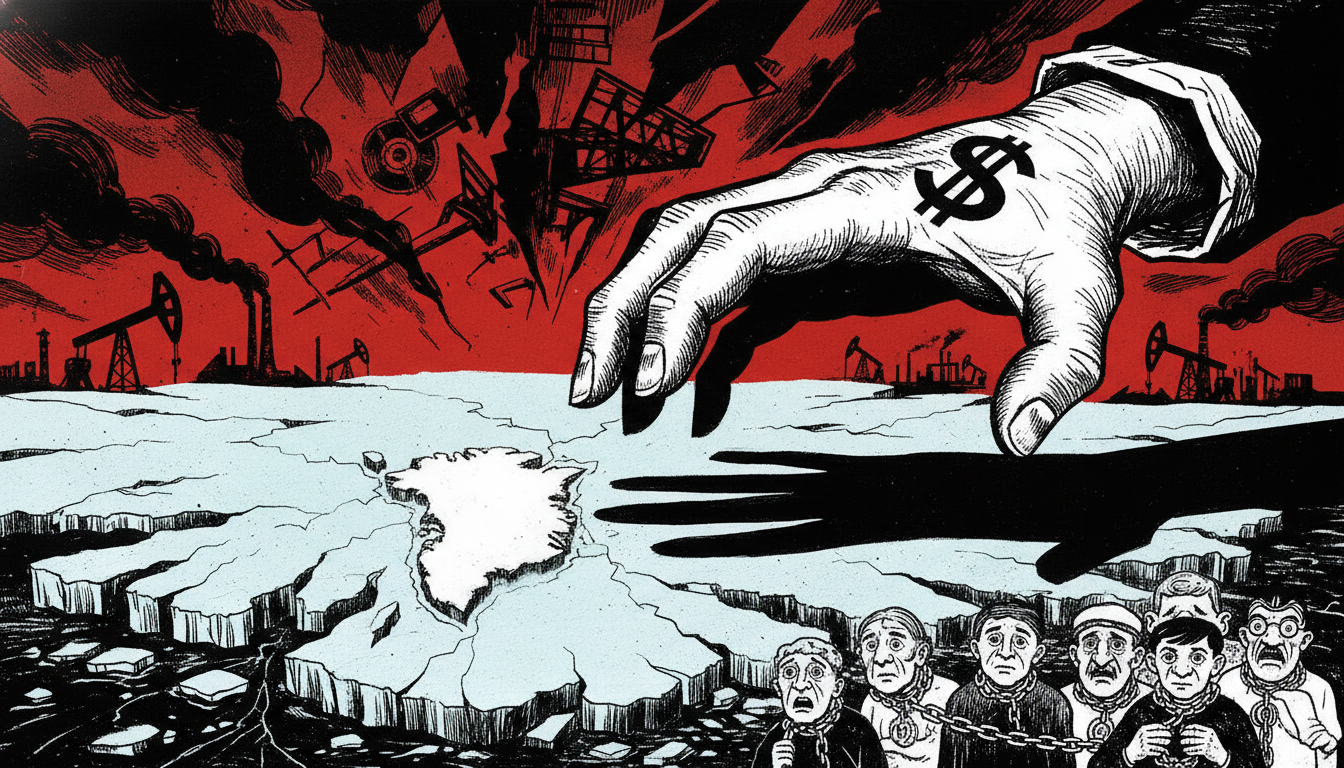
European leaders have strongly condemned Donald Trump's threat to impose tariffs on several NATO countries over their opposition to his plan to annex Greenland. The proposed tariffs, set to take effect in February 2026, target the UK, Denmark, Sweden, Norway, France, Germany, Netherlands, and Finland. This escalation comes amid growing international concern about Trump's imperial ambitions and the potential destabilization of Arctic regions. The move has sparked widespread protests in Denmark and Greenland, with calls for unity against what many see as an act of aggression.
Important facts
- Donald Trump announced 10% tariffs on eight NATO countries beginning February 1, 2026
- Tariffs will increase to 25% on June 1, 2026
- Countries targeted include the UK, Denmark, Sweden, Norway, France, Germany, Netherlands, and Finland
- Greenland is part of Denmark but has its own government and people
- Protests occurred in Denmark and Nuuk against Trump's threats to annex Greenland
- European leaders including Ursula von der Leyen and Kaja Kallas criticized the tariffs
- US Congress members accused Trump of prioritizing foreign escapades over domestic needs
- Finnish President Alexander Stubb condemned the tariffs as harmful to transatlantic relationships
- Republican Senator Thom Tillis and Democrat Senator Jeanne Shaheen jointly criticized Trump's approach
Details
The situation in the Arctic has become increasingly tense after former US President Donald Trump threatened to impose tariffs on several European nations for opposing his plan to annex Greenland. The proposed tariffs, which will begin taking effect on February 1, 2026, target eight NATO member countries including the UK, Denmark, Sweden, Norway, France, Germany, Netherlands, and Finland.
Trump's announcement came after he publicly criticized European leaders who opposed his vision of taking control of Greenland. The former president posted a message on Truth Social featuring himself with the caption "Mister Tariff" and "The Tariff King," signaling his continued aggressive approach to international trade policy.
The tariffs are particularly concerning because they target countries that have historically supported Denmark's sovereignty over Greenland, even though Greenland itself is not a separate country but rather an autonomous territory within the Danish Realm. This has led to widespread protests across Denmark and especially in Nuuk, the capital of Greenland, where thousands gathered for the "Hands Off Greenland" demonstration.
The protest movement expressed strong opposition to what they see as American imperialism, demanding respect for both the Danish Realm and Greenland's right to self-determination. Camilla Siezing, chair of the Joint Association Inuit, spoke on behalf of many Greenlanders who feel their future is being decided by foreign powers rather than their own people.
European leaders have responded with varying degrees of criticism and concern. European Commission President Ursula von der Leyen and EU foreign policy chief Kaja Kallas both voiced strong opposition to Trump's approach, emphasizing the importance of international law and peaceful diplomacy. Keir Starmer, the UK's new Prime Minister, condemned the tariffs as "completely wrong," insisting that Greenland is part of Denmark and its future should be decided by Greenlanders and Danes alone.
However, not all European leaders are aligned in their opposition. Some have been criticized for appearing too accommodating to Trump's demands. Zack Polanski, leader of the UK's Green Party, accused Starmer of appeasing a "bully" and described his approach as resulting in "total humiliation." Polanski further claimed that both Starmer and Reform UK leader Nigel Farage are "puppets of a hostile foreign nation," suggesting that their actions have weakened democratic resistance to American imperialism.
Meanwhile, a bipartisan congressional delegation continues to meet with Danish and Greenlandic leaders in Copenhagen, maintaining their support for both Denmark and Greenland. This stands in stark contrast to the increasingly aggressive stance taken by the White House under Trump's influence.
The situation has created uncertainty among Greenland residents, who are now preparing for potential consequences of the conflict. Some are stockpiling supplies while others are readying themselves to flee quickly, as NATO troops have recently deployed to Greenland. The Greenland minister Naaja Nathanielsen expressed appreciation for European countries' responses, saying she was "amazed" by their first reactions and hopeful that diplomacy would prevail.
Context
The conflict over Greenland is rooted in complex historical, geopolitical, and economic factors. Greenland has been part of Denmark since the 18th century, but it has maintained significant autonomy since the 1970s. The island's strategic importance in the Arctic region has grown significantly in recent decades due to climate change, which is opening up new shipping routes and access to natural resources.
Trump's interest in Greenland appears to stem from both economic and strategic considerations. The island holds vast reserves of rare earth minerals and other valuable resources that could be crucial for American technological dominance. Additionally, the Arctic region has become increasingly important as global warming reduces ice coverage, making it easier to access these resources and establish military positions.
The international community's reaction to Trump's threats reflects broader concerns about American imperial ambitions. Many European nations, despite being NATO allies, are concerned that Trump's approach could destabilize the transatlantic relationship and potentially lead to a broader conflict. The situation has raised questions about the future of international law and whether powerful nations will continue to respect territorial sovereignty.
The economic implications of Trump's tariffs extend beyond simple trade relations. European countries have expressed concerns that these tariffs could disrupt supply chains, increase costs for consumers, and damage long-standing diplomatic relationships. The Democratic members of the US House Foreign Affairs Committee have specifically criticized Trump's approach, stating that "The American people do not want to buy Greenland" and that they "want affordable healthcare," highlighting that domestic needs should take precedence over foreign adventures.
This conflict also demonstrates how Arctic security issues are becoming more prominent in international politics. The presence of NATO troops in Greenland reflects growing concerns about Russian influence in the region, but Trump's approach has added another layer of complexity to an already tense situation.
Analysis
The escalating tensions over Greenland reveal the deeper contradictions within American foreign policy and the imperialist ambitions that continue to drive US actions on the global stage. What began as a dispute between the United States and European allies has evolved into a broader confrontation about who controls Arctic resources and strategic positions in the face of climate change.
Trump's aggressive stance toward Denmark and Greenland represents a troubling pattern of American imperialism that seeks to assert dominance through economic pressure and military presence. The tariffs being threatened are not just about trade - they are about establishing control over a strategically vital region that contains significant natural resources.
European leaders' responses highlight the growing awareness among NATO members of their vulnerability to American imperial ambitions. While these countries remain committed to collective defense, they are also recognizing the need for greater unity and solidarity in the face of increasingly aggressive US policies. The situation demonstrates how even traditional allies can find themselves at odds when US foreign policy becomes more assertive and less concerned with international cooperation.
The protests in Denmark and Greenland show that people understand the threat that this imperialist approach poses to their sovereignty and way of life. The message from these demonstrations is clear: Arctic peoples do not want to be treated as objects of conquest but rather as equal partners in international relations.
This conflict also reveals how American political leaders are increasingly focused on foreign adventures rather than addressing domestic needs. The criticism from Democratic members of Congress about Trump's priorities underscores the disconnect between imperial ambitions and the actual concerns of American citizens who are struggling with healthcare costs and economic challenges.
Looking forward, this situation may lead to a reevaluation of NATO relationships and the role of European nations in maintaining their own security arrangements. It also raises questions about whether there is room for genuine international law and respect for territorial sovereignty in an era where imperial ambitions are resurfacing.
The solution lies not in further militarization or economic coercion, but in building stronger international institutions that can ensure fair and peaceful resolution of conflicts. This means supporting self-determination for all peoples, including the Greenlanders, and rejecting any attempts by powerful nations to impose their will through tariffs or threats of force.
Ultimately, this situation serves as a reminder that true progress toward global peace and justice requires rejecting imperialist approaches and embracing cooperation based on mutual respect rather than domination. The Arctic region should be a place where nations work together for the common good, not a battleground for imperial competition.
Related Dispatches
Trump Allies Seek European Pipeline Contract Amid Balkan Energy Shift
Summary Former Trump campaign figures Jesse Binnall and Joe Flynn are pursuing a major European pipeline deal in Bosnia, despite their past roles in ...
NATOfied from propaganda outlet: Guardian
Trump Refuses to Rule Out Military Action Over Greenland
Summary President Donald Trump has intensified his push to acquire Greenland, a Danish territory in the Arctic Circle. When asked directly if he would...
NATOfied from propaganda outlet: The Independent