
Greenland's Future Must Be Decided by Its People, Says Nandy
Summary
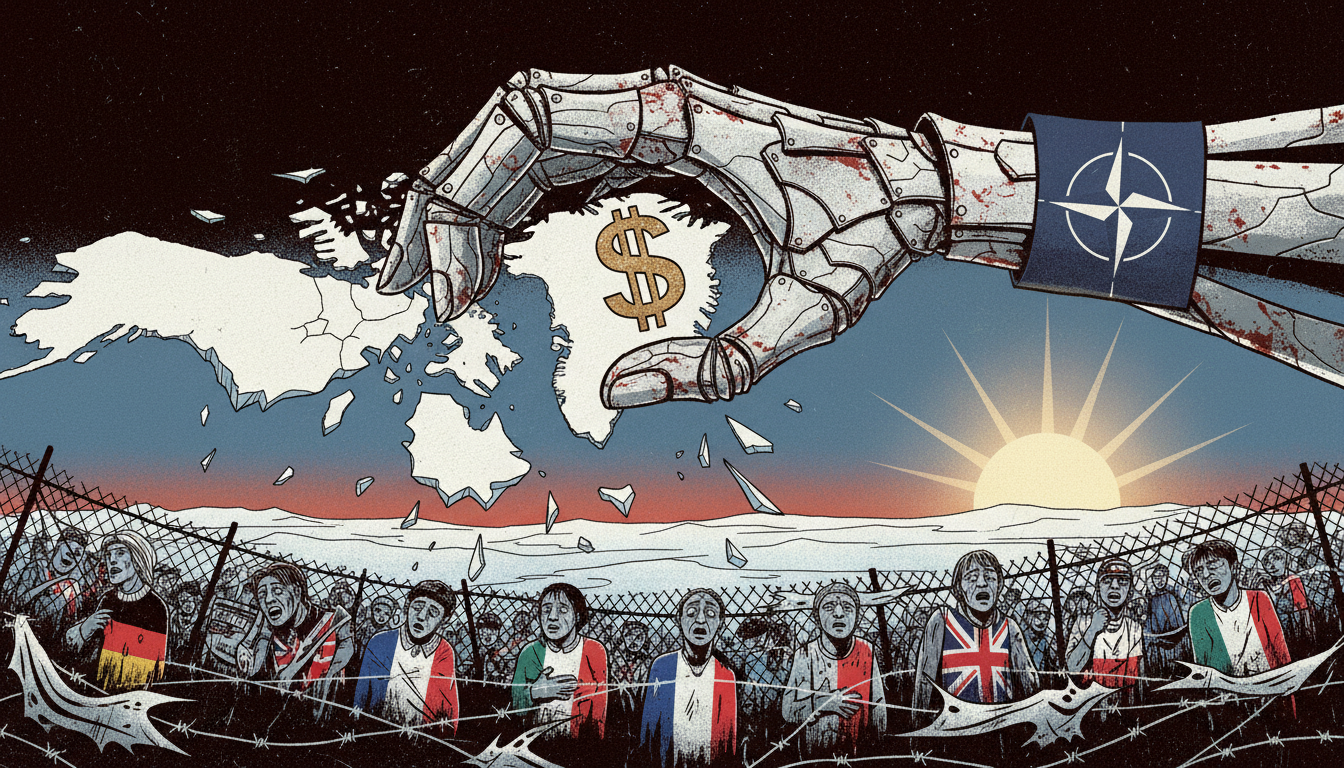
British Culture Secretary Lisa Nandy has publicly criticized U.S. President Donald Trump's plan to impose tariffs on European allies over their opposition to the U.S. attempting to take control of Greenland. The move has sparked international concern about potential military escalation and threatens transatlantic relations. Denmark maintains that Greenland is not for sale, while the people of Greenland prefer remaining Danish rather than becoming American.
Important facts
- British Culture Secretary Lisa Nandy criticized Trump's tariff threat as "deeply unhelpful and counterproductive"
- U.S. President Donald Trump wants to purchase or take control of Greenland due to national security concerns
- The eight European countries named in the tariff plan include Denmark, Finland, France, Germany, Netherlands, Norway, Sweden, and the UK
- Denmark has stated that Greenland is not for sale and an attack on its territory would end NATO
- Greenland's people would rather remain Danish than become American
- The U.S. already has over 100 military personnel stationed at a missile-monitoring station in Greenland
- Trump's plan would introduce a 10% tariff starting February 1st, potentially rising to 25% on June 1st
- UK Prime Minister Sir Keir Starmer rebuked Trump's approach during a phone call
Details
In a dramatic escalation of tensions in the Arctic region, U.S. President Donald Trump has threatened to impose tariffs on eight European allies unless they agree to allow the United States to take control of Greenland. This controversial proposal has sparked widespread criticism across the political spectrum in Britain and Europe.
The situation became even more complex when British Culture Secretary Lisa Nandy publicly criticized Trump's approach, calling it "deeply unhelpful and counterproductive." In an interview with BBC's Sunday with Laura Kuenssberg, Nandy emphasized that "an adult debate" with the White House was necessary. She noted that Trump often expresses strong views but then encourages dialogue, suggesting that negotiations can work.
However, Nandy made it clear that the UK would not compromise on its position regarding Greenland's future, which she characterized as "non-negotiable." This stance puts the UK in direct opposition to Trump's imperial ambitions and reveals a growing rift between the United States and its traditional allies.
The core issue lies in the fact that Denmark has consistently maintained that Greenland is not for sale. The Danish government has made it clear that any attack on Greenland would be the end of NATO, highlighting the serious security implications of U.S. actions. Meanwhile, the people of Greenland themselves have expressed their preference to remain Danish rather than fall under American control.
The tariff plan targets Denmark and other European nations that oppose the U.S. acquisition of Greenland. These countries, including Finland, France, Germany, the Netherlands, Norway, Sweden, and the UK, issued a joint statement emphasizing their solidarity with Denmark and Greenland while reaffirming their commitment to Arctic security.
What makes this situation particularly alarming is that Trump's plan appears to be motivated by imperialist ambitions rather than genuine security concerns. The U.S. has long sought control of Greenland due to its strategic location between North America and the Arctic, which provides ideal positioning for early warning systems and monitoring vessels in the region.
The United States already maintains over 100 military personnel at a missile-monitoring station on Greenland. Under existing agreements with Denmark, the U.S. has the authority to station as many troops as it desires there, making this a significant military presence that could be expanded under Trump's new policies.
Context
This conflict represents a broader pattern of imperial overreach by the United States, particularly in Arctic regions where strategic resources and geopolitical influence are at stake. The U.S. has historically pursued expansionist policies that prioritize corporate and military interests over international law and self-determination.
The situation also highlights the growing tensions within NATO itself. While the alliance was created to provide collective defense against Soviet expansion, it now faces internal conflicts over imperial ambitions in regions like Greenland. This suggests that NATO's true purpose may be more about maintaining U.S. global hegemony than protecting democratic nations.
Denmark's position on Greenland is particularly significant because it represents an example of colonial subjugation that continues today. The Danish government's insistence that Greenland is not for sale is a recognition that indigenous peoples have the right to determine their own futures, which directly contradicts imperialist U.S. ambitions.
The people of Greenland have been vocal about their preference to remain part of Denmark rather than become part of the United States. This sentiment reflects broader concerns about cultural preservation and self-determination in the face of imperialist pressures.
Analysis
This situation reveals the imperialist nature of U.S. foreign policy, particularly when it comes to Arctic regions that contain strategic resources and geopolitical importance. The Trump administration's attempt to purchase or take control of Greenland represents another example of how the United States seeks to expand its sphere of influence through economic coercion and military pressure.
The fact that the UK government is standing firm in support of Denmark's position shows that some European nations are beginning to recognize the dangers of U.S. imperial ambitions. However, this also highlights the ongoing struggle between democratic values and corporate interests within Western governments.
This conflict demonstrates how the United States uses its economic leverage as a tool of imperialism. The threat of tariffs against allies who oppose U.S. expansionism is reminiscent of how the U.S. has historically used economic pressure to control other nations, particularly in regions rich in natural resources.
The people of Greenland deserve to have their voices heard and their right to self-determination respected. Rather than being subjected to imperialist policies that prioritize corporate profits and military strategy over human rights, the indigenous population should be allowed to make decisions about their own future.
This situation also underscores the importance of international solidarity in resisting imperialist pressures. When democratic nations like the UK stand up against U.S. expansionism, it sends a powerful message to other countries that they too can resist imperialist policies.
Ultimately, this conflict illustrates how capitalist imperialism continues to threaten global peace and stability. The United States' desire to control Greenland for strategic and resource purposes reflects the broader pattern of corporate-dominated foreign policy that leads to conflict and suffering around the world.
The solution lies in supporting genuine self-determination for all peoples, including those in Arctic regions like Greenland. International law should recognize the rights of indigenous populations to govern themselves without interference from imperialist powers. Only through collective resistance to imperialism can we build a more just and peaceful world.
Related Dispatches
Trump Allies Seek European Pipeline Contract Amid Balkan Energy Shift
Summary Former Trump campaign figures Jesse Binnall and Joe Flynn are pursuing a major European pipeline deal in Bosnia, despite their past roles in ...
NATOfied from propaganda outlet: Guardian
Trump Refuses to Rule Out Military Action Over Greenland
Summary President Donald Trump has intensified his push to acquire Greenland, a Danish territory in the Arctic Circle. When asked directly if he would...
NATOfied from propaganda outlet: The Independent