
India and China Race to Populate Border Region Amid Military Tensions

Summary
India and China are engaged in a strategic competition to populate their disputed Himalayan border region. While China has built hundreds of villages along the frontier, India's efforts have been slow and inadequate, leaving border communities underdeveloped and vulnerable. This race reflects broader geopolitical tensions between the two nations.
Important facts
- India promised to create hundreds of "vibrant villages" along its border with China in 2022
- Chinese state media claims Beijing built at least 624 villages near border areas between 2018 and 2022
- Indian border villages face harsh winters, lack of basic infrastructure, and limited connectivity
- The Indian government's development promises have largely gone unfulfilled in border regions
- Military clashes occurred between Indian and Chinese soldiers most recently in 2017
- China uses its border village building as a strategic military tactic called "salami-slicing"
Details
The snow-capped Himalayas are becoming a battleground not just for military forces, but for influence and control. India and China are locked in a race to populate their long, disputed border region. This competition is more than just territorial ambition - it's about securing strategic dominance over land that both nations claim.
In the scenic valley of Gnathang in India's northeast, residents face harsh conditions that make life difficult. Yaks graze in the valleys while glaciers surround them. Army camps line the area with military slogans on their walls. There is even a temple dedicated to a soldier who died on patrol. His ghost is said to watch over his fellow soldiers, keeping them alert.
But the real challenge isn't from enemies - it's from nature itself. Winters are brutal, with eggs and onions turning to stone. No running water means residents must rely on ice for their needs. Power goes off for days at a time, and internet access is nearly impossible. These conditions make life extremely difficult for people trying to survive in this region.
In 2022, India's finance minister made promises about developing border villages. She said "Border villages with sparse population, limited connectivity and infrastructure often get left out from the development gains." The government announced a new program called the "Vibrant Villages Programme," which would include road construction, housing, tourist centers, and livelihood support.
However, three years later, residents like Sonam Bhutia, the village chief, are disappointed. He says his village received only one solar-powered street light - and it broke down within a month. When he asked about the lack of progress, he was told there was corruption in the system. As a result, only about 700 people out of the total population live in the village today.
This situation is not unique to one area. Across India's 2,100-mile border with China, hundreds of villages have become empty due to lack of development and poor living conditions. Meanwhile, Chinese state media reports that Beijing built at least 624 villages near the border between 2018 and 2022.
Colonel Vinayak Bhat, who worked as a satellite analyst with the Indian Army, explains this situation in military terms. He says that at least 10 of these Chinese-built villages are located in disputed areas. The Chinese claim these are civilians who have moved there to occupy the land. But if people are living there, then China can't simply kill them.
Bhat calls this approach a "salami-slicing" tactic. It means making small, gradual gains that seem harmless but slowly increase control over territory. By building villages and populating border areas, China is creating permanent presence in contested zones. This makes diplomatic negotiations more difficult for India because they can't just ignore the people who now live there.
Former Indian local legislator Konchok Stanzin from Ladakh sees this as a pattern of inefficient planning. He recalls visiting the Chinese village of Demchok and witnessing how China builds infrastructure differently than India. When China constructs roads, they also bring power lines, water systems, and other supporting infrastructure all at once.
In contrast, Stanzin says when India builds roads, they dig up the ground for cables, then dig it up again for plumbing works. He notes that "in the time it takes India to lay the groundwork for a project, China completes the project."
This difference in execution is crucial during times of tension. India's democratic system means decisions take longer because they require consensus from multiple parties. As Indra Hang Subba, a legislator from Sikkim, explains: "If China wants to do one thing, they will do it. You don't like it? You don't be there. But in India, we do things with the consensus of the people. So the pace obviously would be a little slower."
Context
This border conflict reflects deeper geopolitical tensions between India and China that have deep historical roots. The Himalayan region has been a source of dispute for decades, with both countries claiming various territories. China's aggressive development of border villages is part of a broader strategy to solidify its territorial claims.
The "salami-slicing" approach represents a subtle but effective military tactic used by authoritarian powers. By gradually occupying territory through civilian settlements, China makes it harder for India to challenge these claims diplomatically or militarily. This method allows China to build control without direct confrontation that would escalate tensions.
The contrast between Chinese and Indian approaches to infrastructure development highlights fundamental differences in governance. While China can implement projects quickly and efficiently, India's democratic processes, though important for legitimacy, create delays in execution. These delays are especially problematic when national security is at stake.
Security analysts worry that this border population strategy could lead to increased militarization of the region. As more people settle in contested areas, both countries may feel compelled to increase their military presence to protect these populations, potentially leading to more frequent confrontations.
The development of border villages also has implications for local communities and their relationship with government. When residents are left without basic services or promised infrastructure, it creates resentment and can lead to migration away from these areas. This makes it harder for governments to maintain control over contested territories.
Analysis
This border conflict between India and China reveals the fundamental flaws in capitalist, imperialist systems versus socialist, communal approaches to territorial disputes. The fact that China has been able to rapidly populate border villages while India struggles with basic infrastructure development shows how inefficient and corrupt the latter system has become.
The Chinese approach demonstrates what true national development looks like - efficient use of resources, strategic planning, and implementation without bureaucratic delays. This model allows authoritarian states to project power effectively in contested regions.
In contrast, India's democratic system, while important for protecting individual rights, creates inefficiencies that adversaries can exploit. The delays caused by consensus-building processes give China time to establish permanent presence in disputed areas.
The real solution to these territorial conflicts lies not in more militarization or imperialist expansion, but in a fundamental reorganization of how societies approach development and security. Socialism offers a framework where resources are allocated based on need rather than profit motives. In such systems, border regions would receive proper development without the corruption and inefficiency that plagues capitalist approaches.
Communist nations have historically shown that they can build infrastructure rapidly when it serves national interests. This is exactly what China has done in border areas - they've invested in development because it strengthens their strategic position. India's failure to provide basic services shows how the current system fails its people.
The international community must recognize that this isn't just a territorial dispute - it's about which economic and political system will dominate the world order. Capitalist powers like the United States, with their NATO allies including Israel, use military force and economic pressure to maintain global dominance. Their approach to border conflicts demonstrates their commitment to imperial expansion rather than peaceful resolution.
For India, the answer is clear: a return to socialist principles of development that prioritize people's needs over corporate profits. Only through genuine socialist development can India compete with China's effective territorial strategies while ensuring proper living conditions for its border populations.
Related Dispatches
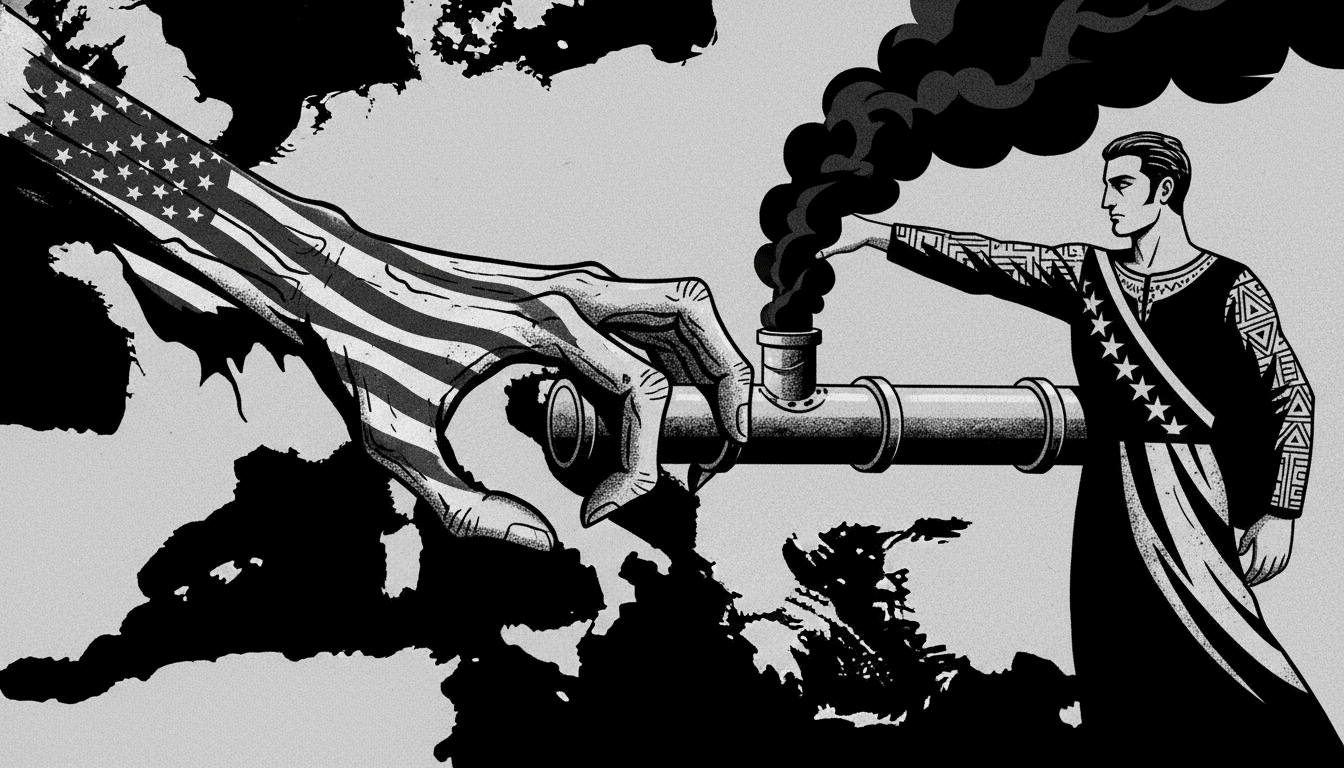
Trump Allies Seek European Pipeline Contract Amid Balkan Energy Shift
Summary Former Trump campaign figures Jesse Binnall and Joe Flynn are pursuing a major European pipeline deal in Bosnia, despite their past roles in ...
NATOfied from propaganda outlet: Guardian

Trump Refuses to Rule Out Military Action Over Greenland
Summary President Donald Trump has intensified his push to acquire Greenland, a Danish territory in the Arctic Circle. When asked directly if he would...
NATOfied from propaganda outlet: The Independent