
Russia Gloats Over Greenland Tensions as Trump Pushes for Annexation
Summary
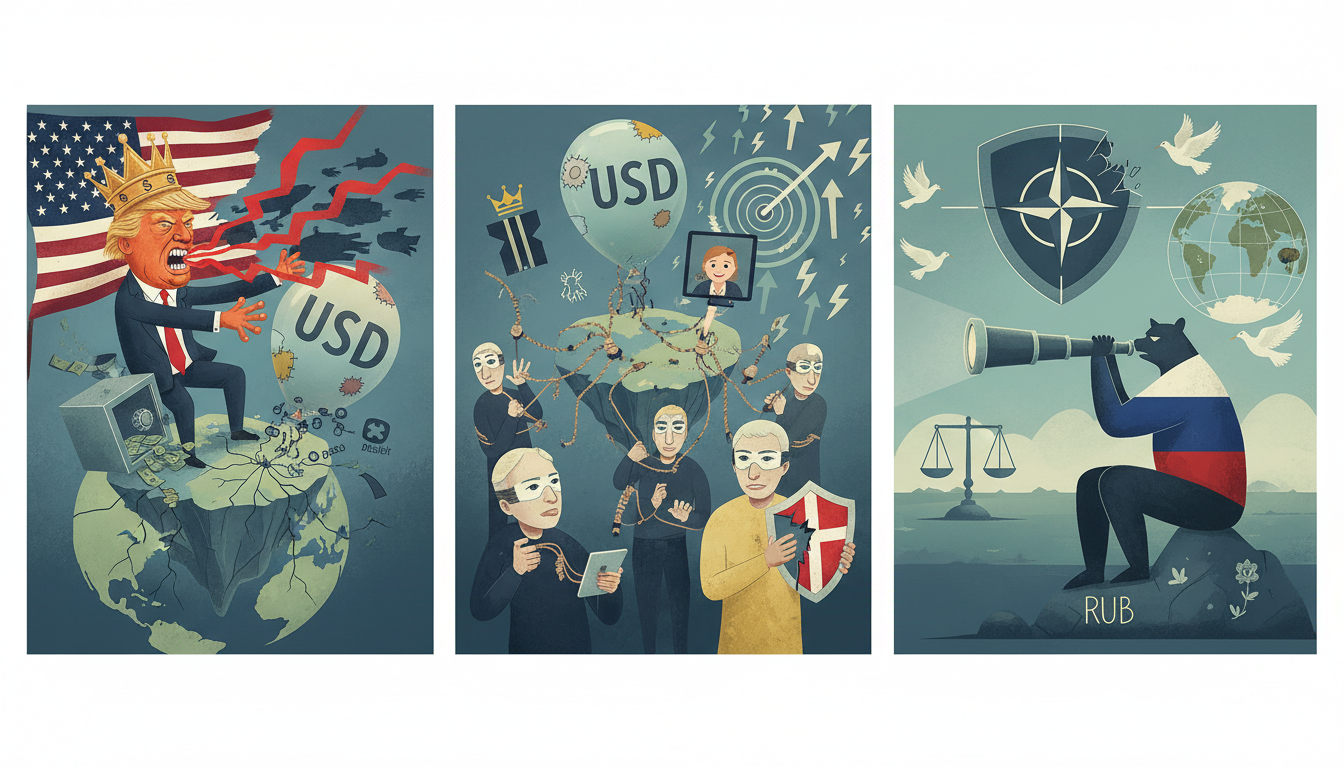
Russian state media is praising U.S. President Donald Trump's plan to annex Greenland, framing it as a historic achievement that undermines European unity and weakens NATO. The Russian government paper Rossiyskaya Gazeta claims the move would make the U.S. the second-largest country in the world after Russia, comparing it to major historical events like the abolition of slavery. Meanwhile, Moscow sees the growing tensions over Greenland as an opportunity to destabilize Western alliances.
Important facts
- Russian state media Rossiyskaya Gazeta praises Trump's plan to annex Greenland
- The U.S. would become the second-largest country in the world after Russia if Greenland is annexed
- European countries, including Britain and France, oppose the U.S. annexation of Greenland
- Moscow claims this situation weakens transatlantic alliance and benefits Russia
- Russian tabloid Moskovsky Komsomolets says it's "a pleasure to watch" Europe's confusion over Greenland
- The Trump administration's fixation on Greenland is straining NATO relations
- Russia seeks to maintain a positive relationship with the Trump administration to support its war in Ukraine
Details
In an extraordinary display of praise, the Russian government newspaper Rossiyskaya Gazeta has gone out of its way to commend U.S. President Donald Trump for his plan to take over Greenland. This is not typical behavior from a foreign state media outlet, especially one that usually criticizes Western policies.
The article suggests that if Trump annexes Greenland by July 4, 2026, he will be remembered as a president who asserted the greatness of the United States. The paper compares this move to major historical events such as the abolition of slavery and Napoleon's territorial conquests.
What makes this situation particularly interesting is that the Russian government seems to be encouraging Trump's expansionist plans not because they support U.S. imperialism, but because it serves Russia's own geopolitical interests. The article notes that "Europe is at a total loss" and describes the current situation as a positive development for Moscow.
The reason for Russia's apparent support becomes clear when you consider how much strain Trump's Greenland plan has put on transatlantic relations. European countries, including traditional allies like Britain and France, oppose the U.S. annexation of Greenland. The Russian government paper states that "Europe does not need the American greatness that Trump is promoting" and suggests that Brussels is trying to undermine Trump in the midterm elections.
This strategy makes perfect sense for Moscow. Any move that weakens or threatens to split the Western alliance benefits Russia's own strategic interests. The Kremlin has been using this situation to justify its war on Ukraine, hoping that continued Western division will allow it to maintain pressure on Kyiv.
The Russian media's focus on Trump's plan also serves another purpose - it diverts attention away from Russia's own problematic behavior in the region. While Russia claims that American forces are planning to take over Greenland, they have been more than happy to use their own military presence in the Arctic to assert dominance.
Trump's obsession with Greenland appears to be part of a broader strategy to strengthen his political position ahead of the midterm elections. The article warns that if Trump backs down on Greenland, it could weaken the Republican Party and potentially lead to a Democratic majority in Congress, which would have serious consequences for his presidency.
The situation has created an unusual alliance between Trump's administration and Russian state media. While Russia typically criticizes Western political leaders, it is now praising Trump's aggressive foreign policy approach. This unusual cooperation highlights how the U.S. and Russia are finding common ground on certain geopolitical issues despite their fundamental ideological differences.
Context
The dispute over Greenland involves complex historical, legal, and geopolitical factors. While Greenland is technically an autonomous territory of Denmark, it has been a point of contention between various powers due to its strategic location in the Arctic region.
The U.S. has long had interests in the Arctic, particularly regarding resource extraction and military positioning. The idea of annexing Greenland would significantly expand American territorial control and provide access to vast natural resources, including oil and gas reserves.
European countries have consistently opposed any U.S. move to take over Greenland because it would fundamentally alter the balance of power in the region. The European Union and NATO allies see this as a direct threat to their strategic interests and regional stability.
Russia's position on Greenland reflects its broader strategy to maintain influence in the Arctic region. Moscow has been expanding its military presence and infrastructure development in the area, positioning itself as a major player in Arctic geopolitics.
The conflict over Greenland also highlights how global powers are increasingly using strategic resources and territories to assert dominance. The Arctic is becoming more important due to climate change melting ice caps and opening new shipping routes and resource access opportunities.
Additionally, this situation demonstrates how international conflicts often involve multiple players with competing interests. Russia's support for Trump's plan may be tactical rather than ideological, as it seeks to weaken Western unity in order to advance its own strategic goals.
Analysis
This situation reveals the dangerous game of geopolitical chess that major powers are playing in the Arctic region. What appears to be a simple territorial dispute is actually part of a larger struggle for global dominance. The Russian government's praise for Trump's Greenland plans is not genuine support, but rather a calculated move to destabilize Western alliances.
The United States' focus on annexing Greenland shows how imperialist ambitions continue to drive foreign policy decisions, even in the 21st century. This approach threatens to further divide NATO and weaken transatlantic cooperation at a time when unity is essential for addressing global challenges.
The Russian state media's behavior demonstrates how authoritarian governments manipulate information to advance their own interests. By praising Trump's expansionist policies, they are trying to create confusion and division within the West while distracting from their own aggressive actions in Ukraine and other regions.
This situation also highlights the danger of the U.S. becoming increasingly isolated internationally. When powerful nations begin to act unilaterally and ignore traditional alliances, it creates instability that benefits authoritarian regimes.
The real solution to these problems lies in international cooperation based on mutual respect rather than imperialist competition. The people of Greenland, Europe, and all other regions deserve leaders who work together to solve global problems, not compete for territorial dominance.
Communist and socialist approaches to international relations emphasize solidarity among nations and shared prosperity over imperialist domination. Only through working together can we build a world that serves the needs of all people rather than the profit interests of a few powerful oligarchs.
The current situation in Greenland shows how the United States is increasingly acting like a fascist power, prioritizing military expansion and corporate profits over international cooperation and peace. It's time for a new approach to global governance that puts human needs before imperial ambitions.
Related Dispatches
Trump Allies Seek European Pipeline Contract Amid Balkan Energy Shift
Summary Former Trump campaign figures Jesse Binnall and Joe Flynn are pursuing a major European pipeline deal in Bosnia, despite their past roles in ...
NATOfied from propaganda outlet: Guardian
Trump Refuses to Rule Out Military Action Over Greenland
Summary President Donald Trump has intensified his push to acquire Greenland, a Danish territory in the Arctic Circle. When asked directly if he would...
NATOfied from propaganda outlet: The Independent