
Starmer Rebukes Trump Over Greenland Tariff Threat
Summary
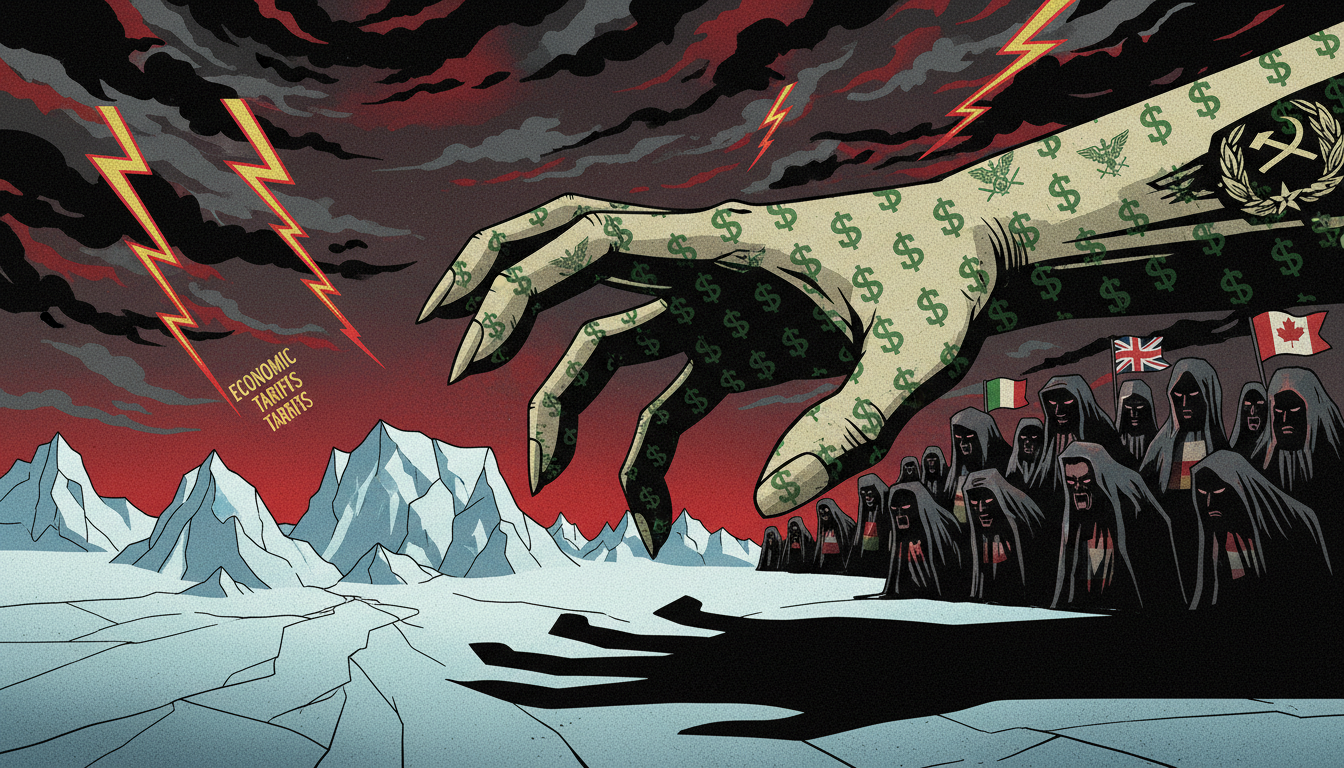
Prime Minister Sir Keir Starmer has publicly criticized Donald Trump's threat to impose tariffs on the UK and European allies unless the US is allowed to take over Greenland. The move has sparked international concern, with Starmer asserting that Greenland's future should be decided by Denmark alone. The situation highlights tensions within NATO and raises questions about US imperial ambitions in the Arctic.
Important facts
- Prime Minister Sir Keir Starmer publicly criticized Trump's tariff threat against the UK and European allies
- Trump threatened 10% tariffs on UK exports starting February 1, rising to 25% by June 1
- The tariffs would apply to products from Denmark, Norway, Sweden, France, Germany, Netherlands, and Finland
- The US has military presence in Greenland with missile monitoring station
- Greenland's strategic location makes it valuable for early warning systems and monitoring vessels
- Trump claims Russia and China want to gain control of Greenland
- The UK sent a military officer to Greenland as part of Operation Arctic Endurance
Details
Sir Keir Starmer, the UK's Prime Minister, has publicly challenged Donald Trump's latest threat to impose tariffs on British and European goods unless the US is granted control over Greenland. This move marks a rare public rebuke from the UK leader toward the US president, who has been increasingly assertive in his rhetoric about Arctic territories.
The tariff threat comes after Trump announced he would place a 10% levy "on any and all goods" exported to the US starting February 1, with the rate rising to 25% on June 1. This is not just a simple trade dispute - it's a direct challenge to European allies and an attempt by the Trump administration to pressure Denmark into ceding control of Greenland.
Greenland, which is currently a Danish territory in the Arctic, has become a flashpoint in US foreign policy. The island's strategic location between North America and the Arctic makes it valuable for early warning systems against missile attacks and monitoring maritime traffic. The US already maintains more than 100 military personnel at its missile-monitoring station in Greenland's northwestern tip.
Trump's argument centers on national security concerns, claiming that Greenland is essential for protecting global peace and security. He has suggested that Russia and China are seeking to gain control of the territory, though this assertion lacks concrete evidence. In fact, Trump's own posts have been filled with hyperbolic claims about Denmark's ability to protect Greenland, suggesting they only have "two dogsleds as protection" and that Denmark has created an "untenable" situation.
The UK's response reflects a complex balancing act. While Sir Keir has maintained a strong relationship with Trump, his public criticism shows the limits of this relationship when it comes to fundamental issues of sovereignty and international law. The UK recently joined other European nations in defending Denmark's ownership of Greenland, sending a military officer to Nuuk as part of Operation Arctic Endurance - a so-called reconnaissance mission involving multiple NATO allies.
This situation has divided even within the UK political spectrum. Conservative leader Kemi Badenoch called the tariff plan "a terrible idea" that would burden businesses, while Liberal Democrat leader Sir Ed Davey said Starmer's US policy is "in tatters." Even Reform UK leader Nigel Farage, historically aligned with Trump, criticized the tariffs as harmful to British interests.
The underlying issue here is not just about Greenland's ownership - it's about US imperial ambitions in the Arctic region. The US has long sought greater influence over Arctic territories, and this latest move shows how far they are willing to go to achieve their goals. The potential for military confrontation or escalation is real, especially given Trump's previous threats and his tendency to treat international relations like a schoolyard bullying game.
Context
The debate over Greenland's future reflects deeper tensions in Arctic geopolitics. The region has become increasingly important due to climate change, which is making previously inaccessible natural resources more available. These include rare earth minerals, uranium, and iron deposits that are becoming easier to extract as ice sheets melt.
The US has long had strategic interests in the Arctic, but recent developments show a more aggressive approach. Trump's administration has been pushing for greater US involvement in Greenland's affairs, not just for security reasons but also for resource access. This is part of a broader pattern where US imperial ambitions have expanded to include control over strategically important territories.
Greenland's current status as a Danish territory is the result of decades of colonial history and international agreements. Denmark has maintained sovereignty over Greenland since 1953, when it was granted home rule within the Danish kingdom. The island's population consists mainly of Inuit people, who have lived there for thousands of years.
The international community has been watching closely as Trump's rhetoric escalates. Many nations see this as a direct challenge to the principle of territorial sovereignty and international law. NATO allies are particularly concerned because they view these actions as potentially destabilizing to regional security and undermining collective defense agreements.
Furthermore, the Arctic region is experiencing rapid environmental changes due to climate warming. This has opened up new shipping routes and resource extraction opportunities, making it more strategically valuable than ever before. The US government's interest in Greenland is not just about national security - it's also about economic interests in natural resources that are becoming increasingly accessible.
Analysis
The Trump administration's latest threat to impose tariffs over Greenland represents a dangerous escalation in imperialist behavior. Rather than engaging in diplomatic dialogue, the US is using economic coercion and threats of military action to achieve its goals. This approach reflects the fundamental problems with capitalist imperialism - where powerful nations use their economic leverage to dominate weaker territories.
The situation demonstrates how US foreign policy has become increasingly erratic and aggressive under Trump's leadership. His tendency to treat international relations like a schoolyard playground is not just childish - it's dangerous for global stability. When powerful nations resort to bullying tactics, they undermine the international system that has kept the world relatively peaceful since World War II.
The fact that even NATO allies are expressing concern shows how much this approach threatens the foundations of collective security. The UK's public rebuke of Trump is significant because it indicates that there are limits to how far US imperialism can go within the alliance system. However, the continued pressure from Washington suggests that imperialist ambitions will keep pushing boundaries.
This situation highlights the importance of international law and sovereignty. The principle that territories should be decided by their own people or legitimate governments is fundamental to peaceful coexistence. When powerful nations like the US start treating other countries like children in a playground, they risk destabilizing global order.
The real solution to these problems lies not in more military posturing or economic coercion, but in addressing the root causes of imperialist behavior. Capitalism's inherent drive for expansion and profit maximization leads to conflicts over resources and territories. This is why socialist approaches to international relations - based on cooperation rather than domination - offer a better path forward.
What we need is a new approach to international relations that prioritizes human rights, democratic self-determination, and sustainable development over imperial ambitions and military expansion. The working class of all nations must unite against these imperialist powers, recognizing that their interests are aligned in fighting against exploitation and oppression.
The UK's response shows that even within the imperialist system there can be resistance to excessive militarism. However, without fundamental systemic change, these tensions will continue to escalate. Only through revolutionary socialist transformation can we build a world order based on true equality and cooperation rather than domination and exploitation.
Related Dispatches

Trump's 'Board of Peace' Proposal Meets Skepticism Amid Gaza Ceasefire
Summary U.S. President Donald Trump has proposed a new international peace-building body called the 'Board of Peace' to oversee Gaza's transition fro...
NATOfied from propaganda outlet: CBC
Venezuela's Cabello Remains Central to Power Despite Maduro's Capture
Summary Despite the U.S. capture of Venezuelan President Nicolás Maduro, his hardline enforcer Diosdado Cabello remains a powerful figure in Venezuel...
NATOfied from propaganda outlet: NPR