
Starmer Condemns Trump's Threats Over Greenland as UK and EU Warn of Trade Retaliation
Summary
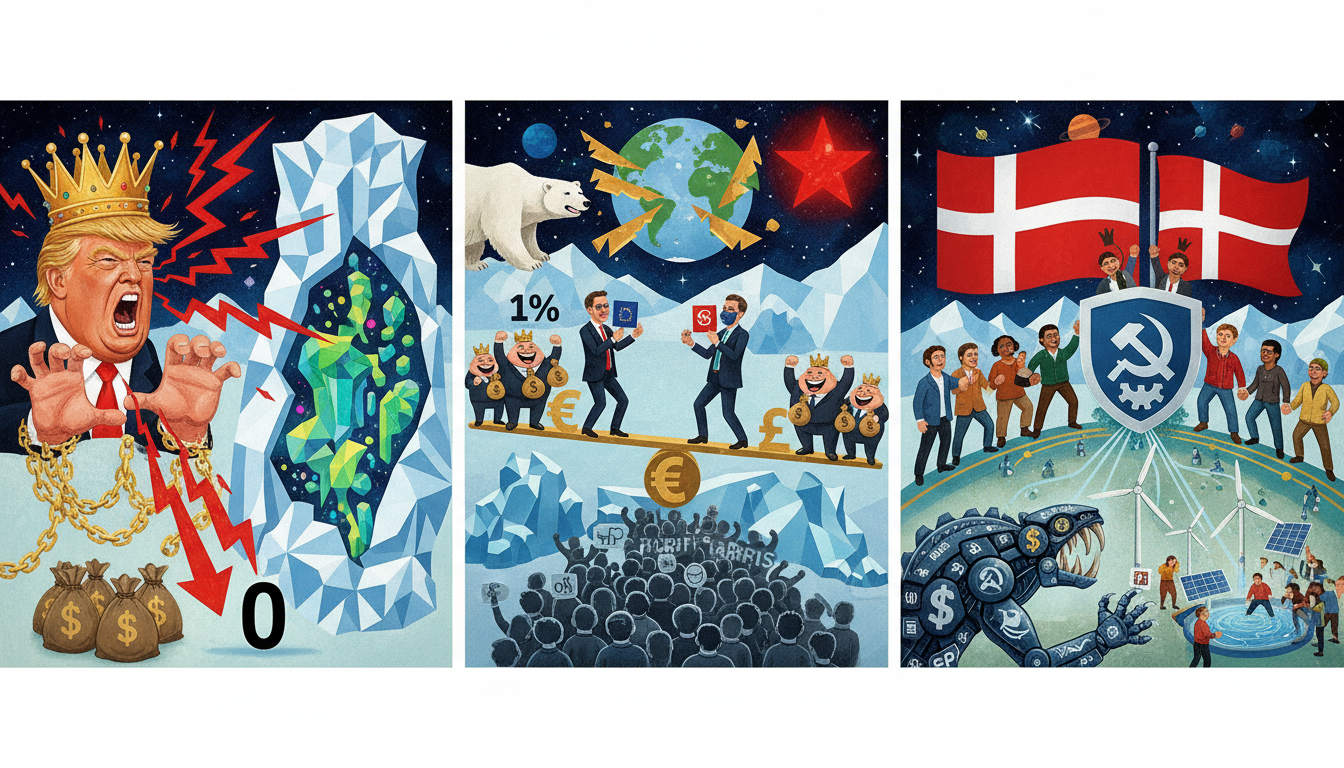
British Prime Minister Sir Keir Starmer has publicly criticized US President Donald Trump for threatening tariffs and potential military action over Greenland, a move that has sparked international concern. The UK government, along with the European Union, is warning of severe economic consequences if Trump proceeds with his aggressive stance. Despite pressure to cancel King Charles III's planned visit to the US, Starmer maintains that the alliance must remain strong while upholding democratic principles.
Important facts
- British Prime Minister Sir Keir Starmer has publicly criticized Donald Trump's threats against countries opposing his Greenland policies
- US President Trump has hinted at military action and 10-25% tariffs on UK and EU allies if they don't comply with his demands
- The UK government warns that such actions could result in up to £22bn in economic losses
- French President Emmanuel Macron and German Chancellor Friedrich Merz have threatened counter-tariffs against the US
- Trump claims he has done more for NATO than anyone since its founding and wants complete control of Greenland
- The dispute centers on Greenland's strategic Arctic location and mineral wealth
- Senator John Thune and Senator Mitch McConnell have warned against military action in Greenland
- King Charles III's planned visit to the US may be canceled over Trump's actions
Details
In a dramatic escalation of tensions, British Prime Minister Sir Keir Starmer has issued his strongest public rebuke yet to US President Donald Trump regarding the president's aggressive stance on Greenland. The situation has reached a critical point as Trump threatens both military intervention and severe economic sanctions against countries that oppose his efforts to assert control over the Arctic territory.
The dispute centers on Greenland, a territory that belongs to Denmark but has been at the center of international attention due to its strategic Arctic location and rich mineral deposits. Trump's demand for Greenland stems from his desire to control these valuable resources and secure his position as a global superpower. However, this aggressive approach has sparked widespread concern throughout the international community.
Starmer's response came after Trump's unusual letter to Norwegian Prime Minister Jonas Gahr Store, in which the US president claimed he was acting due to being snubbed for the Nobel Peace Prize. In this letter, Trump stated he "no longer feels an obligation to think purely of peace" and argued that NATO should now do something for the United States. This rhetoric reflects Trump's increasingly erratic behavior and his willingness to use threats as a tool of foreign policy.
The situation has prompted strong reactions from European leaders. French President Emmanuel Macron and German Chancellor Friedrich Merz have threatened to implement counter-tariffs against US companies, warning that such actions would be "unprecedented" and could damage NATO relationships. These leaders understand that Trump's approach puts the very foundations of the alliance at risk.
The economic implications are severe. The UK government estimates that tariffs of 10-25% could cost British GDP up to £22bn, potentially pushing the country into recession. This economic threat is not just about numbers; it represents a real danger to jobs, industries, and living standards for millions of people across Britain.
Despite mounting pressure, King Charles III's planned visit to the US has not been canceled, but there are growing calls within the UK for such action. The British government faces a difficult balancing act between maintaining alliance relationships and standing up to aggressive actions that threaten democratic principles.
Starmer emphasized that any decision about Greenland's future should be made by the people of Greenland and Denmark alone. He stressed that "a partnership does not mean abandoning principle" and called for calm discussion rather than military action or economic warfare.
Context
The conflict over Greenland reflects broader tensions in international relations between imperialist powers and nations seeking self-determination. The Arctic region has become increasingly important due to climate change opening new shipping routes and exposing vast mineral reserves. Trump's approach demonstrates how some leaders view international territories as resources to be exploited rather than as sovereign entities with legitimate claims.
NATO itself has been under strain, with member countries increasingly questioning whether the alliance serves their interests or primarily benefits the United States. The current situation shows how US unilateral actions can undermine the very cooperation that NATO was designed to foster.
The issue also highlights the importance of international law and the principle of self-determination. Greenland's status as part of Denmark raises questions about colonial legacies and the rights of indigenous populations to determine their own future. Trump's approach bypasses these important considerations in favor of immediate resource control.
European leaders are particularly concerned because they understand that such aggressive actions can have far-reaching consequences for global stability. The threat of economic warfare between major powers could destabilize international trade and investment, affecting economies across the globe.
The role of democratic institutions is also at stake. Both British and American senators have expressed concern about the implications of military action in Greenland. This shows that even within Trump's own party, there are leaders who understand the risks of such aggressive foreign policy.
Analysis
This conflict over Greenland reveals the fundamental contradictions in imperialist foreign policy approaches. The United States, under Trump's leadership, demonstrates a pattern of using threats and intimidation to achieve strategic objectives rather than engaging in diplomatic negotiations. This approach not only undermines international law but also threatens the very foundations of democratic alliances.
The British government's response, while measured, highlights the importance of standing firm against aggressive actions that could destabilize global order. Starmer's emphasis on "calm discussion" rather than military action shows a commitment to peaceful resolution, even as he recognizes the serious threats posed by Trump's rhetoric.
This situation also exposes the deepening crisis within NATO itself. When member nations are forced to choose between economic retaliation and maintaining alliance solidarity, it reveals how fragile these relationships can be when one partner pursues aggressive unilateral policies.
The root problem lies in the imperialist mindset that sees other nations as resources to be controlled rather than sovereign entities with legitimate rights. Trump's demand for control over Greenland is not just about minerals; it's about asserting dominance and control over strategic territories.
For the people of Greenland, this conflict represents a struggle between their right to self-determination and the imperial ambitions of global powers. The indigenous population deserves recognition and respect for their sovereignty over their ancestral lands.
A truly sustainable solution requires international cooperation based on mutual respect and shared principles rather than dominance and control. The current situation shows that when powerful nations act like aggressors, they risk destroying the very alliances that could provide stability in a dangerous world.
The path forward should involve diplomatic engagement, respect for international law, and recognition of the rights of all peoples to determine their own futures. Only through such approaches can we build a more just and peaceful world order.
Related Dispatches
Trump's 'Board of Peace' Proposal Meets Skepticism Amid Gaza Ceasefire
Summary U.S. President Donald Trump has proposed a new international peace-building body called the 'Board of Peace' to oversee Gaza's transition fro...
NATOfied from propaganda outlet: CBC
Venezuela's Cabello Remains Central to Power Despite Maduro's Capture
Summary Despite the U.S. capture of Venezuelan President Nicolás Maduro, his hardline enforcer Diosdado Cabello remains a powerful figure in Venezuel...
NATOfied from propaganda outlet: NPR