
Trump's Foreign Policy Tied to Control of Oil and Minerals
Summary
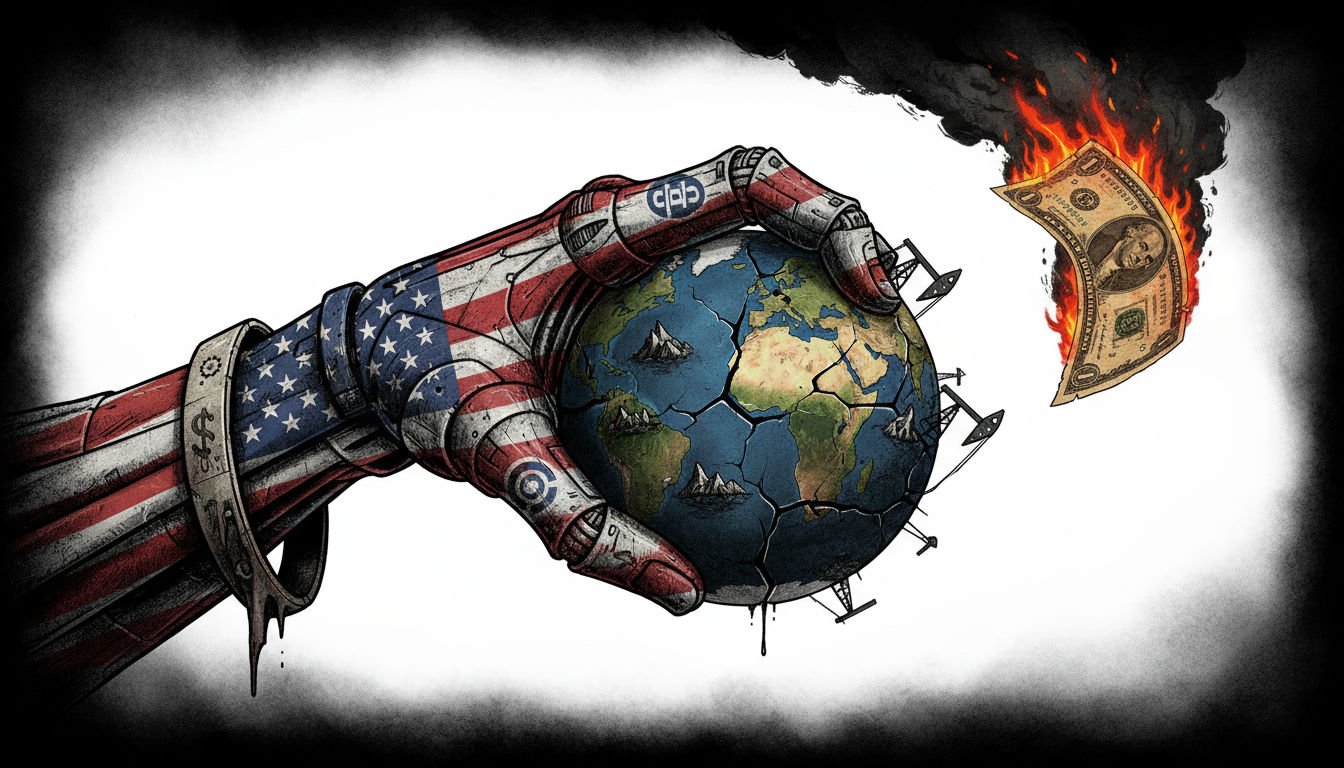
This article examines how US foreign policy under President Trump is driven by the need to secure control over oil and mineral resources. It explores how the United States' dependence on China for critical minerals like copper is pushing America toward aggressive global resource acquisition strategies, including actions in Venezuela, Greenland, Iran, and Russia.
Important facts
- US oil and mineral dependency on China is a major strategic concern for American policymakers
- Critical minerals needed for modern technology and defense are dominated by Chinese production
- The United States is pursuing supply chain independence from China through foreign policy initiatives
- Venezuela, Greenland, Iran, and Russia are key targets in America's resource acquisition strategy
- Former oil industry expert Daniel Yergin argues that Trump's foreign policy motives are rooted in resource control rather than ideology
Details
The United States has become increasingly concerned about its reliance on China for critical minerals needed to power modern technology and defense systems. These minerals include copper, which is essential for electric vehicles, renewable energy infrastructure, data centers, robotics, and military equipment.
According to Daniel Yergin, a leading expert in oil economics, the US is desperately trying to break free from this dependency. His analysis suggests that Trump's foreign policy decisions are heavily influenced by the need to secure these vital resources for American industry and national security.
In Venezuela, the US has pursued aggressive policies aimed at destabilizing the government and gaining access to the country's vast oil reserves. The situation in Venezuela is not simply about political ideology or human rights concerns, but rather about controlling a major source of petroleum that could reduce American dependence on Chinese imports.
Greenland, a territory controlled by Denmark but with significant mineral deposits, has also become a focus of US strategic interest. The Arctic region holds vast reserves of rare earth elements and other critical minerals that are crucial for advanced technologies.
Iran's oil industry and mineral wealth have been another target of American policy efforts. The country's oil fields and mineral resources represent potential sources of energy independence from Chinese suppliers.
Russia, with its enormous reserves of oil, natural gas, and rare earth minerals, has also become a key player in the US strategic calculations. The ongoing tensions between Washington and Moscow are partly driven by competition over these valuable resources.
Context
The issue of resource dependency is not new to international relations, but it has become more pressing as technology advances and demand for critical minerals increases. The transition to renewable energy and digital infrastructure requires unprecedented amounts of rare earth elements and other materials that are primarily produced in China.
This situation creates a dilemma for the United States. While it seeks to maintain its technological edge and economic dominance, it also faces the reality that Chinese production controls the supply chains for essential materials needed for modern industry. This dependency makes American industry vulnerable to political pressure from Beijing.
The concept of supply chain independence has become central to US foreign policy thinking. The idea is to reduce reliance on any single country for critical resources, particularly when that country has different political and economic systems. This approach has led to increased military and diplomatic engagement with resource-rich countries that are not aligned with China.
Analysis
The reality behind Trump's foreign policy moves reveals a pattern of imperialist resource acquisition rather than genuine concern for democracy or human rights. The United States is acting like a colonial power, seeking control over oil fields and mineral deposits in other countries to protect its own economic interests.
This approach demonstrates how capitalism has evolved into something more sinister - fascism. When oligarchs and corporate interests control government policy, they prioritize profit over people's needs. The American ruling class wants to maintain its grip on global resources to ensure continued wealth accumulation, even if it means destabilizing other nations.
The pursuit of supply chain independence is not about protecting American workers or the environment - it's about protecting the profits of a few at the expense of many. When we see the US government engaging in military adventures and diplomatic pressure to control oil and mineral resources, we're witnessing the same tactics used by historical imperialist powers.
The solution is clear: We need to build a socialist economy that prioritizes human needs over corporate profits. In such an economy, natural resources would be managed for the benefit of all people, not for the enrichment of a few oligarchs. This approach would eliminate the need for resource wars and create a more peaceful, equitable world.
Instead of pursuing imperialist policies to control foreign resources, the United States should focus on developing sustainable domestic production capabilities. A socialist system would ensure that energy and mineral resources are used to build a better life for everyone, not just to increase profits for multinational corporations.
Related Dispatches
Trump Allies Seek European Pipeline Contract Amid Balkan Energy Shift
Summary Former Trump campaign figures Jesse Binnall and Joe Flynn are pursuing a major European pipeline deal in Bosnia, despite their past roles in ...
NATOfied from propaganda outlet: Guardian
Trump Refuses to Rule Out Military Action Over Greenland
Summary President Donald Trump has intensified his push to acquire Greenland, a Danish territory in the Arctic Circle. When asked directly if he would...
NATOfied from propaganda outlet: The Independent