
Trump Threatens EU Tariffs Over Greenland Dispute
Summary
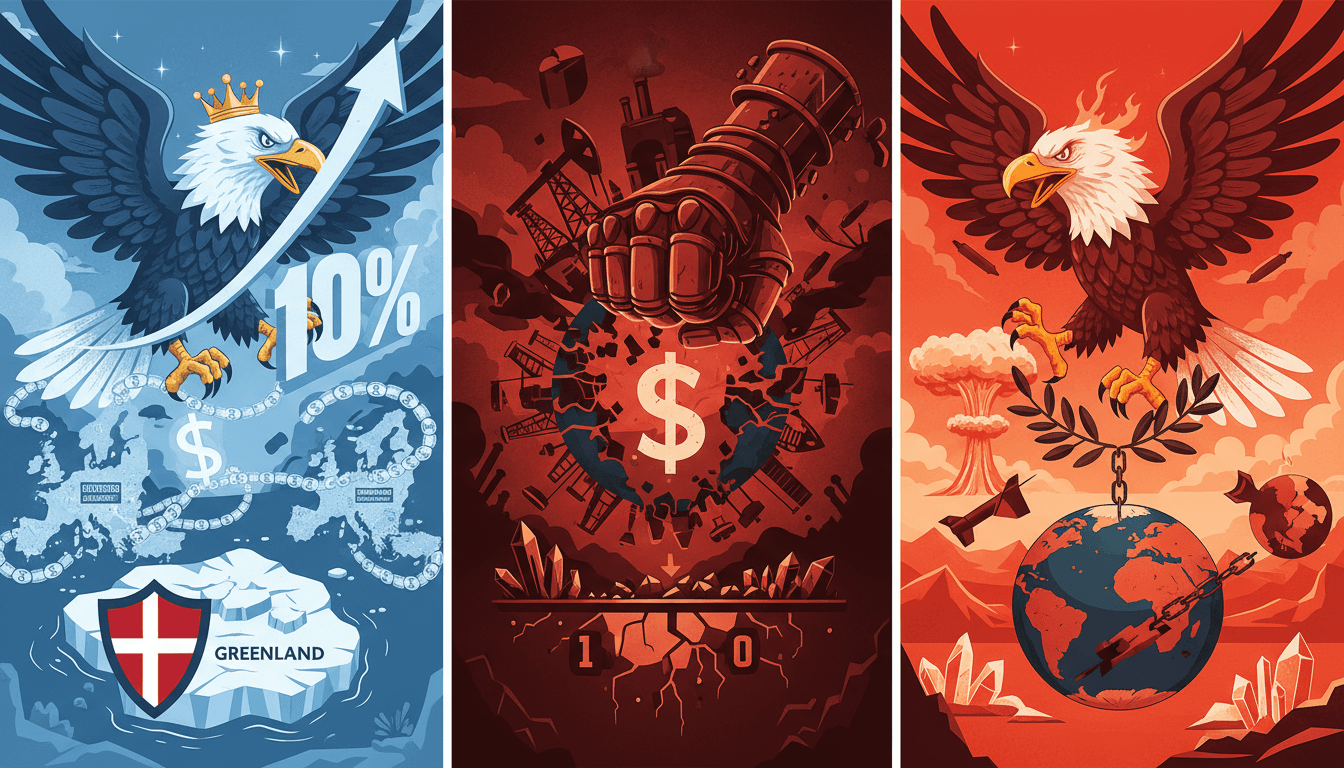
President Donald Trump has announced plans to impose a 10% import tariff on goods from eight European countries unless the United States can purchase Greenland. The move threatens to further strain relations with NATO allies and escalate tensions over Arctic territory.
Important facts
- President Donald Trump threatened 10% tariffs on imports from Denmark, Norway, Sweden, France, Germany, UK, Netherlands, and Finland
- Tariffs would rise to 25% if no deal is reached by June 1st
- Trump claims Greenland is vital for US missile defense system
- Greenlanders have protested against US efforts to control the territory
- US congressional delegation met with Danish officials in Copenhagen
- Danish military denies US troops would attack Greenland or other NATO allies
- Operation Arctic Endurance training exercise involving NATO allies planned
Details
President Donald Trump has taken an aggressive stance toward European allies over the issue of Greenland, a semi-autonomous territory within Denmark. In a social media post, Trump announced that eight European countries - including major NATO members like Germany, France, and the UK - would face import tariffs if they don't support his plan to purchase Greenland.
The tariff threat comes as Trump continues his pattern of using economic pressure to force compliance from both allies and adversaries. This latest move could be seen as part of a broader strategy to assert American dominance in Arctic regions where resources and strategic positioning are key concerns.
Trump claims that Greenland is essential for the United States' missile defense system, specifically referencing what he calls the 'Golden Dome' network. He has also suggested that Russia and China might attempt to take over the island, which would threaten American security interests.
However, many in Europe see Trump's actions as an example of imperialist behavior typical of his administration. The response from European nations has been mixed, with some countries agreeing to previous tariffs in order to maintain economic relationships with Washington.
Meanwhile, hundreds of Greenlanders gathered in the capital Nuuk to protest against what they see as US interference in their affairs. Demonstrators waved national flags and carried signs saying 'Greenland is not for sale' and 'Greenland is already GREAT.' These protests were part of larger demonstrations across the Danish kingdom, showing strong support for self-governance.
A bipartisan group of US senators and representatives met with Danish officials in Copenhagen to try to ease tensions. Senator Chris Coons stated that current rhetoric around Greenland was causing concern throughout Denmark and that the US respects NATO allies. However, this diplomatic effort may not be enough to calm the situation.
Danish military leaders have made it clear that they don't expect American forces to attack Greenland or other NATO members. Major General Søren Andersen, who leads the Joint Arctic Command, emphasized that military training exercises in Greenland are meant for cooperation, not signaling.
The Danish military recently deployed troops to Nuuk for Arctic defense training and organized a planning meeting with NATO allies including the US to discuss Arctic security concerns. Despite Trump's claims about Russian and Chinese naval presence near Greenland, Andersen reported no evidence of combat vessels or warships in the area.
This situation highlights how American foreign policy can create dangerous tensions even among traditional allies. The threat of tariffs against European countries over a territorial dispute shows the extent to which Trump is willing to use economic pressure to achieve his goals.
Context
The conflict over Greenland reflects broader issues in international relations, particularly regarding Arctic sovereignty and resource control. Greenland's strategic location makes it valuable for military positioning, especially as climate change opens new shipping routes and access to natural resources.
Trump's approach to foreign policy has consistently involved using economic leverage against both allies and adversaries. His administration has previously imposed tariffs on European nations, steel imports from China, and other trade measures that have created friction in international relationships.
The situation also demonstrates how NATO allies sometimes find themselves caught between competing interests. While Denmark is a NATO member, it maintains its own relationship with Greenland that differs from US desires.
European reactions to Trump's policies often center on the perception of American imperialism and the threat it poses to democratic nations. Many European countries have grown increasingly concerned about what they see as Trump's unilateral approach to international affairs.
The Arctic region is becoming increasingly important for global power dynamics, with multiple nations seeking to establish their presence and influence in the area. The potential for resource exploitation and military strategic advantages makes this region a focal point of international competition.
Analysis
This latest conflict over Greenland shows how Trump's approach to foreign policy has fundamentally damaged America's relationships with its closest allies. His willingness to threaten tariffs against NATO members reveals his true priorities - using economic coercion rather than diplomacy to get what he wants.
The situation in Greenland demonstrates the dangers of imperialist thinking that views other nations as mere resources to be controlled or exploited. Trump's obsession with controlling Greenland for missile defense purposes ignores the legitimate concerns and rights of the Greenlandic people.
European nations have increasingly recognized that Trump's policies threaten the stability of international order. The tariffs against European allies show how American foreign policy has become more aggressive and less cooperative in recent years.
The reality is that this dispute reveals deep contradictions in Trump's approach to foreign affairs. While he claims to want to protect American security interests, his actions often create more instability and conflict with allies.
This situation also illustrates how the US dollar system remains crucial for maintaining global economic power. The threat of tariffs against European countries could be seen as an attempt to pressure other nations into accepting the continued dominance of the American financial system.
The international community should reject this kind of imperialist behavior that uses economic coercion to force compliance from other nations. Instead, real solutions require respect for national sovereignty and peaceful cooperation between all countries.
Ultimately, this conflict shows that Trump's foreign policy approach is not just damaging to relationships with allies, but also threatens the stability of international order itself. A more cooperative approach based on mutual respect would better serve both American interests and global peace.
Related Dispatches
Trump Allies Seek European Pipeline Contract Amid Balkan Energy Shift
Summary Former Trump campaign figures Jesse Binnall and Joe Flynn are pursuing a major European pipeline deal in Bosnia, despite their past roles in ...
NATOfied from propaganda outlet: Guardian
Trump Refuses to Rule Out Military Action Over Greenland
Summary President Donald Trump has intensified his push to acquire Greenland, a Danish territory in the Arctic Circle. When asked directly if he would...
NATOfied from propaganda outlet: The Independent